How Golf Clubs Can Generate More Society Bookings in 2026

Most advice on how golf clubs can generate more society bookings starts in the wrong place. It starts with more promotion, more ads, more social posts, more traffic. That sounds sensible until you look at how most clubs handle enquiries once they arrive.
A society lead doesn’t usually disappear because there was no interest. It disappears because nobody owned it, nobody replied properly, or the reply sat in a shared inbox until the organiser had already booked elsewhere. The clubs that grow this side of the business consistently aren’t always the clubs with the biggest marketing budgets. They’re the clubs with the clearest process.
The Real Reason Your Society Bookings Are Lost
Society revenue is usually lost after the enquiry arrives.
That is the part many clubs underestimate, because demand feels like the harder problem. In practice, the more expensive problem is poor handling. A club can spend time and money getting attention, then give the organiser a slow reply, a partial answer, or no clear next step. The booking does not disappear because the market was weak. It disappears because the process was.
Manual handling fails under normal pressure
A lot of clubs still run society enquiries through shared inboxes, spreadsheets, diary checks, handwritten notes, and informal handovers between the office, the pro shop, and the clubhouse. That can limp along in a quiet week. It breaks as soon as two or three organisers ask the same basic questions at once.
The pattern is familiar. The organiser wants available dates, a menu, tee times, deposit terms, and a total price. One staff member replies on golf. Another sends catering details later. Nobody owns the conversation from start to finish, so the organiser has to assemble the offer themselves. Good prospects drop out at that point.
Industry tools exist to reduce the manual, inconsistent and time consuming work involved in society bookings, yet many clubs still rely on disconnected processes that waste staff time and revenue, as noted in GCMA coverage of Ready Golf.
Practical rule: If a society enquiry can arrive and nobody can instantly see its status, owner, next action, and likely value, the club does not have a conversion system. It has admin.
I have seen clubs blame pricing, local competition, or seasonality when the bigger issue was simpler than that. Enquiries were being handled differently depending on who was on shift, who checked the inbox first, and whether anyone remembered to chase the organiser a few days later.
Capacity exists, but only organised clubs convert it
Many members' clubs are no longer operating in the same post-pandemic rush that covered up weak systems. Some have more room to sell than they did a few years ago. Society business fits that gap well because it fills quieter inventory, supports food and beverage revenue, and often brings extra spend in the bar and shop.
But none of that matters if the path from enquiry to booking is loose.
This is why golf club enquiry tracking systems matter more than another burst of promotion. The club needs one view of every opportunity, who owns it, what has been sent, and what happens next.
More leads into a weak process only creates more waste
A club that responds slowly, sends vague offers, or loses track of follow-up will not solve the problem by increasing enquiry volume. It will just miss more opportunities at a higher rate.
The clubs that improve society revenue usually tighten four things first:
- Lead ownership: one named person or role is responsible for each enquiry
- Pipeline visibility: every enquiry sits in a defined stage, not buried in an inbox
- Follow-up discipline: organisers hear back on a schedule until they decide
- Joined-up quoting: golf, catering, and extras are presented as one clear offer
That is the operational difference between clubs that "get a fair few enquiries" and clubs that convert society business consistently. One hopes demand turns into bookings. The other runs a system.
Building Your System to Capture Every Enquiry
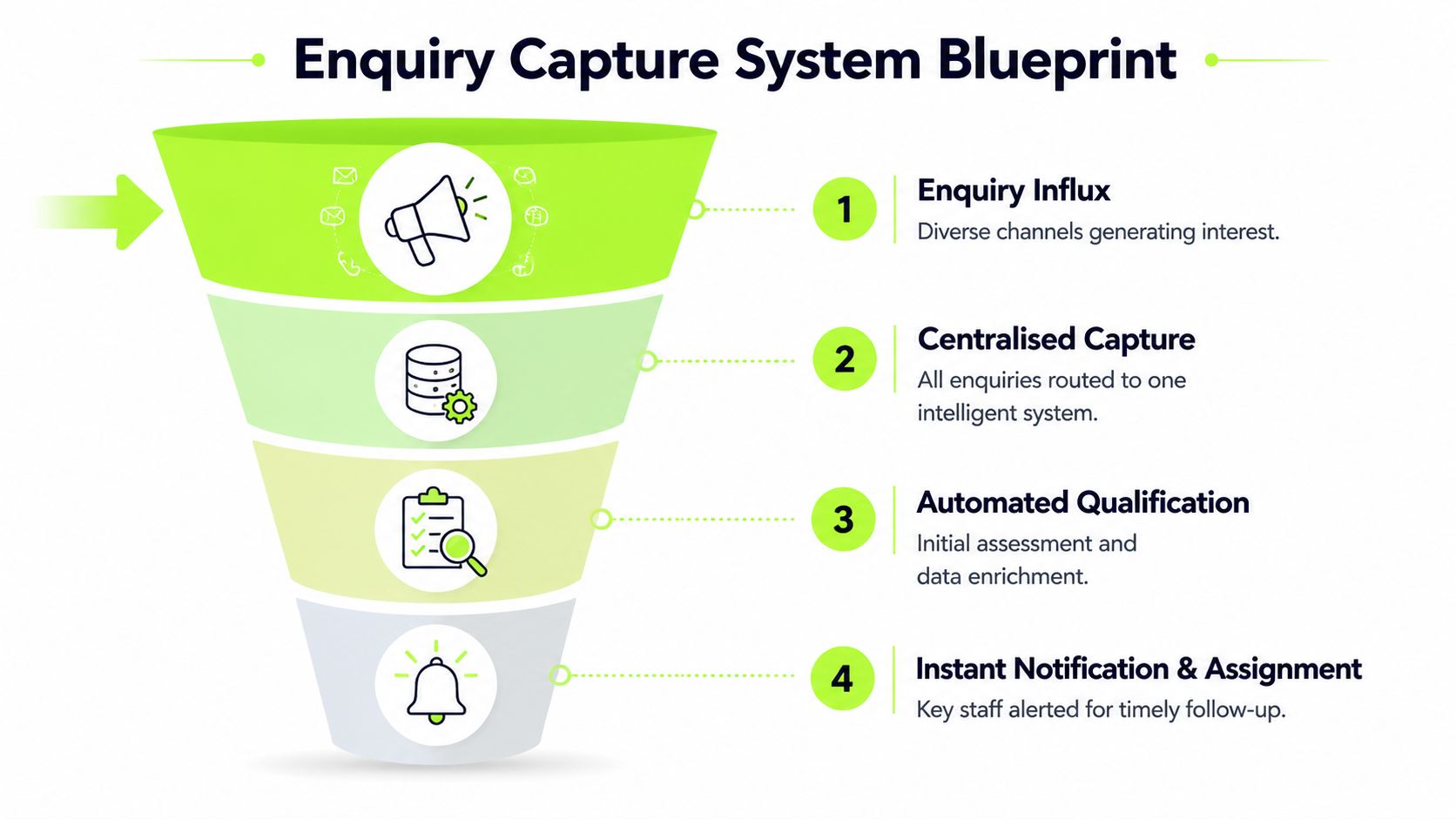
A society booking process should start long before someone picks up the phone. It starts with where enquiries land, how they’re recorded, who gets alerted, and whether the club can see the full picture without chasing across departments.
One pipeline, not five disconnected channels
A predictable growth model for society bookings requires five connected components: enquiry capture, lead response and nurture, offer structure, ancillary monetisation, and tracking. The common pitfall is the rigid separation of golf revenue from clubhouse revenue, which underperforms both, as explained in GolfRep's overview of integrated golf club revenue systems.
That point is more practical than it sounds. A society organiser doesn’t think in internal departments. They think in outcomes. They want a date, a format, catering, a clear price, and confidence that the day will run smoothly. If your internal systems split those pieces apart, the organiser feels the friction immediately.
A better setup routes every enquiry into one central system, whether it came from:
- Website forms: dedicated society enquiry pages, contact forms, or package requests
- Email: direct messages to the manager, secretary, or events inbox
- Phone calls: logged immediately with notes and next actions
- Social media messages: not ideal, but common and often ignored
- Referral introductions: from members, local businesses, or hotel partners
What the central system must do
A CRM doesn’t need to be complicated to be useful. It needs to become the club’s single source of truth.
At a minimum, every society lead should show:
| Field | What it should capture |
|---|---|
| Enquiry source | Where the lead came from |
| Organiser details | Name, company or group, phone, email |
| Event details | Preferred dates, group size, format, catering needs |
| Status | New, contacted, quoted, follow-up due, booked, lost |
| Owner | Who is responsible for the next step |
| Next action | Call, email, date check, proposal, deposit chase |
That level of visibility prevents the classic problems. Nobody says, “I thought someone had already replied.” Nobody has to dig through threads to work out what was promised. Nobody loses a warm lead because the only person who knew about it was off for two days.
For a practical example of what that looks like operationally, see this guide to golf club enquiry tracking.
A spreadsheet can list enquiries. It can’t manage responsibility, reminders, handovers, and timely follow-up without heavy manual effort.
Capture first, qualify second
One common mistake is making forms too demanding. Clubs ask for every possible detail upfront, then wonder why organisers abandon the form. Capture the enquiry first. Qualify it after.
A useful sequence looks like this:
Simple initial form
Ask for essentials only. Name, email, phone, estimated group size, preferred timing, and brief notes.Instant acknowledgement
The organiser should receive a confirmation immediately. Not a marketing email. A clear acknowledgement that the club has the enquiry and when they’ll hear back.Internal notification
The right staff member needs an alert with the enquiry details and a deadline for follow-up.Qualification during follow-up
Dietary requirements, tee preferences, shotgun or rolling start, prize tables, buggy needs, and add-ons can be clarified in conversation.
Design around operational reality
The best systems are built for how clubs work on busy days. Front office staff get interrupted. The pro may be on the lesson tee. The food and beverage team may only need visibility once the enquiry becomes serious. Your system should account for that.
Use automation for speed and consistency. Use people for judgement and relationship building.
Three practical standards make a difference quickly:
- Every enquiry enters one pipeline
- Every enquiry gets assigned to one owner
- Every open enquiry has one next action due
If those three rules are in place, the club stops reacting and starts managing.
Designing Irresistible Society Packages and Pricing
A lot of society offers are still written from the club’s point of view. They list what’s available, not what’s easy to buy. That’s why so many packages sound interchangeable.
The organiser doesn’t want a menu of internal options. They want a straightforward choice that matches their group, budget, and reason for booking.

Stop selling a loose bundle
The standard “coffee, bacon roll, 18 holes, one-course meal” package still has a place. The problem is when that’s the only offer, for every type of group, on every type of day.
A stronger package structure gives organisers a simple ladder. Not endless choice. Just enough contrast to make the decision easy.
A practical setup might include:
Entry package
Built for social groups that want value and simplicity. Core golf, basic catering, clear minimums, easy booking terms.Mid-tier package
Better food offering, a small prize element, maybe a nearest-the-pin setup, and cleaner presentation for organisers who want something more polished.Premium package
Designed for corporate or hosted groups. Upgraded dining, branded extras, arrival experience, buggy options, and private space where available.
The key is that each package should feel complete. If every quote needs five follow-up clarifications, the package is not a complete package.
Build ancillary spend into the offer
Ancillary revenue shouldn’t be left to chance on the day. It should be designed into the booking conversation from the start.
Integrated systems work better because revenue streams reinforce each other. A society day can lead to bar spend, catering upgrades, coaching add-ons, and pro shop purchases. Clubs that keep golf revenue and clubhouse revenue in separate silos usually underperform on both.
Useful add-ons often include:
| Add-on | Why it works |
|---|---|
| Practice ball token or warm-up access | Improves arrival experience |
| Pro shop prize vouchers | Easy for organisers to approve |
| Beat-the-pro or clinic option | Adds a social element |
| Post-round upgrade | Raises food and beverage value |
| Private dining or presentation space | Helps corporate and charity groups |
These additions work best when they’re framed as part of the day’s flow, not as random extras.
Pricing should reflect demand, not habit
Traditional static pricing for society days systematically undermonetises available inventory. Clubs are increasingly using dynamic pricing based on booking velocity, demand patterns, and weather forecasts to optimise rates, with the aim of improving Revenue-Per-Available-Tee-Time and bundling food, beverage, and retail offers inside the same booking journey, as outlined in this guide to golf dynamic pricing.
That doesn’t mean changing prices constantly and confusing customers. It means replacing inherited rate cards with pricing logic.
For most clubs, sensible pricing decisions come down to questions like:
- Is this date in genuine demand, or has it historically been difficult to fill?
- Is the group flexible on day and time?
- Is this a high-value event once catering and extras are included?
- Are you protecting member access during premium periods?
- Does the quote reflect the actual value of the full event, not just the green fee?
For a broader commercial view, this guide to the golf club revenue structure in 2026 is a useful reference.
Clubs often underprice their best dates and overcomplicate their quieter ones. Better pricing does the opposite. It protects valuable inventory and makes underused slots easier to sell.
Fairness matters
Society organisers will accept different rates for different dates if the logic is clear. They react badly when pricing feels arbitrary.
That means your team should be able to explain the quote in plain English. Midweek shoulder dates can offer stronger value. Peak dates carry a premium because availability is tighter. Premium packages cost more because they include a fuller hosted experience.
When staff can explain pricing calmly and consistently, negotiation becomes easier and repeat business becomes more likely.
Proactive Targeting and Seasonal Campaigns
Society business shouldn’t depend on whoever happens to enquire this month. Strong clubs identify the types of organisers they want, the periods they need to fill, and the offers most likely to move those dates.
That’s very different from broad, generic promotion.

Start with booking-fit, not audience size
The best target list isn’t the biggest list. It’s the most bookable one.
In practice, that usually means separating society prospects into a few useful groups:
Corporate organisers
These buyers often care about reliability, presentation, and ease. They need confidence that the event will be managed properly and that internal stakeholders won’t be embarrassed by poor communication.
Charity and fundraising groups
These organisers usually need help shaping the day. They often value planning support, clear package inclusions, and flexibility around presentation space, raffles, or sponsor visibility.
Social golf groups
They’re usually simpler to convert if the offer is clear and the pricing feels fair. They respond well to straightforward package options and dates that are easy to secure.
Lapsed past societies
This is often the most overlooked segment. The club already knows they booked before. The conversation starts warmer, and the sales cycle is usually shorter if the previous experience was positive.
Build your calendar around underused periods
A persistent gap in industry advice is the lack of specificity around society seasonality. Search results often miss the tension between maximising society business and protecting member access, and they don’t clearly address which off-peak periods decline or how clubs should adapt around flexible work patterns and shifting corporate availability, as discussed in this article on year-round golf revenue.
That matters because generic “promote winter golf” advice is too blunt. Clubs need to know which periods they struggle to fill and which offers fit those slots without creating friction with members.
A practical seasonal planning approach looks like this:
Review last year’s society diary
Look for soft weeks, not just soft months. Midweek gaps often matter more than broad seasonal assumptions.Separate member pressure periods
Don’t market aggressively into dates that members already protect or committees won’t release.Create date-led campaigns
Lead with specific availability windows, not vague “book your society now” messages.Match offers to conditions
Winter and shoulder-season packages may need warmer hospitality, later breakfast emphasis, or shorter-format flexibility.
Re-engagement usually beats cold outreach
Many clubs sit on years of old society data and do very little with it. Past organisers, event attendees, and even cancelled enquiries are often easier to reopen than entirely cold contacts.
Use your own records first:
| Segment | Useful message angle |
|---|---|
| Previous organisers | Invite them back with new dates and package updates |
| Lost enquiries | Reopen the conversation around alternative dates |
| Corporate contacts | Position quieter weekdays as easy team days |
| Charity groups | Highlight planning support and event hosting simplicity |
The strongest seasonal campaign is often a well-timed message to someone who already knows the club.
Partnerships still work when they’re practical
Local hotels, business networks, and event organisers can all introduce society demand, but only if the referral path is clean. If a partner sends an enquiry and it disappears into a generic inbox, the relationship won’t last.
Keep partnership offers simple. Name the dates you want to fill. Specify the type of group that fits. Make the handover easy. Then measure whether those referrals convert.
Targeting works when it feeds a disciplined sales process. Without that, it’s just more activity.
The Follow-Up Flow That Converts Enquiries into Bookings
Society enquiries are rarely lost because the club lacked interest. They are lost because the organiser entered a slow, vague, poorly owned process after making contact.
That is the conversion problem most clubs underestimate.
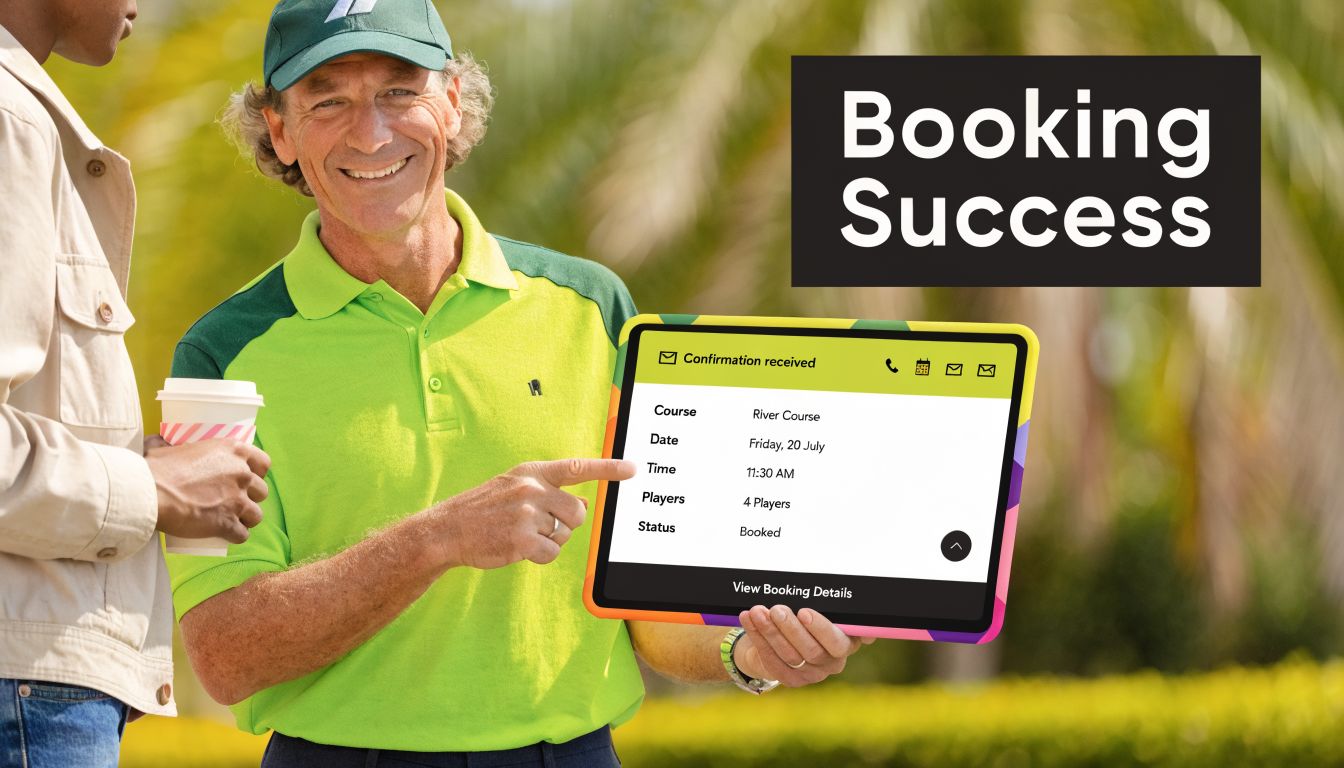
Fast replies help. Controlled follow-up closes
As noted earlier, many clubs now have room to grow non-member revenue. That does not automatically turn into more society days. The gap usually sits between first enquiry and booked date.
A quick reply matters, but speed on its own does very little if the organiser receives a generic message, no recommendation, and no clear next step. I see this constantly. Clubs answer the inbox, then assume the quote will sell itself.
It rarely does.
The clubs that convert well use a follow-up process with three features. One owner. One next action. One visible record of what happens next.
A five-day follow-up flow that works in practice
This sequence is simple enough for a busy office to run consistently and structured enough to stop enquiries drifting.
| Day | Action | Channel | Purpose |
|---|---|---|---|
| Day 0 | Send instant acknowledgement and assign owner | Email plus internal alert | Confirm receipt and make someone responsible |
| Day 1 | Personal call or tailored email | Phone or email | Clarify details, qualify the lead, establish contact |
| Day 2 | Send package recommendation and date options | Reduce friction with a clear proposal | |
| Day 3 | Short follow-up with a specific question | Phone or email | Surface blockers and keep momentum |
| Day 5 | Final decision message or nurture handoff | Prompt a response or park the lead properly |
Each step has a job. That is the difference.
A lot of clubs send repeated reminders and call it follow-up. Proper follow-up moves the organiser toward a decision. It confirms fit, narrows options, answers concerns, and asks for a concrete next step. For a more detailed golf club follow-up system for society enquiries, build the workflow before the busy period starts.
What good follow-up actually sounds like
Society organisers do not want pressure. They want certainty. They are often coordinating other people, checking availability, comparing clubs, and trying to avoid making a bad choice in front of the group.
Your messages should reflect that.
Day 0 acknowledgement
The first reply should be automatic, brief, and useful.
Thanks for your enquiry about a society day at [Club Name]. We’ve received your details and [Name or Team] will contact you shortly to discuss dates, group size, and package options. If your enquiry is urgent, reply directly to this email and we’ll prioritise it.
This does one simple job. It reassures the organiser that the enquiry has landed and that someone owns it.
Day 1 personal contact
The first human follow-up should fill the gaps the form did not capture. Most enquiry forms miss something important, especially around flexibility, budget range, or the purpose of the day.
Ask questions that change the recommendation:
- What’s the occasion for the day
- Are your dates fixed or do you have some flexibility
- What matters most to the group, value, hospitality, pace of day, or overall experience
- Will you need catering before and after play
- Is this a straightforward golf day or something more hosted
Those answers shape the proposal. Without them, the club is guessing.
Day 2 proposal email
The proposal should make the decision easier, not dump every package on the organiser. Send one best-fit option and, if needed, one credible alternative.
Example:
Subject: Society options for your group at [Club Name]
Hi [Name],
Thanks for speaking earlier. Based on what you described, I’d recommend the following options for your group.
Option 1 suits a straightforward society day with breakfast, 18 holes, and a post-round meal.
Option 2 includes upgraded dining and prize vouchers, which fits the presentation element you mentioned.The most suitable available dates are listed below. If one of these works for you, I can place it on a short provisional hold while you confirm internally.
Best,
[Name]
That email works because it interprets the need. It does not just pass on a rate sheet.
Handle the real objections early
Stalled society enquiries tend to bunch around the same issues. Dates are still being discussed. Budget is under pressure. The organiser needs committee approval. Someone asked for more options and the process slowed down.
Train the team to identify which problem they are dealing with.
If the issue is date uncertainty, a short provisional hold often helps, provided your availability rules allow it. If the issue is budget, adjust the package structure before cutting price. Change the meal level, remove low-value extras, or offer a different time slot. Discounting first is usually the lazy option, and it can damage yield on dates that would have sold anyway.
If the organiser has gone quiet, use a message that makes replying easy:
Hi [Name], just checking whether you’d like me to keep the proposed dates open or whether plans have changed on your side. If helpful, I can also suggest an alternative package or different dates.
That is stronger than a generic follow-up because it gives the organiser three simple response paths.
Ownership matters more than good intentions
Many clubs believe they already follow up. In reality, staff are relying on memory, inbox flags, handwritten notes, and whoever happens to be on shift.
That is not reliable enough for a sales process.
A workable setup usually looks like this:
- The enquiry owner makes first contact and sends the proposal
- Operations or events staff confirm what can be delivered
- Food and beverage input is added where it affects the quote
- Management visibility shows which leads are active, quoted, booked, or stalled
The trade-off is straightforward. A shared inbox feels flexible, but it creates drift and duplication. A named owner creates accountability, though it does require cover rules for days off and holidays. The second model converts better because nothing sits unclaimed.
Track the stage after the quote
The quote is the midpoint, not the finish line.
Every live society enquiry should show the same core fields inside the CRM:
| Question | Why it matters |
|---|---|
| Has personal contact happened | Stops leads being quoted without qualification |
| Has a clear recommendation been sent | Prevents option overload |
| Is the next follow-up date scheduled | Keeps action visible |
| Is the likely blocker known | Helps the team respond properly |
| Is the lead won, lost, or parked | Keeps reporting clean |
Good follow-up feels personal to the organiser and procedural inside the club. That balance is what turns more enquiries into bookings, without relying on guesswork or memory.
From Manual Chaos to Predictable Revenue
Clubs don’t usually struggle with society bookings because nobody is interested in playing golf. They struggle because enquiries arrive into a messy process, offers are too vague, and follow-up depends on whoever happens to be available that day.
That’s why the fundamental shift is operational, not promotional.
A stronger society pipeline has a few clear features. Every enquiry lands in one place. One person owns the next action. Packages are easy to understand. Pricing reflects real demand. Follow-up happens by design, not by chance. Golf, food, and add-ons are sold as one experience, not as separate internal departments.
When those pieces are in place, the club becomes easier to buy from. That matters more than most marketing advice admits. Society organisers reward clarity. They reward quick, confident communication. They reward clubs that make the decision simple.
How Golf Clubs Can Generate More Society Bookings isn’t really a question about traffic alone. It’s a question about control. The clubs that build reliable systems stop guessing where bookings come from, why leads stall, and which dates are hardest to fill. They can see it, manage it, and improve it.
That’s what turns manual chaos into predictable revenue.
If your club wants help building a proper society booking pipeline, GolfRep works with golf clubs to put the systems behind growth in place. That means lead capture, CRM visibility, structured follow-up, and a process your team can run without adding more chaos.
Ready to tap into our proven growth system?