Golf Club Facebook Ads: A Membership Growth Playbook

Most golf clubs don’t have a Facebook ads problem. They have a follow-up problem.
The ad gets blamed because that’s the visible part. You can see the spend, the clicks, the form fills, and the comments under the post. What you usually can’t see is what happens next. How quickly the enquiry was answered. Whether anyone called. Whether the prospect received the right message. Whether the club can even tell which leads became visits, and which visits became members.
That gap is where good campaigns get wasted. Golf club Facebook ads can generate interest, but interest on its own doesn’t produce subscriptions, joining fees, or recurring revenue. A club needs a system that takes a name and number and turns it into a managed sales process.
Beyond Enquiries Why Your Follow-Up System Matters Most
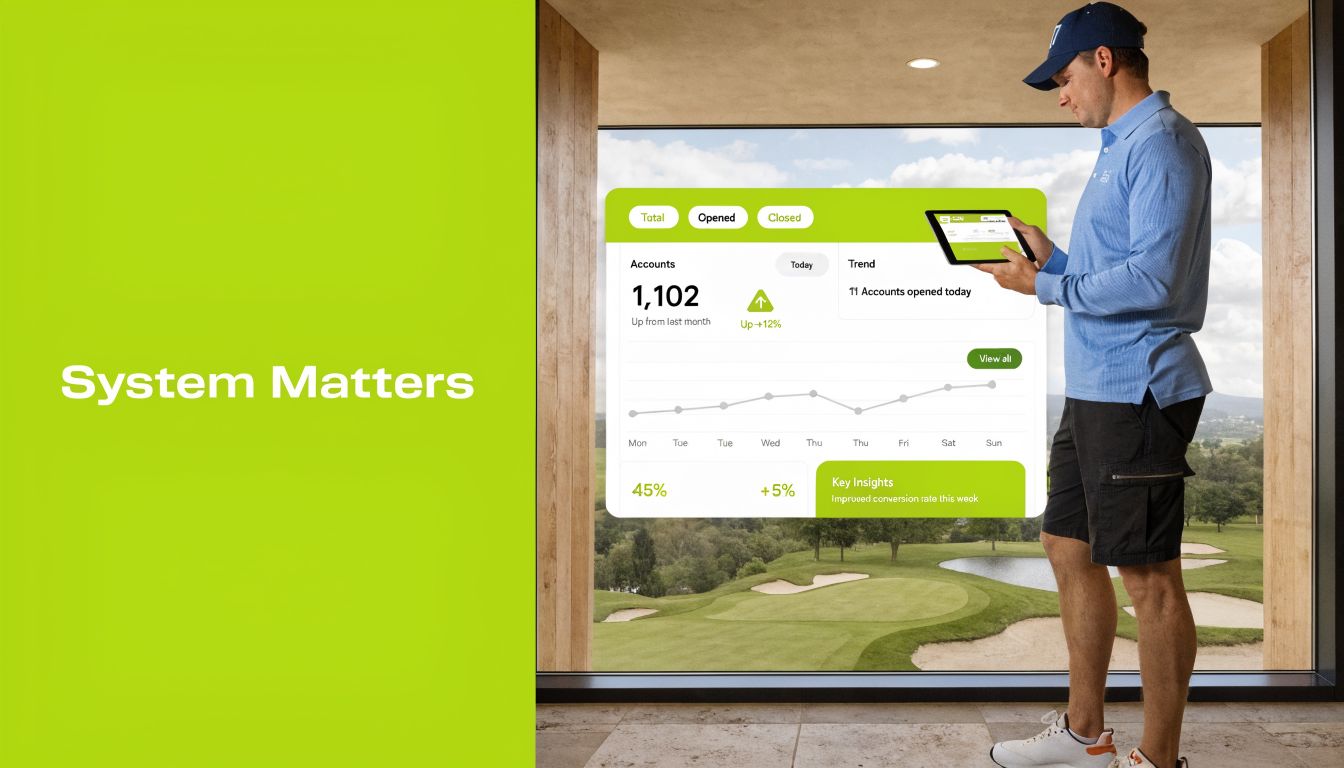
A lot of clubs still judge marketing by the wrong question. They ask, “How many enquiries did we get?” The better question is, “What happened to every enquiry after it arrived?”
That sounds obvious, but in practice it’s where campaigns stall. An enquiry lands in a Facebook form or inbox. It gets emailed to a shared address. Someone at the club sees it later. Then they mean to reply, or they call when they have time, or they wait for the membership secretary to come in. By then the prospect has gone cold, joined another club, or just moved on.
The ad is only the trigger
Facebook is good at generating local attention when the campaign is built properly. In the wider Sports & Recreation category, the average Facebook ad conversion rate was 5.48% in 2025, according to AdBacklog’s Facebook ad benchmarks. That matters because it shows the platform can produce action, not just views.
But those conversions are only the start of the pipeline.
If your club has no reliable way to see every lead, assign ownership, follow up quickly, and track progress, the ad account won’t save you. The platform can deliver prospects. It can’t make your staff call them back, log outcomes, or chase a visit.
Practical rule: If a club can’t answer “who contacted this lead, when, and what happened next?” it doesn’t yet have a scalable advertising system.
What breaks after the click
The most common failure points aren’t creative issues. They’re operational.
- Slow response times: A prospect submits a form while they’re interested. If the club waits, intent fades.
- Poor lead visibility: Enquiries sit in email inboxes, spreadsheets, or individual phones.
- No follow-up sequence: One missed call often becomes the end of the process.
- No attribution: The committee sees spend, but nobody can link the campaign to visits, trials, or memberships.
This is why clubs often say Facebook leads are poor quality when the underlying problem is that the club had no structured process to handle them.
Predictable growth needs a pipeline
A proper system does three things. It captures the enquiry, responds immediately, and keeps the lead moving until there’s a clear outcome.
That usually means a CRM, automated email or SMS acknowledgement, task assignment, and a defined follow-up sequence. It also means the club can separate raw leads from qualified opportunities. Those are not the same thing.
The click matters less than the handover. A decent ad with excellent follow-up will usually outperform a brilliant ad with no process behind it.
For golf clubs, this is a shift in thinking. Facebook ads shouldn’t be treated as a one-off promotion. They should be treated as the front end of a membership pipeline.
Targeting Your Ideal Future Members on Facebook

Bad targeting makes clubs think Facebook doesn’t work. Good targeting makes the same budget look far more efficient.
For UK golf clubs, the most practical starting point is local, specific, and selective. A proven methodology is to target ages 35 to 65, layer interests such as golf courses and PGA, set a 50km radius around the club, and exclude current members using CRM uploads. Combined with lead generation objectives, that approach can produce a 2.53% CTR, which is 61% higher than standard traffic campaigns, according to Focus Digital’s 2025 CTR benchmark data.
Start with geography and member fit
Most clubs don’t need broad national reach. They need the right people within realistic travelling distance.
That means beginning with catchment, not interest targeting. Draw the radius around the club postcode first. Then think about who is commercially valuable to attract within that area. Not every golfer is the same prospect. Some want a trial round. Some want flexible membership. Some are comparing multiple clubs. Some are price shopping and won’t convert at your fee level.
A sensible audience build often includes:
- Core local audience: People within travelling distance who fit the club’s likely member age range.
- Interest-layered audience: Prospects with signals such as golf courses or PGA-related interests.
- Household lifestyle angle: For clubs selling more than golf, family, dining, and social appeal can matter just as much as handicap.
For a broader look at why this channel suits membership campaigns, GolfRep’s guide to why Meta ads work so well for golf club membership campaigns is useful background.
Exclude the wrong people on purpose
A lot of wasted spend comes from showing membership ads to existing members, staff, or people with no realistic intent.
The easiest fix is Custom Audiences. Upload your current membership database and exclude those people from prospecting campaigns. This saves budget and cleans up reporting. If an existing member clicks out of curiosity, that activity can distort performance and make a campaign look busier than it really is.
There’s another advantage. Once your current members are grouped properly, you can segment them by category. Full members, flexible members, academy participants, visitors who’ve played recently, and lapsed contacts all tell Facebook something different about the kind of person your club attracts.
Use lookalikes carefully
Lookalike Audiences can help, but only if the source data is sound. If the seed audience is mixed, outdated, or full of low-value contacts, the lookalike will reflect that.
A better approach is to build lookalikes from your best member types, not your entire database. For example, clubs often get stronger results when they model from engaged, retained members rather than everyone who has ever filled out a form.
Broad targeting usually feels safer because it reaches more people. In golf club Facebook ads, it usually just reaches more irrelevant people.
A simple targeting framework
Use this as a working structure:
| Audience layer | What to include | Why it matters |
|---|---|---|
| Local base | Catchment radius around club | Keeps the campaign commercially realistic |
| Demographic fit | Likely membership age bands | Improves relevance |
| Golf intent | Interests such as golf courses and PGA | Filters for genuine interest |
| Exclusions | Existing members from CRM | Reduces waste |
| Expansion | Lookalikes from strong member segments | Finds similar prospects |
The goal isn’t to make the audience as large as possible. The goal is to make it useful.
Designing Ad Creatives That Generate Qualified Leads
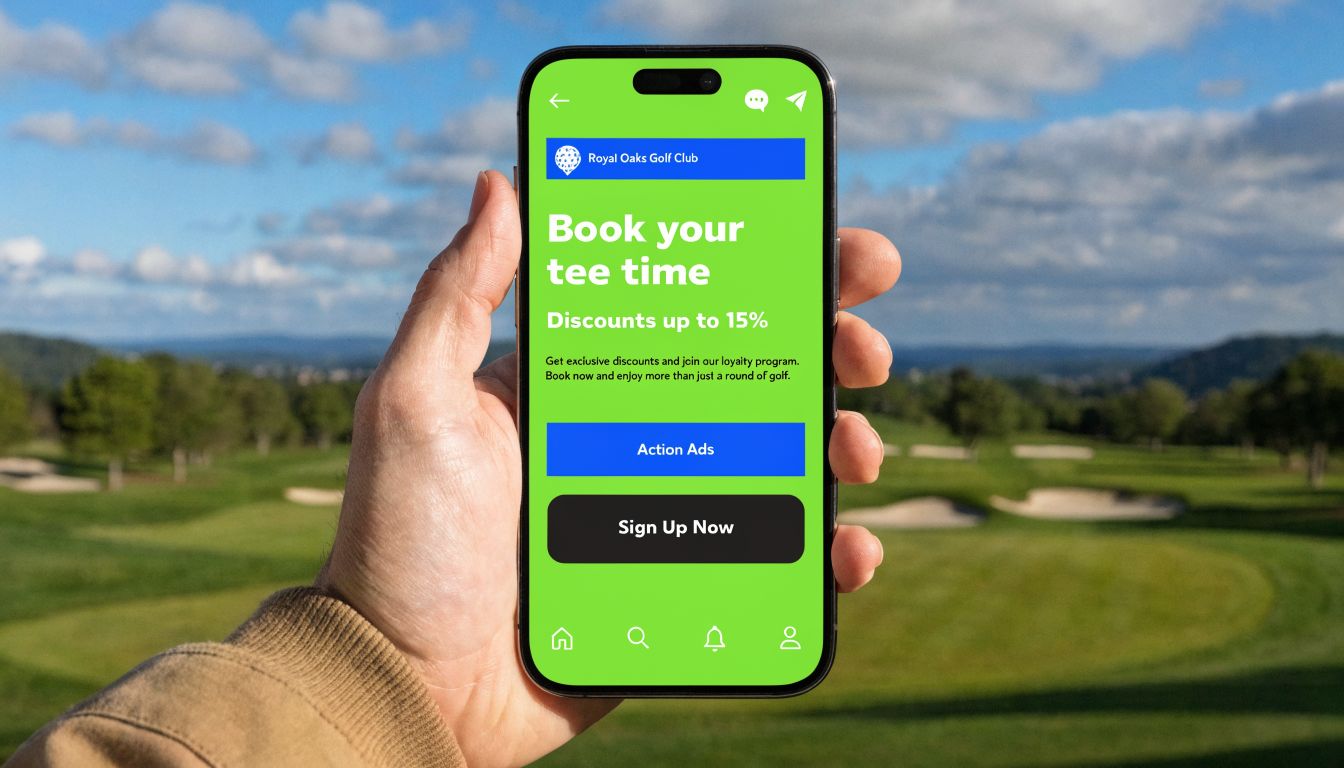
Most golf clubs already have attractive photos. That isn’t the same as having effective ad creative.
A polished image of the 18th green might look excellent on the club website or in a brochure. In a paid campaign, it often does very little on its own. People need a reason to stop, understand the offer, and take the next step.
Beauty shots don’t qualify intent
The strongest creative usually ties the club to a decision. Why should this person enquire now? Why should they choose your club over the one ten minutes away? Why should they believe membership would fit their life?
That’s why short videos and simple proposition-led ads tend to outperform vague brand-led posts. Useful examples include:
- A short course flyover video with a clear invitation to book a trial round or visit
- Member testimonial clips that answer objections about friendliness, flexibility, or value
- A specific open day or membership discovery event with a direct response form
- A club lifestyle angle showing golf, food, coaching, and social life together
Good creative doesn’t try to say everything. It gives the right person enough clarity to raise a hand.
Engagement can be a trap
Many clubs still boost posts because they want likes, comments, and shares. That often leads to the wrong kind of response. You get passive engagement rather than genuine buying intent.
There’s also a deeper issue. As noted by 19th Hole Media’s piece on Facebook marketing for golf courses, many clubs fall into an engagement trap. Promotional content often underperforms, and there’s little hard data on which non-promotional content types effectively drive membership enquiries. That means clubs need to test options like member stories or course condition updates instead of assuming generic sales posts will convert.
Likes don’t pay subscriptions. A lead form completed by the right prospect is worth more than a busy comment section full of existing members.
A practical way to think about creative is to separate attention content from conversion content. Attention content earns the stop. Conversion content earns the enquiry. Sometimes the same ad can do both, but often clubs need a mix.
For a more detailed view of paid campaign structure, GolfRep’s article on golf club paid advertising adds useful context.
What to test instead
The clubs that learn fastest test angles, not just images. They compare message against message.
Try testing themes such as:
New member confidence
Focus on how welcoming the club feels to someone joining without an existing network.Lifestyle value
Show that membership includes more than access to the course.Playing quality
Use real visuals of the course condition, not stock-style perfection.Progress and coaching
Useful for clubs where lessons, practice, and development are part of the proposition.Trial or visit-first messaging
Lower the pressure. Ask for a visit or trial before asking for a full commitment.
The best ads make the next step easy
A strong golf club Facebook ad usually includes four parts:
| Element | What good looks like |
|---|---|
| Visual | Real club footage or member-led content |
| Headline | Clear and specific, not vague branding |
| Copy | Short, plain English, focused on one decision |
| CTA | A direct next step such as enquiry, visit, or trial |
The ad’s job is not to close the sale. It’s to start a conversation with the right prospect.
Budgeting and Measuring Your Campaign for True ROI
How much should a golf club spend on Facebook ads? The honest answer is whatever the club can track properly from enquiry to membership.
Budget only makes sense when it sits inside a working conversion process. I have seen clubs spend a modest amount and get very little back because enquiries sat in an inbox for days. I have also seen clubs spend more, follow up fast, qualify properly, and turn the campaign into a predictable source of visits and joiners. The difference was never the ad account alone.
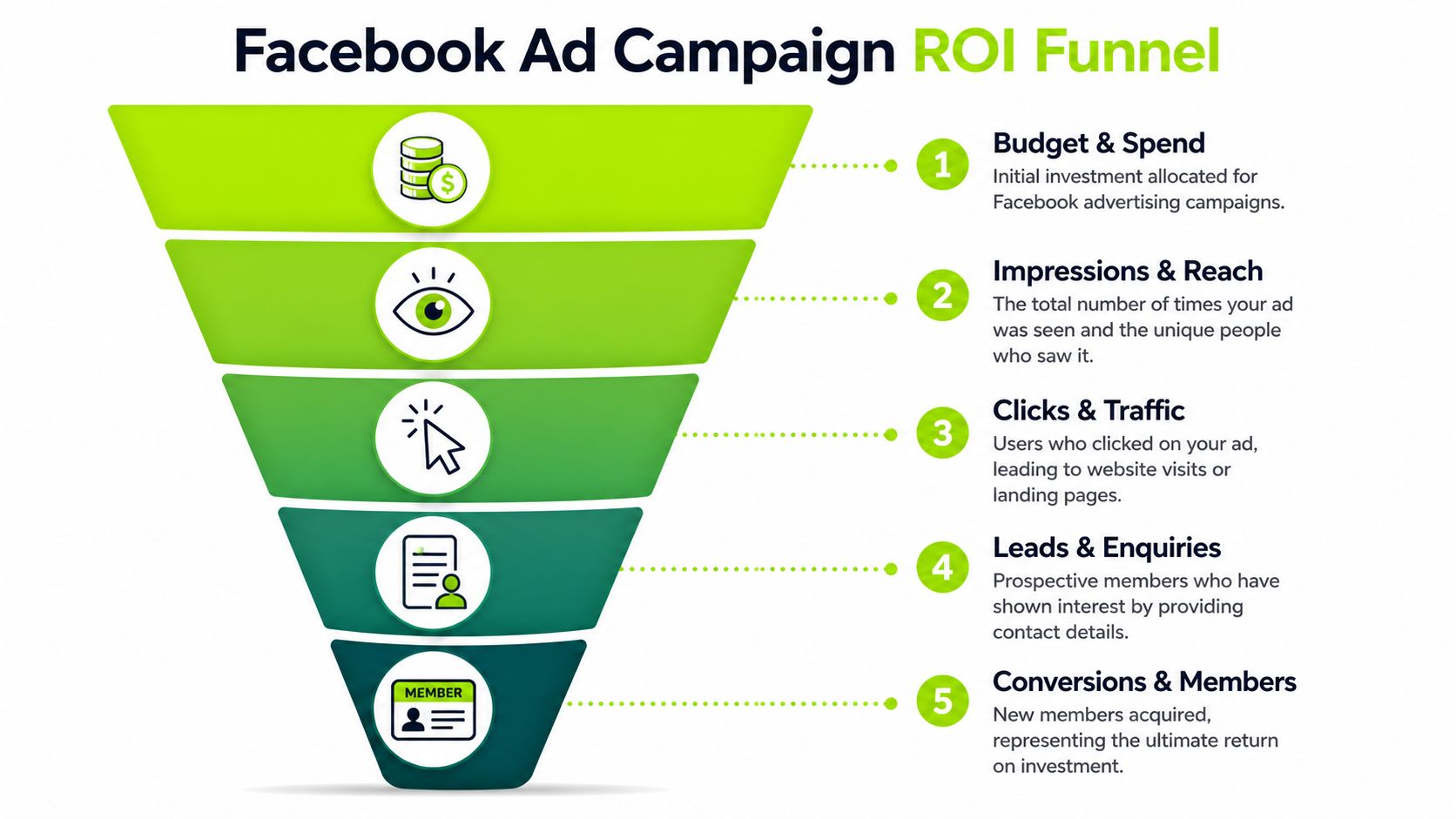
Start with commercial maths, not platform metrics
A club does not need a huge budget to begin. It needs a clear idea of what a new member is worth, how many enquiries usually become visits, and how many visits usually become joiners.
That changes the budgeting conversation. Instead of asking whether £20, £50, or £100 per day sounds reasonable, ask how many qualified membership conversations the club needs each month and what it can afford to pay to create one. That gives the campaign a commercial target, not just a media target.
For clubs that want to tighten this stage, AI lead qualification for golf clubs can help sort serious prospects from low-intent enquiries before staff spend time chasing them.
Measure the handoff, not just the form fill
Facebook is good at generating response. Clubs still lose money after the click if they cannot answer basic operational questions:
- How many leads were contactable?
- How many replied after the first follow-up?
- How many booked a visit, trial round, or meeting?
- How many joined?
- How long did that take?
These numbers show where the constraint sits. If leads are coming in but nobody is booking visits, the issue is usually follow-up speed, message quality, or weak qualification. If visits are happening but memberships are not closing, the issue sits further down the sales process.
CPL matters, but it is not the decision-maker
Cost per lead is useful for spotting efficiency trends. It is a poor way to judge campaign value on its own.
A cheaper lead can create more admin, more chasing, and fewer serious conversations. A more expensive lead can produce stronger fit, better attendance, and more membership revenue. Boards care about acquisition cost tied to actual members, not a low headline CPL that never turns into income.
A practical reporting view looks like this:
| Metric | What it tells you | Why it matters |
|---|---|---|
| CPL | Cost to generate an enquiry | Useful for media efficiency, but limited |
| Cost per qualified lead | Cost to generate a real sales opportunity | Shows whether targeting and messaging are attracting the right people |
| Cost per booked visit or trial | Cost to create a meaningful next step | Exposes whether follow-up is working |
| Cost per member | Cost to acquire actual membership revenue | The number that supports confident budget decisions |
Set a budget that gives you enough data to act
Underfunded campaigns create noisy results. Overfunded campaigns waste money if the club has not fixed what happens after the lead arrives.
The better approach is controlled testing. Run enough budget to generate a meaningful sample of enquiries, then review what happened beyond the form. If one audience produces fewer leads but more visits, that audience usually deserves more spend. If one offer drives volume but poor response quality, cut it or rewrite it.
That is how clubs get to true ROI. They stop treating Facebook ads as a lead count exercise and start measuring the full path from spend to signed member.
Building Your Automated Lead Conversion Engine
A Facebook lead form should trigger a process, not create admin.
If the form submission arrives and then waits for someone to notice it, the club has already introduced friction. The cleaner approach is to route every new lead straight into a structured workflow.
What should happen immediately
The first stage is simple. A prospect fills in the form. Their details should move into a CRM automatically. That can be done through native integrations, platform connectors, or tools such as Zapier, depending on the stack the club already uses.
Then the system should do three things at once:
- Send an immediate acknowledgement so the prospect knows the enquiry was received.
- create a task or notification for the right team member.
- log the source so the club knows the lead came from Facebook and can track the eventual outcome.
That first response doesn’t need to be fancy. It needs to be clear, timely, and relevant. If the person asked about membership, don’t send a generic club newsletter. Send a message that confirms the enquiry and sets expectation for the next step.
Build for staff reality, not ideal conditions
Many clubs operate with lean teams, split responsibilities, and busy front-of-house staff. That’s exactly why manual follow-up breaks down.
A usable system accounts for that. It should show open leads, recent contact attempts, next actions, and status changes in one place. It should also reduce the chance that a lead gets lost when one person is away or when multiple people assume someone else has handled it.
Useful status stages often include:
- New enquiry
- Attempted contact
- Spoken to
- Visit or trial booked
- Considering
- Joined
- Closed lost
This is where a dedicated golf club setup matters. GolfRep’s approach to AI lead qualification for golf clubs is one example of a system designed to help clubs route and qualify enquiries without relying on manual chasing alone.
Fast follow-up matters, but visibility matters just as much. Clubs need to know which leads are waiting, which are active, and which have gone quiet.
Nurture the leads that aren’t ready yet
Not every prospect will join after one call. Some are researching. Some are waiting for the season to change. Some are comparing your club with others nearby.
That doesn’t make them poor leads. It means the club needs a nurture sequence.
A simple nurture flow usually includes a small number of messages spread over time. The content should answer real buying questions. What kind of members join. What the atmosphere feels like. How flexible the options are. What happens if they want to visit first. Why the club might suit their routine or family life.
Tracking closes the loop
The final step is the one most clubs miss. Every lead outcome should be written back into the CRM so the club can see which campaigns, audiences, and messages produced membership revenue.
Without that, reporting stays superficial. With it, golf club Facebook ads become measurable and repeatable.
Frequently Asked Questions About Golf Club Facebook Ads
The practical objections are usually sensible. Most clubs aren’t asking whether Facebook works in theory. They’re asking whether it will work in their club, with their team, and with the way they currently operate.
FAQ on Golf Club Facebook Advertising
| Question | Answer |
|---|---|
| Should a golf club run Facebook ads if it doesn’t have a CRM? | It can, but it probably shouldn’t until lead handling is organised. Without a CRM or equivalent system, enquiries get scattered across inboxes, notes, and staff memory. That makes follow-up inconsistent and ROI hard to prove. |
| Are Facebook leads low quality? | Some are. Many aren’t. Quality usually depends on targeting, offer, and follow-up. Clubs often blame the lead when the real issue is weak contact process or poor qualification. |
| Is it better to use a Facebook lead form or send people to the website? | It depends on the objective and the club’s setup. Lead forms reduce friction. Website journeys can offer more context. The right choice is the one your club can track and follow up properly. |
| Should we boost posts instead of building proper campaigns? | Usually no. Boosting is easy, but it gives the club less control over objective, audience structure, exclusions, and measurement. Proper campaign setup is more useful when membership growth is the goal. |
| What kind of offer works best? | Clear next steps work better than vague branding. Trial rounds, open days, club visits, and membership enquiry campaigns tend to create more useful intent than generic awareness messaging. |
| Can committee-run clubs manage this internally? | Yes, if responsibilities are clear. Someone must own the lead pipeline, monitor response, and update outcomes. If ownership is blurred, campaigns tend to underperform no matter how good the ad is. |
| Do likes and comments matter? | They matter less than clubs think. Engagement can be helpful if it supports trust and relevance, but it isn’t the commercial goal. The main job is generating and converting qualified enquiries. |
| How long should a club test golf club Facebook ads before judging them? | Long enough to gather real operational feedback, not just ad account data. If the club hasn’t tracked lead handling and sales outcomes, it’s too early to make a fair judgement. |
| What if the club already gets enquiries from its website? | That’s useful, but it doesn’t replace paid demand generation. Facebook can create additional pipeline and also feed remarketing or nurture activity if the club has proper tracking in place. |
| Who should handle the leads once they come in? | The person most able to respond consistently and move the prospect forward. In some clubs that’s the membership manager. In others it may be the general manager, golf operations, or a centralised sales function. The key is ownership, not job title. |
A club doesn’t need a complicated marketing department to make this work. It needs a disciplined process.
If there’s one point worth keeping, it’s this. Facebook ads are not the growth system. They are one input into the growth system. The clubs that win are the ones that can see every enquiry, respond quickly, follow up properly, and measure what became revenue.
If your club wants a clearer way to turn enquiries into a predictable membership pipeline, GolfRep helps build the lead generation, follow-up, and CRM process around that goal.
Ready to tap into our proven growth system?