Golf Kingdom Romford: Growth Strategies for Club Managers

Most commentary on Golf Kingdom Romford treats it as a consumer choice. Is it good for families, is the range fun, is the course suitable for a casual round. That framing misses the point for club managers.
The more useful question is this. What happens when a local operator builds a venue that is deliberately inclusive, affordable and broad enough to attract golfers, non-golfers, juniors and families at scale. For a traditional club, that isn't a side story. It's a competitive signal.
Golf Kingdom Romford matters because it shows how modern golf businesses can widen the top of the funnel far beyond the usual membership enquiry. It also exposes the harder truth that many clubs still avoid. The biggest growth constraint usually isn't demand. It's what happens after the enquiry arrives.
Beyond the Driving Range A New Competitor
A lot of clubs still dismiss leisure-led venues as irrelevant to membership golf. That's a comfortable assumption, but it's increasingly hard to defend.
Golf Kingdom in Romford, Essex opened in June 2017 and transformed what had been a simple driving range into a much larger operation, expanding into the UK's largest Adventure Golf facility and a new 18-hole golf course. It was designed to be inclusive, affordable and fun, which helped establish a new standard for leisure golf in the UK, according to the Golf Kingdom project overview by Weller Designs.
That matters because inclusivity isn't only a brand position. It's an acquisition strategy.
Why club managers should take it seriously
A venue like Golf Kingdom doesn't rely on one audience. It draws in the committed golfer, the occasional range user, the family looking for an activity, the junior player, the beginner and the non-golfer who may never have considered entering a traditional clubhouse. That's a much wider front door than most private clubs operate.
The original site was founded by PGA professional Alan Walker and later evolved under American Golf ownership into a refurbished leisure complex with an 18-hole course, a 25-bay driving range equipped with Toptracer and a wider mix of facilities, as outlined by Golf Features. For club managers, that combination is the point. It creates repeated reasons to visit before someone ever considers membership.
Traditional clubs often ask how to generate more enquiries. Competitors like Golf Kingdom show that the better question is how many entry points your business gives people before they enquire at all.
The real lesson sits upstream
Most clubs still organise growth around a narrow offer set. Membership, green fees, maybe lessons. Golf Kingdom's model suggests that modern demand is often built one casual interaction at a time.
That's why the most useful takeaway isn't “build an adventure golf course”. It's to understand how broad-access facilities create a constant flow of interest across different products, then capture that attention over time. Clubs that want to study this shift properly should look closely at the rise of the digital driving range model in golf, because technology-led practice environments have changed who walks through the gate, how often they return, and what data a club can collect from the visit.
Deconstructing the Golf Kingdom Business Model
Traditional clubs often misread competitors like Golf Kingdom because they judge the venue by course quality first. The sharper analysis starts with demand capture. Golf Kingdom is built to collect different forms of local leisure intent, then convert part of that traffic into higher-value golf activity over time.
That distinction matters.
A member-led club usually asks a prospect to make a relatively high-commitment decision early. Golf Kingdom asks for a much smaller first yes. Practice session. Family activity. Casual round. Lesson. The commercial advantage is not just volume. It is the ability to meet customers at different levels of confidence, spending power, and golfing identity.
Six routes into one venue
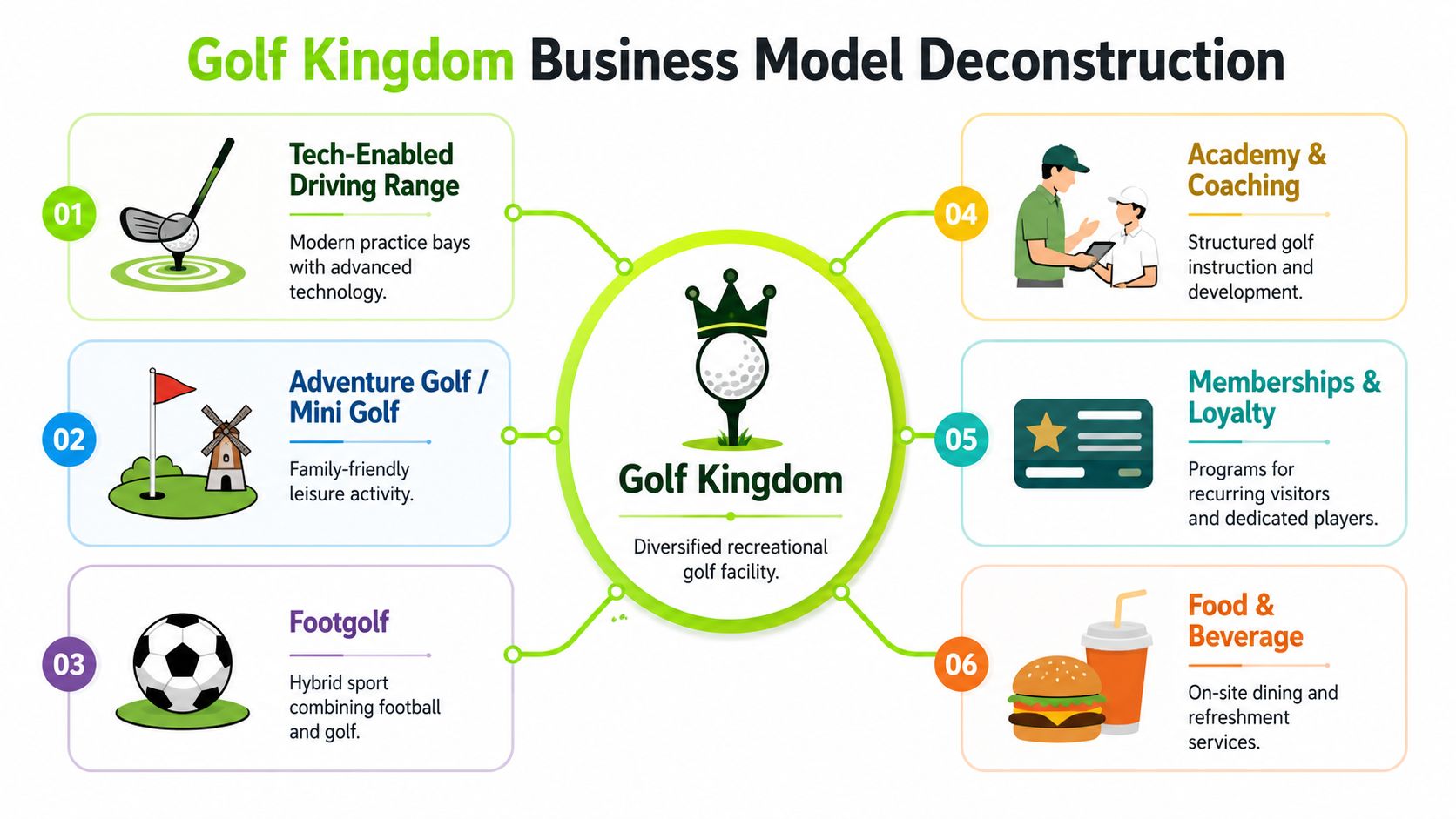
The operating model is broad by design. Each product attracts a different customer need, but the wider commercial value comes from overlap between them.
| Offer | Likely audience | Strategic role |
|---|---|---|
| 18-hole Masters course | Golfers seeking a full round | Maintains golfing credibility and supports traditional play demand |
| 25-bay floodlit driving range | Regular practisers, after-work visitors, beginners | Generates frequent visits with lower commitment than a tee booking |
| Toptracer-enabled bays | Data-focused golfers, younger users, social groups | Adds measurable engagement and extends appeal beyond core golfers |
| Adventure golf | Families, children, non-golfers | Introduces the venue to households that would not start with golf membership |
| Footgolf | Parents, juniors, mixed groups | Creates another low-barrier entry point into the site |
| Retail and wider leisure features | Existing visitors on-site | Increases average spend and lengthens on-site engagement |
The strategic lesson for club managers is easy to miss. These are not six isolated revenue lines. They are six acquisition channels sharing one physical site, one local catchment, and potentially one customer database.
That is why the model is stronger than it first appears. A venue with an 18-hole course, Toptracer range, adventure golf, footgolf, coaching, and events can serve serious golfers and casual visitors without forcing either group into the same buying journey. Golf Kingdom's own venue pages show this multi-activity positioning clearly across golf, range, coaching, and family-focused offers on the Golf Kingdom website. For a club manager, the commercial question is not whether every product has equal prestige. It is whether each product creates another permission to start a relationship.
A broad funnel changes the economics of conversion
Most traditional clubs still organise sales around the final product. Membership sits at the centre, with practice, casual play, and lessons treated as side income. Golf Kingdom reverses that logic. Entry-level activity feeds the database, and the database creates future sales opportunities.
That makes lead management far more important than many clubs assume. If a venue attracts visitors through several low-friction offers, enquiry handling cannot stay informal. Staff need to know whether a range user also booked a lesson, whether a parent who visited for adventure golf later asked about junior coaching, and whether casual golfers are showing repeat behaviour that signals membership intent. This is the same operational weakness examined in our guide to how most golf clubs lose 30% of enquiries without realising.
What many clubs still underestimate
The primary competitive threat is not that Golf Kingdom offers more activities. It is that the business model is designed around customer progression.
A private club can still win on course quality, heritage, and member experience. But if it only markets the end state, it gives up too much ground at the start of the funnel. Golf Kingdom shows how local golf demand increasingly behaves in the UK market. More consumers begin with flexible, pay-as-you-go, socially acceptable entry points before they commit to formal club affiliation.
For club managers, the takeaway is practical. Product range matters. Process matters more. A broader offer creates more leads only if the club can identify, track, and convert movement from casual use into committed value.
The Hidden Challenge of High-Volume Enquiries
The wider the funnel, the greater the strain on operations.
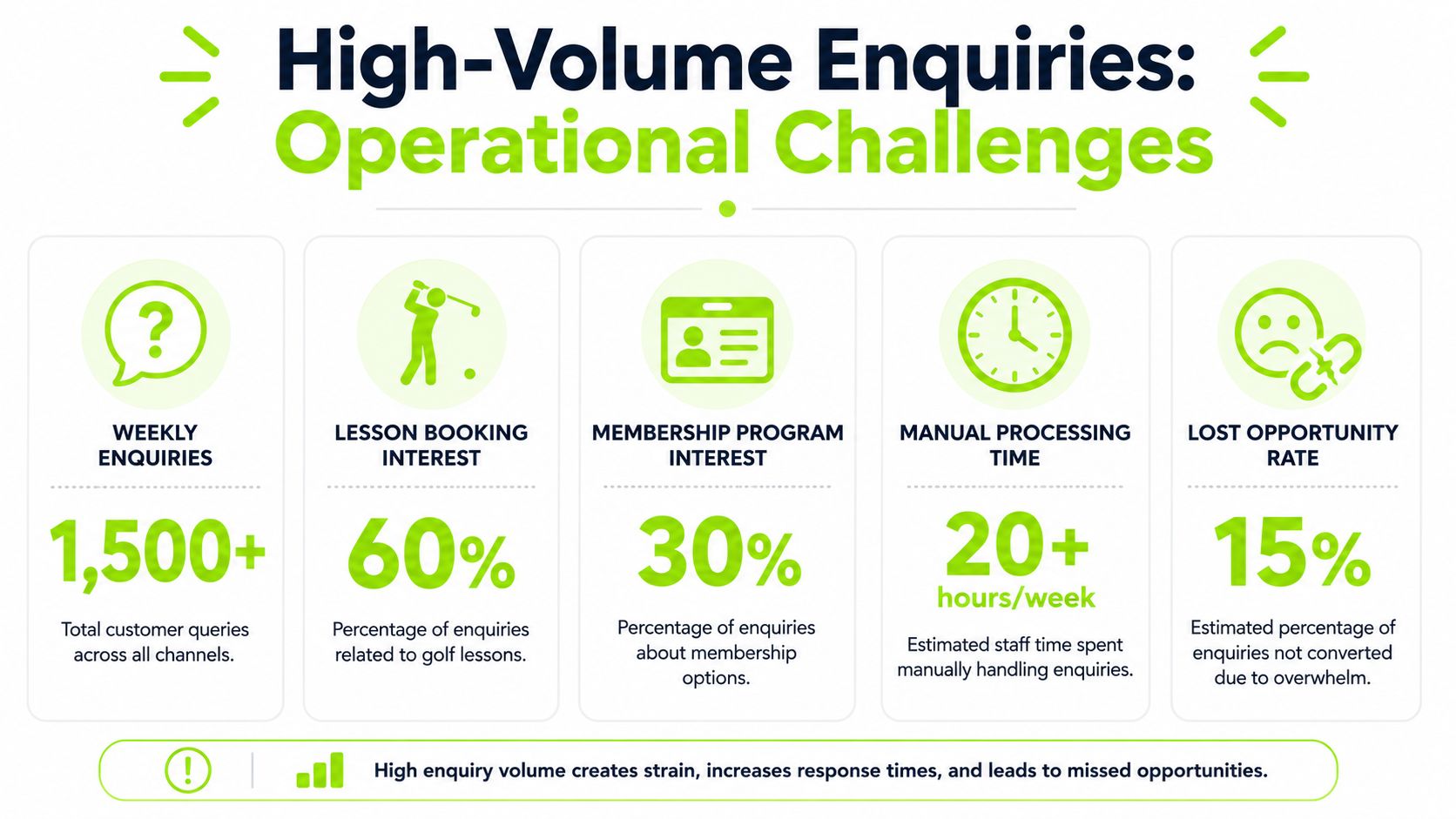
A venue with lessons, range traffic, casual play, parties, family bookings and membership interest doesn't just generate revenue opportunities. It generates administrative pressure. Enquiries arrive through forms, calls, walk-ins, social messages and staff conversations. That's where many clubs lose control.
Speed shapes outcomes
The most important operational number in lead management is often response time, not enquiry count.
A lead that receives a response within one hour is five times more likely to convert than one that waits 24 hours, based on golf club response time and conversion data from CRM.Golf. Yet the average response time for new membership enquiries at UK golf clubs remains 30 hours, with faster response consistently linked to stronger conversion rates, according to The Revenue Club.
That gap explains a lot of underperformance in the sector.
If a club manager says demand is weak, the first question shouldn't be how many leads the club generated last month. It should be how quickly each lead received a useful, trackable response, and whether anyone can see what happened next.
Manual follow-up breaks first
High-volume models expose the weakness of manual systems faster than low-volume ones do. A spreadsheet, a shared inbox and somebody's memory can survive when enquiries are occasional. They fail when demand becomes uneven, multi-channel and time-sensitive.
That's why clubs should treat lead handling as an operational system, not a front-desk task.
- Inbox dependence: Messages sit in email accounts that nobody fully owns.
- No lead visibility: Managers can't see which enquiries were answered, chased or lost.
- Weak follow-up discipline: Staff respond once, then move on when the prospect doesn't reply immediately.
- No conversion tracking: The club knows a lead came in, but not whether it became a visit, lesson or member.
A practical diagnosis starts with the same issue covered in GolfRep's analysis of how golf clubs lose enquiries without realising it. Most leakage doesn't come from poor advertising. It comes from delays, inconsistency and the absence of a proper process after the initial contact.
Clubs don't usually have a lead generation problem in isolation. They have a lead handling problem disguised as a demand problem.
Systematising the Path From Range User to Member
Traditional clubs often underestimate the commercial threat from venues like Golf Kingdom because they measure the wrong unit. The relevant unit is not a bucket sale or a single range booking. It is the cost and probability of moving a casual user into lessons, repeat visits, and eventually a higher-yield relationship.
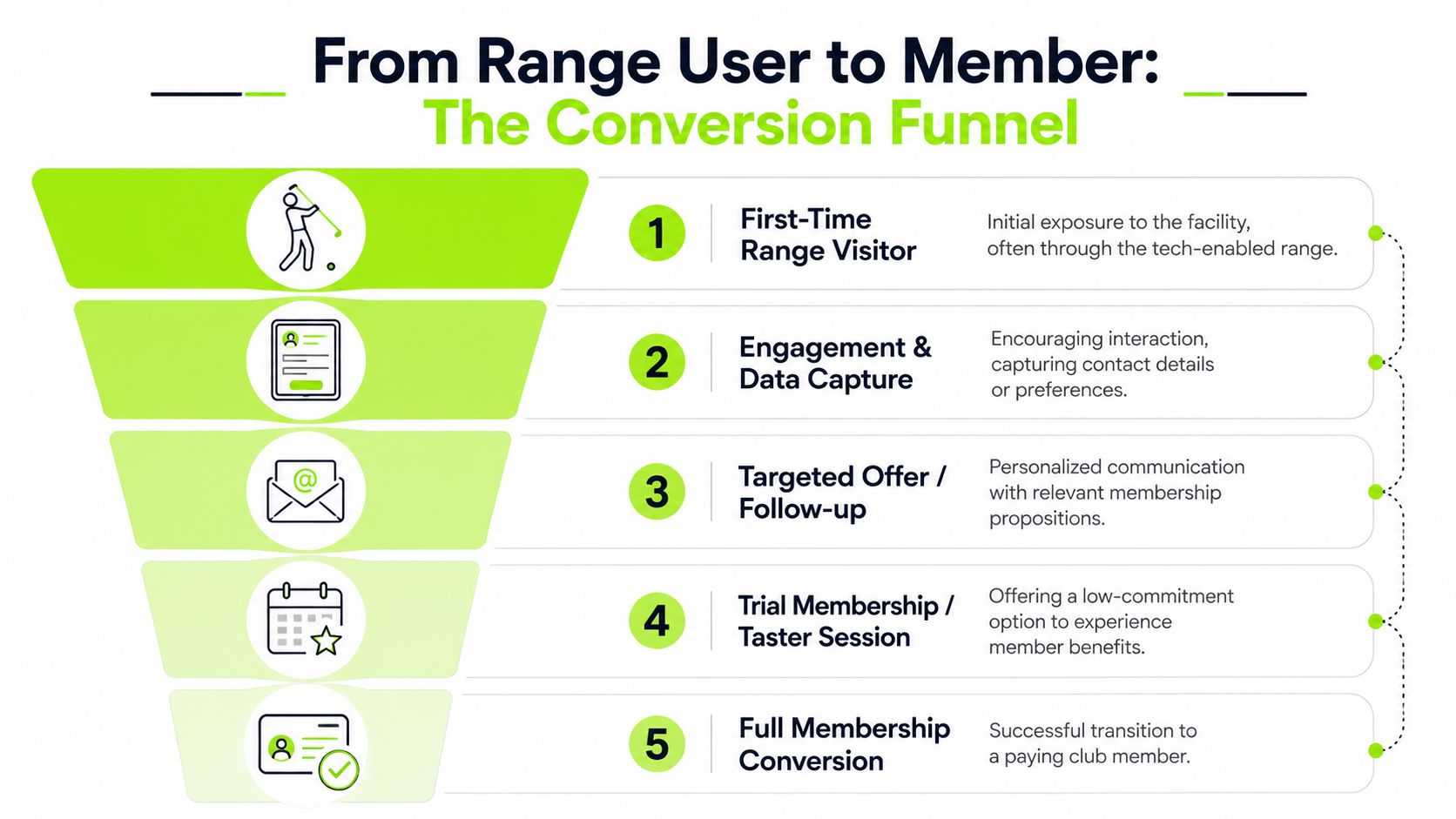
That distinction matters because leisure-led operators tend to create more trackable entry points than member-led clubs. Bay bookings, lesson enquiries, junior activity, social offers, and beginner sessions all generate intent signals. A club manager who can see those signals can assign priority, trigger relevant follow-up, and measure conversion by stage rather than relying on anecdote from the shop or reception.
The strategic lesson from Golf Kingdom is straightforward. High-frequency, low-commitment activity gives operators more chances to identify who is warming up to the game. Traditional clubs often have the opposite profile. Fewer early touchpoints, weaker data capture, and too much dependence on staff remembering who asked about beginner options three weeks ago.
Behaviour should determine the next action
A systemised pathway starts with a basic operational principle. Different behaviours should produce different responses.
Someone who books a bay once and never returns is not the same as someone who books twice, clicks a lesson page, and opens an email about group coaching. Those are not just contacts. They are leads at different temperatures, and they should sit in different workflows.
A workable progression model usually looks like this:
Capture the first interaction clearly
Bay booking, taster session registration, lesson enquiry, or form submission should create a usable contact record.Tag intent based on behaviour
Repeat attendance, coaching interest, junior enquiries, and event engagement should sort prospects into categories the team can act on.Send the next relevant offer
The right next step might be a beginner class, a six-week lesson plan, a social academy, or a trial membership.Give staff a visible pipeline
Managers should be able to see who has been contacted, who has booked, who has gone quiet, and who needs another follow-up.Review conversion by stage
The club should know which source produces visits, which visit types lead to coaching, and which coaching journeys produce membership conversations.
This is basic revenue operations, not advanced marketing.
For clubs still relying on inbox chains and paper notes, even the first layer of process improvement can change outcomes. Clean online capture through tools such as job and membership forms reduces friction at the point where interest first appears and makes later follow-up easier to audit.
Why many clubs fail at the middle of the funnel
The weak point is rarely awareness. It is progression.
Many clubs can generate an enquiry, especially if they have a decent location, coaching offer, or practice facility. The leakage happens after first contact, when no one owns the sequence that should turn curiosity into commitment. A beginner asks about lessons and receives a generic reply. A range user visits three times and is never invited into an introductory programme. A parent enquires about juniors and hears back too late.
That is where the Golf Kingdom model has implications beyond Romford. Across the UK market, off-course and leisure-first venues are training golfers to enter the sport in smaller, lower-risk steps. Clubs that still expect newcomers to jump from interest straight into a membership conversation are working against how demand now behaves.
The operational answer is structured nurture. GolfRep's guidance on AI lead nurture for golf clubs is useful here because it focuses on timing, segmentation, and follow-up discipline rather than broad marketing theory.
Practical rule: If your club cannot show the current status, next action, and owner for each serious enquiry, you do not have a conversion system. You have a collection process.
Analysing Market Gaps and Competitor Weaknesses
Broad appeal creates its own tension. When a venue serves many audiences at once, quality control becomes strategically important.
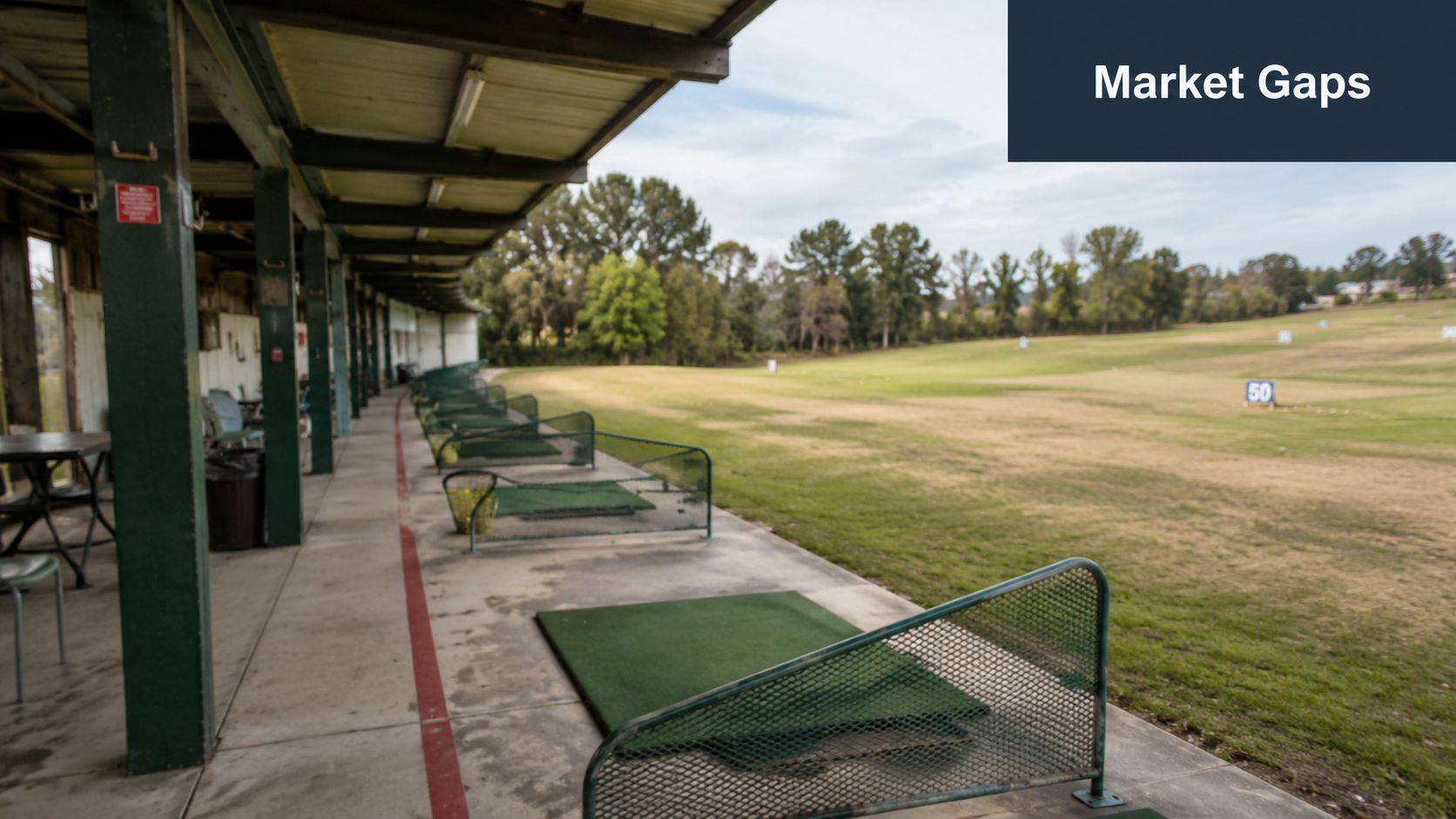
That's where Golf Kingdom also offers a second lesson for club managers. Scale and accessibility can attract people into golf, but they don't always guarantee the best progression environment once someone wants to improve.
Where the mass-market model can struggle
Data from 2026 reviews of Golf Kingdom shows 68% of new learners report that the “greens may not be best” and “tee boxes could do with work” as primary reasons for early drop-off. That matters because 42% of UK beginners abandon golf within three months due to poor facility quality, as cited in Golfshake's Golf Kingdom page.
For a private club, that shouldn't be read as criticism for its own sake. It should be read as market intelligence.
If a leisure-led competitor is strong at attracting first-time users but weaker at supporting confident progression, then the opportunity is obvious. Position your club as the best next step for people who've already shown interest in the game and now want better surfaces, clearer structure and a more consistent learning environment.
Differentiation is operational, not rhetorical
Many clubs try to differentiate with heritage, atmosphere or prestige. Those things matter, but they rarely help a beginner decide what to do next.
A more effective position is practical:
- Surface quality matters: New golfers notice whether greens and teeing areas help or hinder confidence.
- Progression needs clarity: People want to know how to move from trial play to proper improvement.
- Staff consistency matters: The handover between front-of-house, PGA staff and membership teams needs to feel organised.
If your team needs to sharpen that handover, resources such as Viral.new's training insights are useful because they focus on repeatable team execution rather than abstract service slogans.
A competitor's weakness becomes your advantage only when your staff can deliver the better experience consistently.
The best clubs define the next step
Many committee-led clubs still leave money on the table. They assume dissatisfied users from other venues will “find their way” to a better club. Usually they won't.
Clubs need a visible proposition for improvers. Not a generic membership page, but a clear route for the player who has already tried golf elsewhere and is now looking for better conditions, better support and a stronger sense of progression.
Applying These Lessons to Your Club's Growth
Golf Kingdom Romford isn't a template to copy. It's a case study in what happens when a golf business widens access, multiplies entry points and then forces the local market to respond.
The first lesson is commercial. Clubs need more than one front door. The emerging trend of footgolf shows why. Data indicates that 31% of footgolfers transition to traditional golf within six months, and the same source notes that clubs such as Bidston used nurturing footgolf-to-golf flows as part of 127% membership growth, according to the Golf Kingdom Foot Golf listing on Tripadvisor. The underlying point is broader than footgolf itself. Low-barrier activities can feed long-term golf demand when a club has a process to move people forward.
What club managers should do next
A practical response usually comes down to four decisions.
- Review every enquiry source: Range users, lesson prospects, event enquiries, juniors and casual visitors shouldn't sit in separate blind spots.
- Tighten response handling: Fast response isn't a courtesy. It's part of conversion.
- Build a visible pipeline: Each lead should have a clear status, owner and next action.
- Create progression offers: Casual users need a structured next step, not just a generic membership brochure.
Don't confuse activity with a system
Many clubs are busy. That isn't the same as being organised.
The clubs that grow predictably usually do three things well. They capture demand cleanly, follow up quickly, and track what converts. If your prospecting process still feels inconsistent, even outside golf there are useful lessons in expert tips for predictable prospecting, especially around building repeatable outreach habits rather than relying on sporadic bursts of effort.
The final lesson from Golf Kingdom is simple. Modern golf growth doesn't belong only to clubs with the biggest site, the newest range or the broadest entertainment offer. It belongs to operators that can turn interest into a managed journey.
GolfRep helps golf clubs build that journey properly. If your club is generating interest but struggling to see, track and convert enquiries consistently, GolfRep offers a structured growth system built specifically for UK golf clubs, combining lead generation, CRM visibility and follow-up automation to create a more predictable membership pipeline.
Ready to tap into our proven growth system?