Golf Club Membership Marketing: The Complete Playbook

Most advice on golf club membership marketing starts in the wrong place. It tells clubs to buy more attention, post more often, or spend more on ads. That can help, but it usually isn't the main constraint.
The bigger problem is what happens after a golfer raises their hand.
Many clubs already get a steady flow of interest through website forms, email replies, visitor bookings, open days, social messages, and word of mouth. Then the process breaks. The enquiry sits in an inbox. Nobody knows who owns it. A committee member replies late. A prospect asks about flexible options and gets a generic membership PDF. By the time someone follows up properly, the golfer has moved on.
That isn't a lead problem. It's a system problem.
The Real Challenge in Membership Marketing
Golf club membership marketing fails when clubs treat enquiries as isolated admin tasks instead of a managed pipeline. A prospect doesn't experience your internal constraints. They only see whether the club feels organised, welcoming, and responsive.
When follow-up depends on memory, goodwill, or whoever happens to be in the office, good prospects disappear without a trace. That's the leaky bucket most clubs recognise. They invest time and money getting attention, then lose people in the handover between enquiry and conversation.
Why more leads often make the problem worse
If your enquiry handling is weak, increasing ad spend can magnify inefficiency. More forms come in, but visibility drops. Staff become reactive. Notes live in email inboxes, spreadsheets, or on paper. Nobody has a clean view of who asked what, when they were contacted, or whether they ever booked a visit.
That creates three common failures:
- Slow first response: A local golfer enquires while comparing several clubs. The club that replies clearly and quickly usually gets the next conversation.
- No defined ownership: The prospect gets passed between office staff, the pro shop, and management, with no single person accountable for the outcome.
- No structured follow-up: If someone doesn't join immediately, the club assumes they weren't serious. In reality, many golfers need time, reassurance, and a reason to visit.
Practical rule: If a club can't see every live enquiry in one place, it can't manage conversion properly.
The issue isn't that clubs don't care. Most do. The issue is that manual processes don't scale, even at modest enquiry volumes.
The shift that makes growth predictable
Predictable membership growth starts when clubs stop asking, "How do we get more leads?" and start asking, "What happens to every enquiry from the moment it arrives?"
That changes the entire approach to golf club membership marketing. The goal isn't just reach. It's controlled movement through stages: enquiry, response, qualification, nurture, visit, sign-up, retention, referral.
A practical system does four things well:
- Captures every enquiry from every source.
- Responds immediately with useful next steps.
- Tracks progress visibly so nobody gets lost.
- Prompts follow-up until the prospect either joins or opts out.
Clubs that build around those basics stop relying on luck. They create a pipeline they can inspect, improve, and trust.
Attracting High-Value Enquiries Through Smart Targeting
The best membership campaigns don't chase everyone. They focus on golfers who are local enough to use the club, motivated enough to enquire, and suitable for the membership categories you want to grow.
That sounds obvious, but many clubs still run broad activity that generates noise rather than commercial value. A campaign can look busy and still produce weak-fit enquiries. Smart targeting fixes that by aligning message, geography, intent, and offer.

What good targeting looks like
Start with the audience, not the advert. For most clubs, the strongest prospects sit within a realistic driving radius and already show some level of golfing intent. They may be paying visitor green fees, searching for a local club, following local golf pages, or asking about flexible membership.
A practical targeting approach usually combines:
- Google Ads for active intent: This catches golfers already searching for membership, lessons, local clubs, or joining options.
- Meta for awareness and re-engagement: Facebook and Instagram help clubs stay visible to local golfers who may not be searching today but are open to joining.
- Local partnerships: PGA coaching programmes, nearby employers, residential developments, and member-guest activity can all feed stronger enquiries into the same pipeline.
The channel mix matters. Search captures demand. Social shapes preference and keeps the club visible while prospects think it over. That's one reason combined campaigns often outperform single-channel efforts. GolfRep explored that dynamic in more detail in this piece on why Meta ads work so well for golf club membership campaigns.
The case for combined channels
A UK multi-club campaign run from August to December 2023 spent £1,275 across Google and Meta, generated 644 leads at £1.97 per lead, and produced an initial 700% ROAS that scaled to over 2,148% in new membership revenue when both platforms were used together, according to The Revenue Club's membership marketing case study.
That result matters for two reasons. First, it shows that clubs don't always need a huge media budget to create momentum. Second, it shows that the structure behind the campaign matters as much as the creative.
The strongest campaigns don't send traffic to a generic club homepage. They send local golfers to a page built to capture intent and start a follow-up process.
How to improve enquiry quality
High-value enquiries usually come from tighter positioning, not louder promotion. Clubs often improve quality by refining a few practical inputs:
| Focus area | What to tighten |
|---|---|
| Offer | Match the message to a real membership pathway such as full, flexible, beginner, or lifestyle-led options |
| Landing page | Remove clutter. Make the next step obvious and easy |
| Audience filtering | Prioritise realistic catchment areas and likely-fit golfers |
| Tracking | Know which campaign, keyword, or audience actually produced the enquiry |
Good golf club membership marketing doesn't start with volume. It starts with fit. When the targeting is sharp, the follow-up system has something worthwhile to work with.
Automating Lead Response for Total Visibility
Most clubs lose enquiries in the first stretch after contact. Not because the prospect was poor quality, but because the club relied on a manual process that had gaps everywhere.
An automated response system closes those gaps. It doesn't remove the human element. It protects it. Staff still hold the main conversation, but automation handles the parts that should never depend on office hours, memory, or handwritten notes.

What should happen straight away
When someone submits a membership form, asks about joining, or responds to a campaign, the first response should happen immediately. That response doesn't need to be long. It needs to be clear, timely, and useful.
A strong first-touch system does the following:
- Confirms receipt instantly by email or SMS so the golfer knows the enquiry landed.
- Sets expectations about what happens next and who'll be in touch.
- Collects basic qualification data if it wasn't gathered on the first form.
- Assigns the lead to the right person internally.
- Logs everything centrally so the enquiry is visible to management, not buried in someone's inbox.
Without that structure, clubs guess. With it, they manage.
Visibility changes behaviour
The true advantage of automation isn't convenience. It's visibility.
When every enquiry enters a central system, staff can see status, source, notes, tasks, and next actions in one place. Managers can tell which leads are fresh, which are stalled, and which team member needs to act. That makes follow-up measurable.
A lot of clubs still operate without that clarity. They know enquiries are coming in, but they can't answer simple questions with confidence. How many are waiting for a call? How many booked a visit? How many went cold after the first response?
A slow reply can be forgiven once. A disorganised process can't. Prospects read that as a sign of how the club operates.
Tools matter. A CRM with workflow automation, task assignment, and lead-source tracking gives clubs control. Systems like HubSpot can do that. So can a golf-specific setup that combines advertising, automation, and pipeline management. GolfRep's automation approach is built around that idea: capture the lead, trigger immediate follow-up, and make every stage visible.
Manual follow-up isn't a strategy
Manual follow-up still has a place, but only after the system has done the first job properly. Staff should spend their time on qualified conversations, booked visits, and objections that need a human touch.
They shouldn't spend it checking whether a web form was seen, wondering who replied last, or rebuilding the same email every week.
The clubs that improve conversion usually don't become more aggressive. They become more organised.
Nurturing Enquiries into Booked Visits with a CRM
Most membership enquiries don't convert on the first interaction. That's normal. A golfer may be comparing clubs, waiting for a current membership to expire, discussing cost with a partner, or trying to work out whether they would fit in.
If the club only follows up once, then stops, it mistakes delay for disinterest.
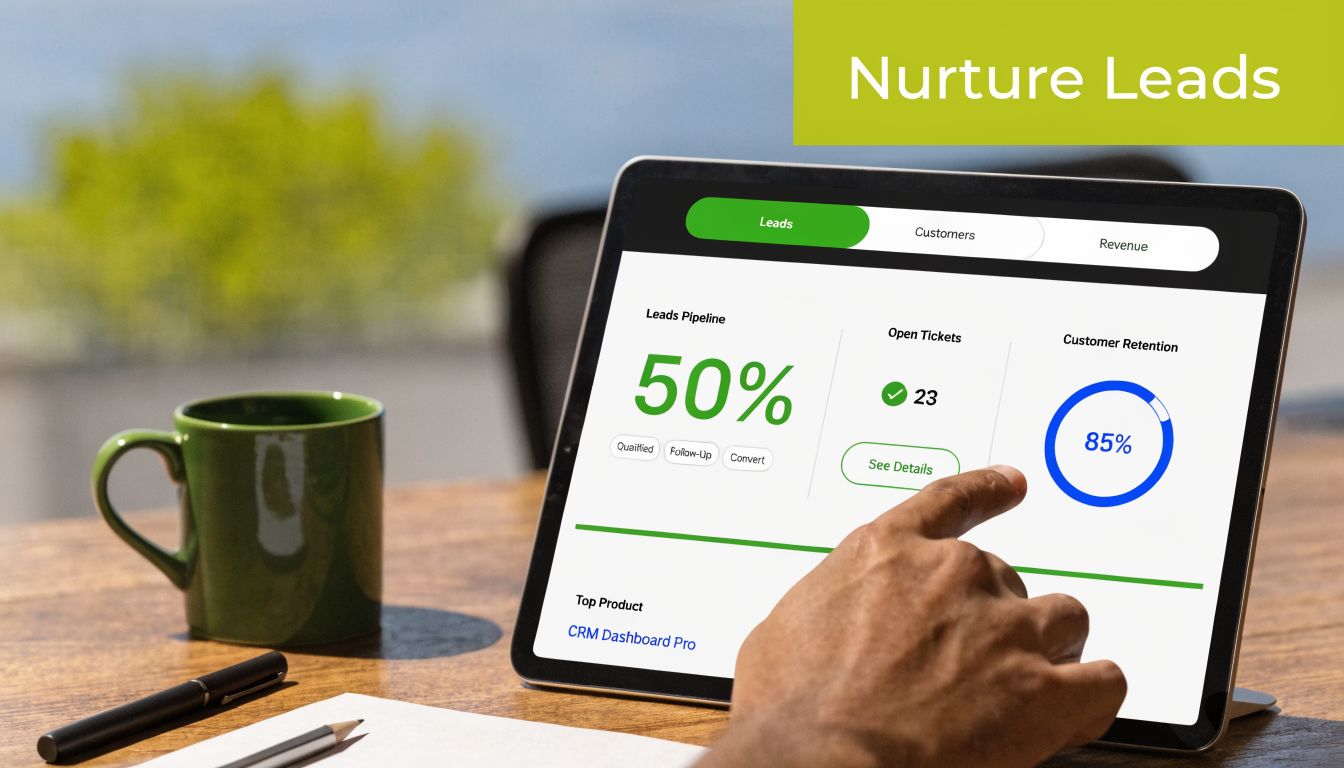
A CRM nurture flow solves that. It keeps the conversation alive without requiring staff to manually remember every prospect, every message, and every next step.
What nurture actually means
Nurture isn't spam. It isn't a stream of hard-sell emails asking if they're ready to join yet. It's a structured sequence of useful contact that helps the prospect move from curiosity to confidence.
That usually includes a mix of:
- Practical information: Membership options, playing flexibility, visitor pathways, and joining process.
- Reasons to visit: Invitations to open days, taster rounds, coaching sessions, or a guided tour.
- Social proof: Stories, photos, and member experiences that show club culture, not just the course.
- Timely prompts: Follow-up messages triggered by behaviour, such as opening an email or clicking a membership page.
The purpose is simple. Stay relevant until the golfer is ready to take the next step.
Why CRM-led follow-up beats ad hoc chasing
Ad hoc follow-up depends on enthusiasm. CRM-led follow-up depends on process. That's why it performs better over time.
Data cited in UK POS coverage on golf club membership systems notes that GolfRep's work with clubs such as Addington Palace showed automated nurture flows can convert up to 3x more enquiries than traditional follow-up, and that AI-qualified leads convert at 28%.
Those numbers underline a practical truth. The value isn't in one clever message. It's in consistency, timing, and qualification.
A simple nurture journey
A good nurture flow feels helpful rather than relentless. For a typical membership prospect, the journey might look like this:
| Stage | Example contact |
|---|---|
| Day one | Confirmation message with a clear contact point and invitation to ask questions |
| Early follow-up | Email explaining suitable membership routes based on playing habits |
| Mid-sequence | Invitation to visit the club, meet staff, or attend an event |
| Later follow-up | Reminder that answers common objections such as flexibility, commitment, or social fit |
A CRM makes that repeatable. It can segment prospects by enquiry type, membership interest, location, or engagement level. It can pause sequences when someone books a visit. It can alert staff when a lead becomes active again. That's a much stronger model than hoping someone remembers to chase a spreadsheet.
For clubs comparing systems, this overview of a golf CRM system is a useful starting point because it frames the CRM as an operational tool, not just a database.
Operational test: If a prospect goes quiet for two weeks, the club should still know exactly where they sit and what message goes next.
When nurture is done properly, more prospects reach the point that matters most. They book a visit.
Mastering the Club Visit and Securing the Sign-Up
By the time a prospect visits, the marketing has already done its job. The club visit is where belief gets confirmed or lost.
Many clubs become too transactional. They show the bar, the locker room, the course map, and the subscription sheet, then wait for a decision. That approach misses what the prospect is evaluating. They're not only judging facilities. They're judging whether this club fits their golf life.

How a strong visit feels
A productive visit is guided, but not scripted. The prospect should feel listened to, not processed.
A good membership conversation usually starts with questions such as:
- How often do you play now?
- What are you missing at your current club or routine?
- Do you mainly play socially, competitively, or a mix of both?
- What matters most to you. Flexibility, competitions, community, practice, or family use?
Those answers change the tour. A competitive golfer wants to understand fixtures and standards. A returning golfer may care more about welcome, coaching, and ease of getting games. A younger member may need clarity on flexibility and value.
The best tour isn't a speech. It's a guided diagnosis that helps the prospect see where they fit.
Selling membership without discounting
Clubs often discount too early because they haven't framed value properly. If the tour is generic, price becomes the only obvious comparison point.
A better approach is to position membership categories as solutions. If someone plays irregularly, show the route that suits that pattern. If they want quick access to games, explain how the club makes that easier. If they're worried about joining alone, talk about roll-ups, introductions, and member integration.
That changes the discussion from "Can we reduce the fee?" to "Which option suits you best?"
A practical visit should include:
- A customized route through the club, based on the golfer's priorities.
- Specific examples of club life, not vague claims about friendliness.
- A clear recommendation, rather than handing over every option and asking them to decide alone.
- A defined next step, such as application, trial arrangement, or follow-up call.
New members can become your strongest lead source
The sign-up isn't the end of the process. It's the start of your next source of growth.
Systematised referral programmes are powerful because new members often join at the moment they're most enthusiastic. According to NGCOA reporting on referral-led growth, cold leads from advertising may convert at around 2.5%, while member referrals can close at 50% or higher.
That doesn't happen by accident. Clubs need a process.
A practical referral model might include welcoming new members properly, inviting them to bring guests, giving them an easy way to introduce interested friends, and recording every referral so nobody is missed. The common mistake is leaving it informal. When clubs say, "Most of our members come through referrals," that's often true, but unmanaged referrals still leak.
The strongest clubs treat the first few weeks of membership as both onboarding and advocacy. If the member feels settled quickly, they're far more likely to bring others with them.
Measuring What Matters for Predictable Growth
Most clubs still measure golf club membership marketing by surface-level activity. Website visits. Form submissions. Social engagement. Those indicators can be useful, but they don't tell management what it really needs to know.
The commercial questions are simpler and tougher. Which campaigns produce qualified enquiries? Which enquiries become visits? Which visits become members? And what does each step cost?
The numbers that matter in practice
A tracked system should let a club see performance through the full pipeline, not in fragments.
The most useful measures are usually:
- Cost per enquiry: What it costs to generate a genuine expression of interest.
- Cost per booked visit: What it costs to move that interest into an in-person sales opportunity.
- Cost per new member: The only number that really settles whether the process is working.
- Lead source quality: Which channels generate joiners, not just contacts.
- Stage conversion: Where prospects slow down, stall, or disappear.
If you can't see those numbers, you can't allocate budget properly. You also can't explain results clearly to a committee or owner.
Why full-funnel tracking changes decisions
When clubs track from first click to sign-up, they stop making decisions on instinct alone. They can see whether poor results came from weak targeting, slow response, poor nurture, or underperforming visits.
That matters more than ever because the commercial upside of digital systems is already visible across the market. In 2025, UK golf clubs saw online sales rise to £126k from £98k, with sector marketing activity producing an average return on ad spend of over 1,620%, according to The Revenue Club's 2025 performance review.
Those figures don't mean every club should spend more immediately. They mean clubs should build systems that make revenue attributable and visible.
If a club can't track the journey from enquiry to member, it will keep debating budget instead of improving conversion.
Predictable growth comes from control
Predictable growth doesn't come from one campaign. It comes from a controlled process that the club can review every month.
That process is straightforward in principle:
| Stage | Management question |
|---|---|
| Enquiry generation | Are we attracting the right golfers? |
| Lead handling | Are we responding fast and consistently? |
| Nurture | Are we creating enough booked visits? |
| Sales conversion | Are visits turning into sign-ups? |
| Referral and retention | Are new members feeding future growth? |
When those stages are connected, marketing becomes easier to manage. Problems are easier to find. Budget decisions become less political. Membership growth stops feeling random.
That is the ultimate playbook. Not more activity for its own sake, but a system that captures demand, handles it properly, and turns interest into members with far less waste.
If your club is generating interest but still losing too many prospects between enquiry and sign-up, GolfRep helps build a more structured pipeline through lead generation, automated follow-up, CRM visibility, and conversion tracking designed specifically for golf clubs.
Ready to tap into our proven growth system?