Golf Club Lead Generation: Attract & Convert Members
Most advice on golf club lead generation starts in the wrong place. It starts with traffic, adverts, clicks, and reach.
That sounds sensible until you look at how most clubs operate in practice. The enquiry lands in a shared inbox. Someone means to call back later. A spreadsheet gets updated when there’s time. A prospect asks about membership, then hears nothing for two days, or gets a generic reply that looks the same as the one sent to a society booking.
The issue usually isn't interest. It's what happens after interest.
At GolfRep, we’ve found that clubs grow more reliably when they stop treating lead generation as a marketing task and start treating it as a conversion system. More enquiries on top of a weak follow-up process just create a larger pile of missed opportunities. A proper system does the opposite. It gives the club visibility, speed, structure, and a clear route from first enquiry to booked visit to member.
That distinction matters. When we partnered with Bidston Golf Club, they were near closure. By implementing a systematic approach that combined targeted lead generation with a structured CRM and follow-up system, we helped them more than double their membership, generating six-figures in new recurring revenue and creating a sustainable growth pipeline.
The Real Problem With Golf Club Lead Generation
More enquiries can make a club feel busy while membership revenue stays flat.
I see this repeatedly in UK clubs. The campaign produces interest, but the enquiry enters a process built around memory, goodwill, and whoever happens to be free that day. The secretary is dealing with members. The pro is coaching. The general manager is pulled into operations. By the time someone replies properly, the prospect has already looked at two other clubs.
The failure point sits after the click. Clubs rarely lose membership prospects because nobody showed interest. They lose them because the follow-up path is slow, inconsistent, and hard to track.
Extra lead volume exposes weak follow-up
A prospect asks about membership. They want to know price, availability, playing rights, joining fees, and whether a visit is possible this week. If the reply is late, generic, or stops after one touch, intent fades fast.
That is why so much generic advice on golf club lead generation underperforms. Running ads, posting on social media, and refreshing the website can all help, and we use those channels ourselves. But they only pay off when the club can handle demand properly. Our work usually starts by fixing the conversion path first, then adding acquisition on top. The approach is explained in more detail in this guide to adding 50 to 100 new members with paid advertising.
A manager should be able to answer five questions without chasing staff or opening three different spreadsheets:
- Where did this enquiry come from?
- Who owns the follow-up?
- What membership option are they considering?
- Have they booked a visit or call?
- What stalled the sale if they did not join?
Practical rule: If every active membership enquiry is not visible in one place with a clear next action, the club does not have a growth system. It has scattered admin.
Manual handling creates uneven results
Clubs often describe manual follow-up as personal. Sometimes it is. More often, it depends on who picked up the message and how busy they were. One prospect gets a same-day phone call and a personalized invitation to visit. Another receives a brochure days later. Another sits in a shared inbox with no owner attached.
That creates three commercial problems at once. Forecasting becomes guesswork. Marketing spend looks harder to justify because attribution is weak. Staff stay occupied, yet management still cannot explain why one month converts well and the next one drifts.
At GolfRep, we build around a simple principle. Lead generation only matters if the club can qualify, nurture, and convert each enquiry through a repeatable process. That means fast response, clear ownership, automated follow-up where it helps, and a CRM that shows movement from first contact to visit to membership decision.
What a working system gives the club
Managers need visibility, not anecdotes.
A proper setup shows how many enquiries came in, how many fit the club, how many progressed to a conversation, how many booked a visit, and how many became members. It also shows where prospects stall, which matters just as much. Some clubs have enough top-of-funnel demand already. Their bottleneck sits between first reply and booked visit. Others respond quickly but fail to stay in touch long enough to convert people comparing several options.
Once that is visible, the club can improve the part that is costing revenue. Staff know what needs action today. Follow-up stops depending on memory. Membership growth becomes something the club can manage, measure, and forecast.
Attracting the Right Prospects Not Just Any Traffic
A full enquiry pipeline sounds healthy. It often isn't.
If the majority of enquiries come from people with no real intent, the club gets busy without getting closer to revenue. Staff spend time answering the wrong questions, following up the wrong people, and diluting attention away from genuine membership prospects.

Start with member fit, not campaign ideas
The first step in golf club lead generation is defining who the club wants to attract. Not everyone who clicks an advert is worth pursuing.
The strongest campaigns are usually built around a clear view of the club's ideal future member. That means thinking beyond age and gender. It includes questions like:
- Location fit. Do they live close enough to play often?
- Lifestyle fit. Are they looking for regular golf, business use, family use, or a better club environment?
- Commitment level. Are they actively comparing clubs, returning to golf, or just browsing?
- Commercial fit. Are they likely to value the club properly, rather than price-shopping every option in the area?
That changes the targeting completely. A broad message pushed to everyone nearby usually pulls in curiosity. A more focused campaign pulls in relevance.
Channels matter less than targeting discipline
Google Search and Meta can both work, but they solve different problems.
Google tends to capture existing demand. Someone searches for private golf club membership in their area because they're already considering a move. Meta is more useful for creating interest and putting the club in front of local golfers who fit the profile but haven't yet taken action.
What doesn't work well is the casual approach many clubs default to:
- Boosting posts without a clear offer
- Running broad local ads with no filtering
- Sending traffic to a generic homepage
- Treating all enquiries as equal
That approach creates noise.
A better setup uses specific audiences, specific offers, and a dedicated path from advert to enquiry. If you want a useful reference point for this approach, our guide on how golf clubs can add 50-100 new members using paid advertising breaks down the mechanics.
Quality signals to look for
Good prospects usually reveal themselves early if you ask the right questions and watch the right behaviours.
Here are some signals that tend to matter:
| Signal | What it often tells you |
|---|---|
| They engage with membership-specific pages | They are considering commitment, not just a casual round |
| They request a visit rather than just pricing | They want context, not just numbers |
| They mention current club frustrations | They are actively comparing alternatives |
| They respond quickly to follow-up | They have present intent |
The best campaigns don't attract the most people. They attract the people the club can actually convert and retain.
That is the difference between traffic generation and lead generation. One fills the top of the funnel. The other gives the club a realistic chance of adding members who stay.
Designing Offers That Compel Action
Most golf club websites ask too little of the prospect and offer too little in return.
“Download our brochure” is the standard example. It feels safe because it doesn't ask much. That's also why it underperforms. It attracts low-commitment behaviour, gives the club limited information, and rarely creates urgency.
Why weak offers create weak enquiries
A brochure request usually tells you only one thing. Someone was mildly curious.
That doesn't help much when the club needs to prioritise follow-up. It also doesn't create a natural next step. The prospect downloads something, glances at the fees, then disappears. The club ends up chasing a lead that never took a meaningful action in the first place.
Stronger offers do two jobs at once. They give the prospect a reason to act now, and they reveal intent.
Offers that move people forward
The best lead magnets in golf club lead generation are rarely “content” in the generic marketing sense. They are invitations, experiences, and value-led next steps.
Examples include:
- An invitation to a members' open evening for serious local prospects
- A hosted club tour with a named contact and clear date options
- A complimentary swing review with the PGA professional for golfers considering a move
- A guest round linked to a membership consultation rather than a vague enquiry
- A short guide to membership pathways for prospects unsure which category suits them
Each of those creates movement. The prospect isn't just raising a hand. They're stepping into a process.
The trade-off clubs need to accept
A better offer can sometimes reduce raw enquiry volume because it filters out weak intent. That's a good thing.
Too many clubs judge campaigns by top-line lead count. They should judge them by sales usefulness. A smaller number of clearer, more motivated prospects is easier to convert than a pile of brochure downloads from people who were never serious.
If the offer doesn't create a next step, the club has to invent one later. That usually means slower follow-up and lower conversion.
Match the offer to the club's position
Not every club should use the same hook. A private members' club with a strong social calendar might lead with an open evening. A club with standout practice facilities might lead with a skills-based experience. A club rebuilding membership may need a more direct “visit and assess fit” route.
The key is to avoid passive language. “Enquire for details” puts all the work on the prospect. Better offers make the next action obvious.
A simple test helps here:
| Weak offer | Stronger alternative |
|---|---|
| Download brochure | Book a hosted club tour |
| Enquire for prices | Speak to the membership manager |
| Learn more | Reserve a place at our next open evening |
| Contact us | See which membership route fits you |
Good offers also make follow-up easier. If someone books an open evening, the next conversation is clear. If they request a hosted tour, the club knows what to arrange. That clarity is what turns marketing into pipeline.
Building Your 24/7 Lead Qualification Assistant
More golf club leads do not fix a slow sales process. Poor handling just gives the club more people to ignore.
The key break point usually comes after the enquiry. A serious membership prospect fills in a form on Sunday evening, gets a generic reply on Monday afternoon, and hears nothing useful after that. By then, attention has gone, comparison shopping has started, and the club is already reacting instead of directing the sale.
Qualification has to happen immediately
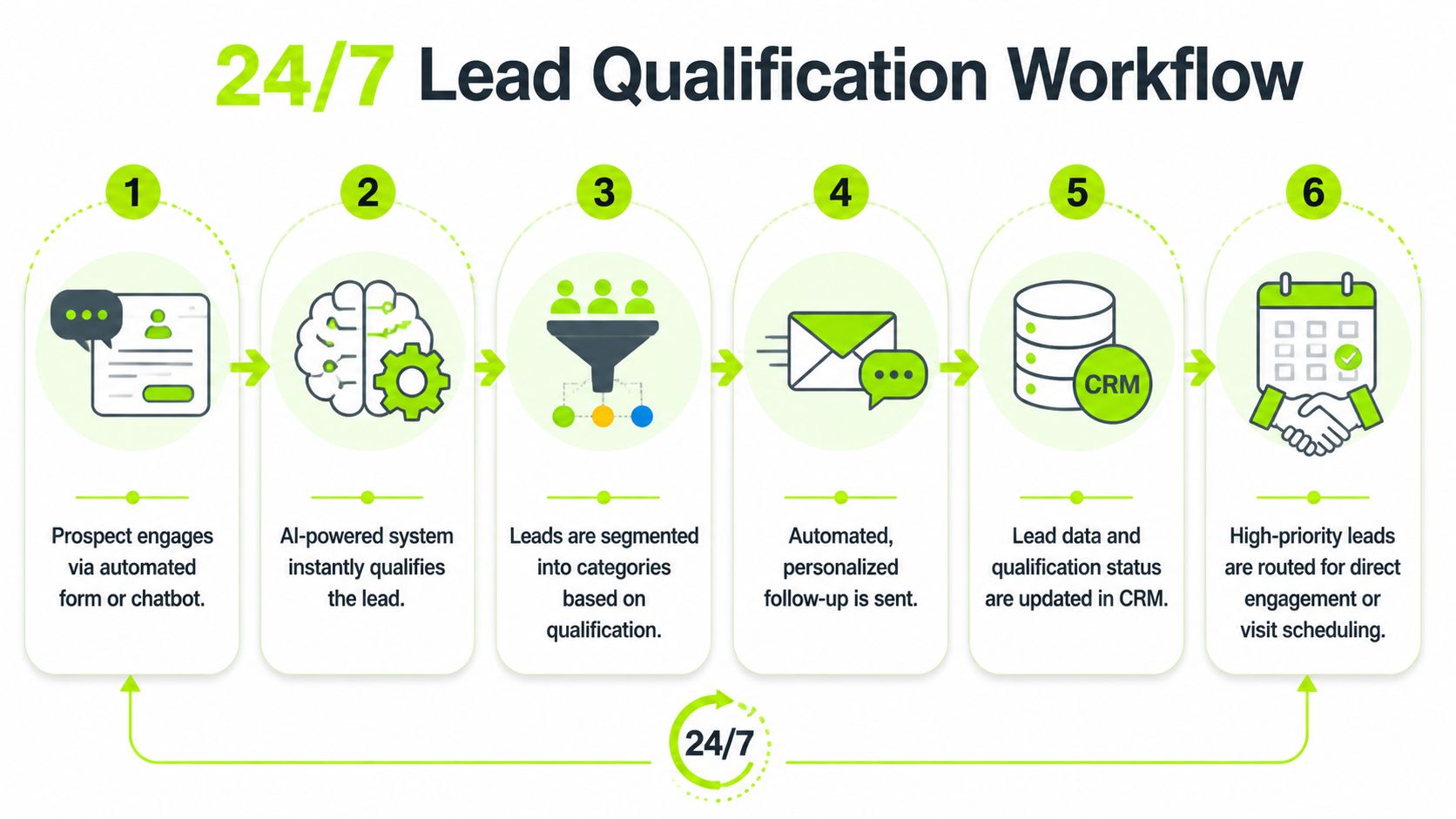
A proper lead handling system starts working at the first interaction. That can be a smart form, a chatbot, or a guided landing page. The format matters less than the speed and the structure behind it.
The job is straightforward. Identify what the person wants, how close they are to a decision, and what the club should do next without waiting for a staff member to sort the inbox.
In practice, automated qualification shortens response time, improves routing, and gives the club a better chance of turning interest into a booked visit. Manual follow-up usually fails for a simple reason. Busy teams treat every enquiry as if it can wait until later.
Questions that separate signal from noise
Qualification does not need to feel intrusive. It needs to give the club enough context to act properly.
A strong first-stage flow might ask:
What are you interested in
Membership, green fees, society golf, lessons, or an event.When are you looking to join
Soon, within a few months, or just researching.Are you currently a member elsewhere
This helps the club understand switching intent.What matters most in your decision
Course quality, tee availability, community, practice facilities, family use, or flexibility.Would you like to book a visit
This is one of the clearest intent signals you can capture early.
Those answers change the sales path immediately. A prospect looking to move clubs this month should not get the same reply as someone casually comparing options for next season.
For clubs that want to see how this works in a real operating setup, our guide to AI lead qualification for golf clubs breaks down the workflows in more detail.
What the workflow should do next
Automation should handle triage, context gathering, and first response. Staff should handle the moments where trust, nuance, and closing matter.
A useful workflow usually does three things well:
- High-intent membership prospects get an immediate acknowledgement, a relevant next step, and an internal alert for personal follow-up.
- Mid-intent prospects receive relevant information based on their answers, plus a prompt to book a visit or speak to the membership team.
- Low-intent or non-membership enquiries are routed to the right place without filling the membership pipeline with noise.
That distinction matters more than clubs often realise. If every lead goes into the same bucket, the sales team spends time sorting instead of selling.
One practical option is a system like GolfRep, which combines ads, AI qualification, CRM routing, and follow-up in one workflow for clubs that want one connected process instead of separate tools.
The first response, the first qualification step, and the first routing decision should happen automatically. That is how clubs protect speed without adding admin.
What clubs get wrong with automation
The common objection is that automation feels cold. It feels cold when it is badly written and badly configured.
A generic instant email that says “thanks for your enquiry” and offers no next step does not help conversion. A better setup reflects what the person asked for, directs them to a clear action, and gives the membership team enough information to continue the conversation properly.
The failure points are usually predictable:
- No segmentation, so a hot membership lead gets the same response as a society enquiry
- No routing rules, so strong prospects still sit in a shared inbox
- No CRM sync, so staff have partial information and duplicate records
- No owner assigned, so everyone assumes someone else will follow up
Good automation does the early work fast. Good sales process takes over at the right moment.
That is the difference between collecting enquiries and building a membership engine.
Structuring Your CRM for Total Pipeline Visibility
The clubs that struggle with membership growth usually do not have a lead problem. They have a visibility problem.
Once an enquiry enters the business, too many clubs lose the plot. One person replies from Outlook, another keeps notes on paper, someone updates a spreadsheet a week later, and management still cannot answer a simple question like: how many qualified membership enquiries are actually close to joining?
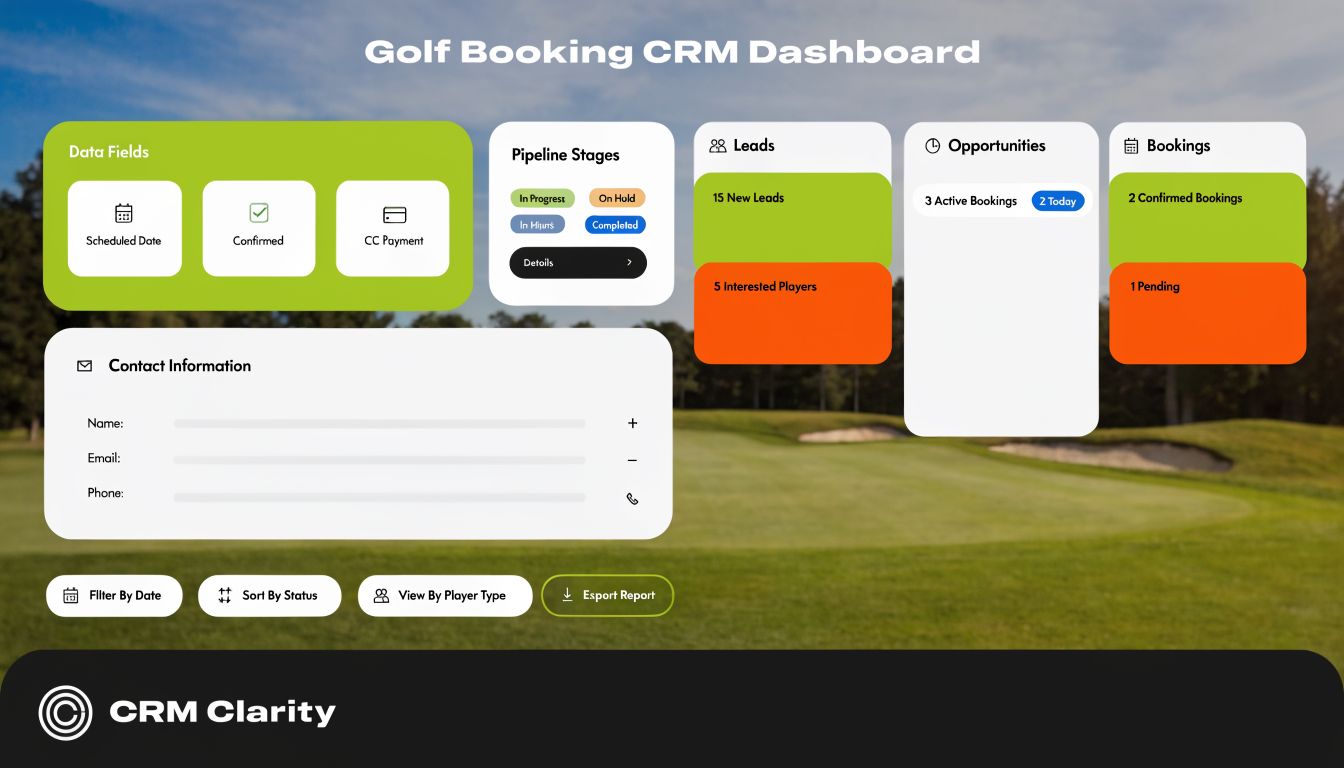
A CRM should give the club one version of the truth. That means every enquiry sits in a defined stage, has a clear owner, and shows the next expected action. Without that structure, reports become guesswork and follow-up becomes inconsistent.
Build stages the club can actually manage
I have seen clubs overbuild this part. Twenty pipeline stages look impressive in a demo and fail in real use.
A better setup is simple enough that the membership team will keep it updated under pressure. For most clubs, a practical pipeline looks like this:
- New enquiry
- Qualified
- Contacted
- Visit offered
- Visit booked
- Visited
- Proposal sent
- Joined
- Lost or deferred
Those stages do two jobs at once. Staff know what should happen next with each prospect, and managers can see exactly where momentum drops.
That second point matters. If plenty of leads reach "Qualified" but very few reach "Visit booked", the issue is not traffic. It is process.
Fields and tags that matter
Pipeline stages show movement. Fields explain why deals move, stall, or die.
At minimum, track:
| CRM field | Why it matters |
|---|---|
| Lead source | Shows which channels produce actual opportunities |
| Membership interest | Separates full, flexible, off-peak, and other categories |
| Qualification level | Helps staff prioritise follow-up |
| Key objections | Prevents the same weak conversation from repeating |
| Next action date | Stops leads being forgotten |
| Assigned owner | Makes response someone’s responsibility |
Most clubs do not need a complicated CRM. They need a disciplined one.
If you are comparing platforms or planning a rebuild, this guide to choosing a golf CRM system breaks down what clubs should configure.
Group operators need local ownership and central control
This gets harder when a business runs more than one site.
A single-site club can survive with poor visibility for a while, although it still costs them conversions. A group with multiple venues cannot. Records get duplicated, attribution becomes messy, and prospects bounce between clubs with no clear ownership. Head office wants reporting. Local teams need freedom to manage relationships properly. A usable CRM has to support both.
The structure we implement for UK golf groups separates three things clearly: source, venue, and owner. Source shows where the enquiry came from. Venue shows which club the prospect asked about. Owner shows who is responsible for the next action. If one of those is missing, leads slip between teams.
Head office should be able to see pipeline health across the group. Each club should still be accountable for converting the enquiries it owns.
That sounds obvious. In practice, it is where many setups fail.
Visibility changes management behaviour
Once the CRM is configured properly, commercial conversations improve fast.
Managers can see whether the bottleneck is weak lead quality, slow first contact, poor visit-to-join conversion, or neglected deferred prospects. Sales staff stop working from memory. General managers stop relying on anecdotes. Committee discussions get more useful because everyone is looking at the same pipeline, not different versions of it.
That is the shift clubs need. Golf club lead generation only becomes predictable when the club can track every prospect from first enquiry to signed membership, and spot where revenue is leaking before another month disappears.
The Nurture Sequence That Books Visits and Closes Members
The clubs that win more memberships are rarely the ones with the biggest enquiry volume. They are the ones that follow up properly after the enquiry arrives.
That is the bottleneck for most UK clubs. A prospect asks for information, visits the website twice, maybe opens one email, then hears nothing useful for a week. By that point, interest has cooled or another club has replied faster. Lead generation was never the main problem. The missing piece was a system that keeps the conversation moving until someone books a visit or rules themselves out.
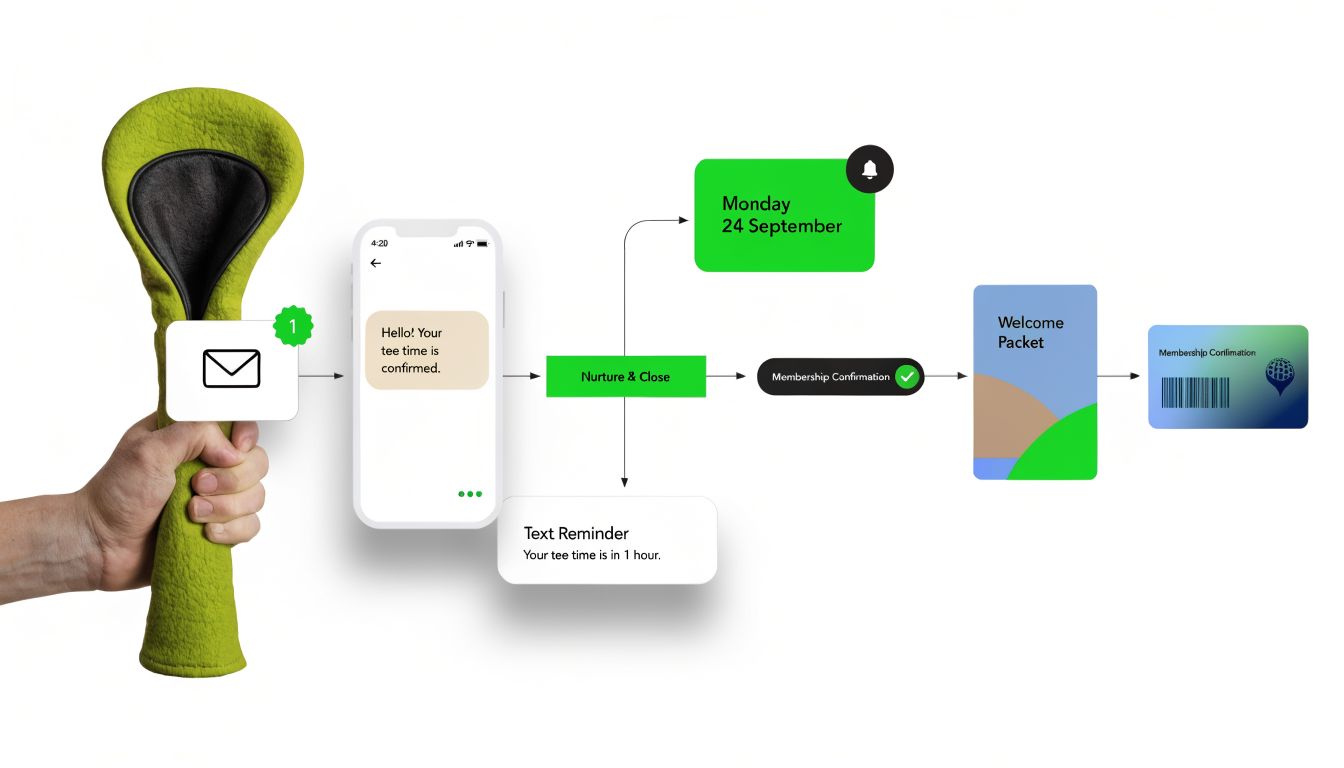
What a useful sequence looks like
A good nurture sequence answers the next obvious question and gives the prospect one clear action.
For a standard membership enquiry, the flow we implement usually starts with an immediate confirmation email that feels human, references the category they asked about, and offers a simple route to book a tour. Within two or three days, the prospect gets a short follow-up by SMS or email with something practical: available visit times, a short course video, or a note from the membership manager. Around day five to seven, if they still have not booked, the club sends a more specific invitation tied to intent, such as an open event, a hosted tour, or details relevant to the membership type they viewed.
After a visit, the sequence should change completely.
Post-visit follow-up works best when it reflects the actual conversation. If the prospect asked about joining as a couple, send that information. If they raised flexibility, explain the route that fits. If they liked the club but needed time, set the next contact around their stated decision window instead of dropping them into the same generic drip as everyone else.
Why generic sequences fail
Generic nurture usually breaks in one of two places.
First, the messaging is too broad. A weekday golfer, a family considering full membership, and a lapsed member returning to the club should not receive the same three emails. Second, the cadence ignores buyer behaviour. Some prospects are ready for a call this week. Others are comparing options over the next two months and need light, relevant contact rather than constant prompting.
The result is predictable. Staff assume the lead was poor, when weak follow-up design was the issue.
At GolfRep, we build these sequences around intent signals, not just form fills. The pages viewed, the membership category selected, the timing of replies, and whether a visit was booked all shape the next message. That is how clubs stop sending marketing and start managing a sales process.
Good nurture sends the next useful message to the right prospect at the right point in the decision.
Handle price objections properly
Budget objections are often mishandled.
Clubs hear "too expensive" and treat it as a closed door. In practice, some of those prospects are still interested. Their timing is wrong, their preferred category does not fit, or they need a few months before they can commit. A separate nurture track for price-sensitive enquiries keeps the relationship active without cheapening the offer. In one golf referral and nurture analysis, operators recovered 15 to 40% of opportunities that initially stalled on price by staying in touch until circumstances changed, according to this referral and nurture strategy analysis.
That sequence should be measured and patient. A softer cadence works better than repeated "just checking in" emails. Useful content helps too, especially where the club can explain different joining routes, usage patterns, or the value members get from the category being considered. Then add timed reactivation around realistic reconsideration points, such as the end of a season, a membership deadline, or a prospect's own stated review date.
The real job of nurture
Nurture is not there to chase people.
Its job is to remove uncertainty, keep the club visible, and make the next step easy. For some prospects, that means booking a visit. For others, it means restarting a conversation that would otherwise have gone cold in the CRM.
That is why we treat nurture as part of the sales system, not a marketing add-on. When a club has structured follow-up, clear ownership, and messages tied to actual buyer intent, more enquiries turn into visits, more visits turn into decisions, and revenue stops depending on who happened to remember to call back.
Measuring and Optimising Your Growth Engine
More leads do not fix a weak membership pipeline.
What fixes it is measurement that shows where revenue is being won, where it is being lost, and which part of the system needs attention first. At GolfRep, we see the same pattern across UK clubs. Marketing reports often stop at clicks, form fills, and cost per lead. Core commercial questions sit further down the line. Which source produces booked visits? Which offer attracts people who can join? Which follow-up stage keeps stalling because nobody owns it?
Track the numbers that change action
A club does not need fifty dashboards. It needs a small set of numbers that make the next decision obvious.
Focus on:
- Cost per lead
- Cost per acquisition
- Lead-to-visit rate
- Visit-to-member conversion rate
- Lead source by closed member
- Pipeline stage ageing
These metrics need to be read together, not in isolation. A high cost per lead can still be profitable if those enquiries book visits and convert into the right membership category. A cheap lead source can be expensive in practice if the sales team spends hours chasing low-intent enquiries that never progress.
Pipeline ageing matters more than many clubs realise. If prospects are sitting in "contacted" or "visit invited" for two weeks, the problem usually is not lead volume. It is speed, ownership, or poor follow-up design.
Use analytics to move budget with discipline
Budget decisions should follow closed-member performance, not whichever channel produced the lowest click cost last month.
According to this website analytics guide for private golf clubs, clubs that use website analytics to review traffic sources and conversion paths can reduce cost per acquisition by up to 30%, and the same analysis notes that paid channels converting at less than 1% can underperform referral partners producing 15% qualified visits.
That is the practical lesson. If paid social is filling the CRM with weak enquiries while referral traffic or a specific campaign is producing visits, move the spend. If a seven-day trial offer creates curiosity but your membership consultation offer creates actual joining conversations, give the stronger path more budget and more sales attention.
Many clubs hesitate at this point. They keep funding familiar channels because the top-of-funnel numbers look healthy. The better approach is less comfortable but more profitable. Cut what does not progress. Increase investment where members come from.
Review the system weekly, not occasionally
Optimisation works best as an operating rhythm.
| Question | What to look for |
|---|---|
| Which channels generate members, not just leads | Closed revenue, not top-of-funnel volume |
| Which offers produce booked visits | Real pipeline movement |
| Where do prospects stall | Delays between stages |
| Which follow-up messages get responses | Evidence of buying intent |
Weekly reviews are usually enough. Monthly is often too slow, especially when response times slip or an ad campaign starts sending poor-fit leads into the pipeline. The goal is not constant tinkering. The goal is fast detection of waste, friction, and missed conversion opportunities.
Small improvements stack up. Faster lead routing lifts contact rates. Better qualification improves visit quality. Cleaner CRM stages improve forecasting. Stronger follow-up turns more undecided prospects into booked visits and signed members.
That is how a club builds a predictable revenue machine. Not from one good campaign, but from a system that measures every stage, shows where the bottleneck is, and gives the team a clear next move.
If your club wants a clearer, more structured approach to golf club lead generation, GolfRep helps UK clubs build the full system behind growth. That includes targeted enquiry generation, lead qualification, CRM visibility, and automated follow-up that turns interest into booked visits and members.
Ready to tap into our proven growth system?