Golf Club Email Marketing: A Practical Playbook

Most golf club email marketing fails for a simple reason, it starts with the newsletter and ends there. Clubs polish the subject line, send a monthly update, and then wonder why enquiries still sit unanswered, visits don't progress, and membership conversations go cold.
That's the wrong problem to solve. The key gap is usually earlier, in response time, lead visibility, and whether the club has a proper follow-up system inside a CRM. If a prospect sends an enquiry on a Thursday afternoon and nobody owns the next step, even a well-written email campaign won't rescue the opportunity.
For clubs that want a more practical benchmark for building email around the whole enquiry journey, the complete email marketing guide is a useful wider reference. But for golf clubs, the more important shift is to stop treating email as a broadcast tool and start using it as the connective tissue between advertising, the front desk, and membership conversion.
Why Most Golf Club Email Marketing Falls Short
The usual pattern is easy to spot. A club sends a decent newsletter, gets a few opens, and assumes the channel is doing its job. Meanwhile, the primary leaks are happening in the handover from enquiry to contact, and from contact to visit.
The newsletter is rarely the bottleneck
Most clubs do not lack content. They have member updates, open days, society availability, clubhouse news, and renewal reminders. What they often lack is a clear operating system for what happens after someone raises their hand. A prospect can enquire, be tagged manually, and still disappear because nobody can see the lead, nobody knows the follow-up status, or the response arrives too late to matter.
That is why GolfRep works from the position that lead handling matters more than lead volume. If your database is not linked to a CRM, if enquiry ownership is unclear, or if replies depend on someone remembering to check a shared inbox, email marketing becomes a cosmetic layer on top of a leaky process.
Practical rule: if an email cannot move someone to a next action, it is probably doing too much branding and not enough selling.
Email should sit inside the pipeline
Email is strongest when it supports a real commercial process. A prospect enquiry should trigger an acknowledgement, then a personalized nurture path, then a booked visit, call, or membership conversation. A renewal should trigger a reminder sequence. A lapsed member should trigger reactivation. That is systems work, not newsletter work.
For clubs trying to understand the wider mechanics of this, the GolfRep database guide is the right place to look at how data structure underpins everything that follows. Without that structure, even good copy gets wasted because the club cannot see where each lead sits or what action comes next.
The clubs that win here are not the ones sending the most emails. They are the ones that make every email part of a visible, accountable chain.
Building Segments That Reflect How Golfers Actually Enquire
Segmentation works when it mirrors how golfers arrive in the club's world. If every contact gets the same follow-up, the email system starts acting like a broadcast list, and the club loses the ability to match the message to the enquiry. That is where relevance slips.
Start with the way people enter your club's world
A prospective member is not the same as a society organiser. A casual pay-and-play golfer is not looking for the same next step as a corporate host. A lapsed member already knows the course and the culture, but often needs a different tone from someone who has never visited. Segmentation has to reflect those differences, or the follow-up becomes generic and easy to ignore.
A practical structure usually starts with these CRM tags or lists:
- Prospective members: separate new enquiries from older prospects, because their intent is often different.
- Society organisers: group enquiries need fast answers, clear availability, and simple next steps.
- Corporate hosts: they tend to care about presentation, timing, and ease of booking.
- Casual players: they often need a softer pathway into repeat visits.
- Lapsed members: they need a re-entry conversation, not a generic promotion.
- Event enquirers: weddings, dinners, celebrations, and golf days all need distinct follow-up.
The useful test is simple. If a contact can be sorted into a bucket the moment they enquire, the club can start shaping the reply around what they want. If they cannot, staff usually default to one generic sequence and then wonder why replies are uneven.
Relevance is operational, not creative
Segmentation is about making the next action obvious. A society organiser who receives membership-style copy will notice the mismatch straight away. A lapsed member who gets a first-time visitor pitch never gets the benefit of familiarity, even though that is the club's strongest starting point.
That only works if the database is built properly, which is why a database article matters here. The point is not the language itself, it is the structure behind it. Clubs need to be able to find the right contact, see the right status, and send the right sequence without rebuilding the list every time a new enquiry comes in.
The clubs that get this right keep the setup simple. Each major enquiry type needs its own label, its own follow-up logic, and its own owner. Once that is in place, email becomes part of a visible process instead of another task sitting in the inbox.
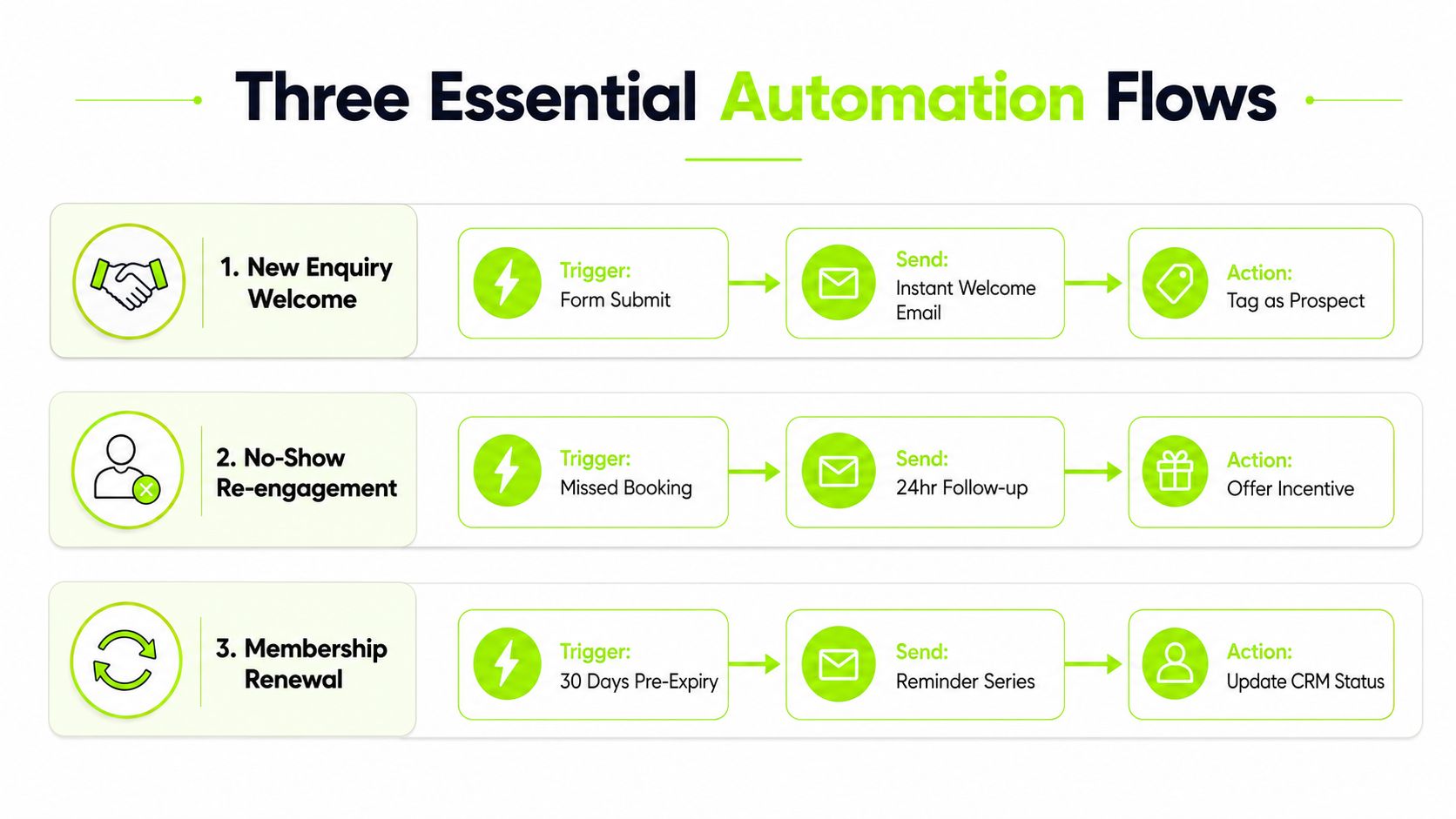
Three Automation Flows Every Club Should Have Live
A Thursday afternoon enquiry should not sit in an inbox until someone has time to notice it. Automation closes that gap. It gives the club a first response at once, keeps the enquiry visible in the CRM, and stops warm leads from going cold while the office is busy.

A new-enquiry sequence should answer the obvious questions
A prospect fills in the form. The first email should confirm receipt, acknowledge the enquiry, and deal with the questions that usually slow people down. That means price context where it helps, what happens next, and a clear route to a tour, call, guest round, or meeting.
The point is not to send more email. The point is to move the enquiry out of the queue and into a tracked process. GolfRep's automation overview fits that model because the reply should update CRM status and prompt staff action at the same time. If the office can see which lead is warm, the follow-up becomes easier to prioritise. That is a simple operational advantage, not a marketing flourish.
A welcome sequence should settle new members quickly
The first days after joining shape how a new member behaves. A welcome sequence can explain the club's practical routines, point them to the right contact, and make them feel expected rather than processed. It does not need polished copy. It needs clear instructions and a tone that sounds like the club.
A useful sequence here also benefits from custom email templates for small businesses because the job is consistency, not reinvention. Keep the structure fixed, then adapt the details to the club's actual onboarding steps. If a member knows where to park, who to contact, and what the first week looks like, the office gets fewer repeat questions and the handover feels cleaner.
A reactivation flow should feel personal, not desperate
Lapsed or cold contacts usually ignore generic offers. They respond better to a short, direct check-in that recognises the relationship and gives them a simple way back in. The aim is not to bombard them with promotions. It is to reopen a conversation with enough context that they can reply without effort.
Reactivation works best when it uses the information already in the CRM. A former member, an old society organiser, and a one-time visitor should not get the same message, because their reasons for drifting away are different. The club does not need clever wording here. It needs timing, recognition, and a clear next step.
A good automation sequence does not replace staff. It gives staff a cleaner queue.
That queue matters because it shows who needs a call, who needs a visit booked, and who has gone quiet. The commercial value sits in that handover, not in the message itself. Once each automation updates the CRM properly, email becomes part of a predictable pipeline instead of a set of disconnected sends.
Templates and Subject Lines You Can Steal Today
A lot of clubs overcomplicate email because they start from a blank screen every time. That usually leads to long, polite messages that do not ask for a next step. A better approach is to keep the structure fixed and adapt the details to the audience.
Use a simple shape for every core send
A strong post-enquiry reply can follow the same basic order every time, greeting, acknowledgement, one short answer to the main question, and one clear action. For a no-show re-engagement email, the structure should acknowledge the missed booking without sounding judgemental, then invite the reader back. Society organiser follow-ups should be even more direct, because they are usually comparing options.
Subject lines need to work on mobile first. The club marketing source that notes over 60% of emails are opened on smartphones, and another that puts mobile opens at around 68%, both point in the same direction, concise subject lines, single-column layouts, and clear calls to action that work on a phone screen (GolfManager). That is especially relevant in UK clubs, where quick replies often decide whether a lead stays warm.
Keep the wording human and specific
Here are practical examples clubs can adapt:
- Post-enquiry reply: “Thanks for your enquiry, here's what happens next”
- No-show re-engagement: “Still keen to visit, or should we pick another day?”
- Society organiser follow-up: “A quick look at spring availability”
- Renewal reminder: “Your membership renewal is coming up”
- Member event invitation: “Join us for the next club evening”
The body copy should do one thing well. Keep paragraphs short, avoid jargon, and make the call to action obvious. If you want a broader set of layout ideas, custom email templates for small businesses is a useful reference for structure, but a golf club still needs to adapt the tone to membership, hospitality, and enquiries rather than generic commerce.
Design matters too. A single-column mobile layout, concise preview text, and one clear button or link are usually enough. If the email looks like a flyer, people skim it. If it reads like a direct message, they tend to respond faster.
Staying Compliant Without Killing Your Marketing
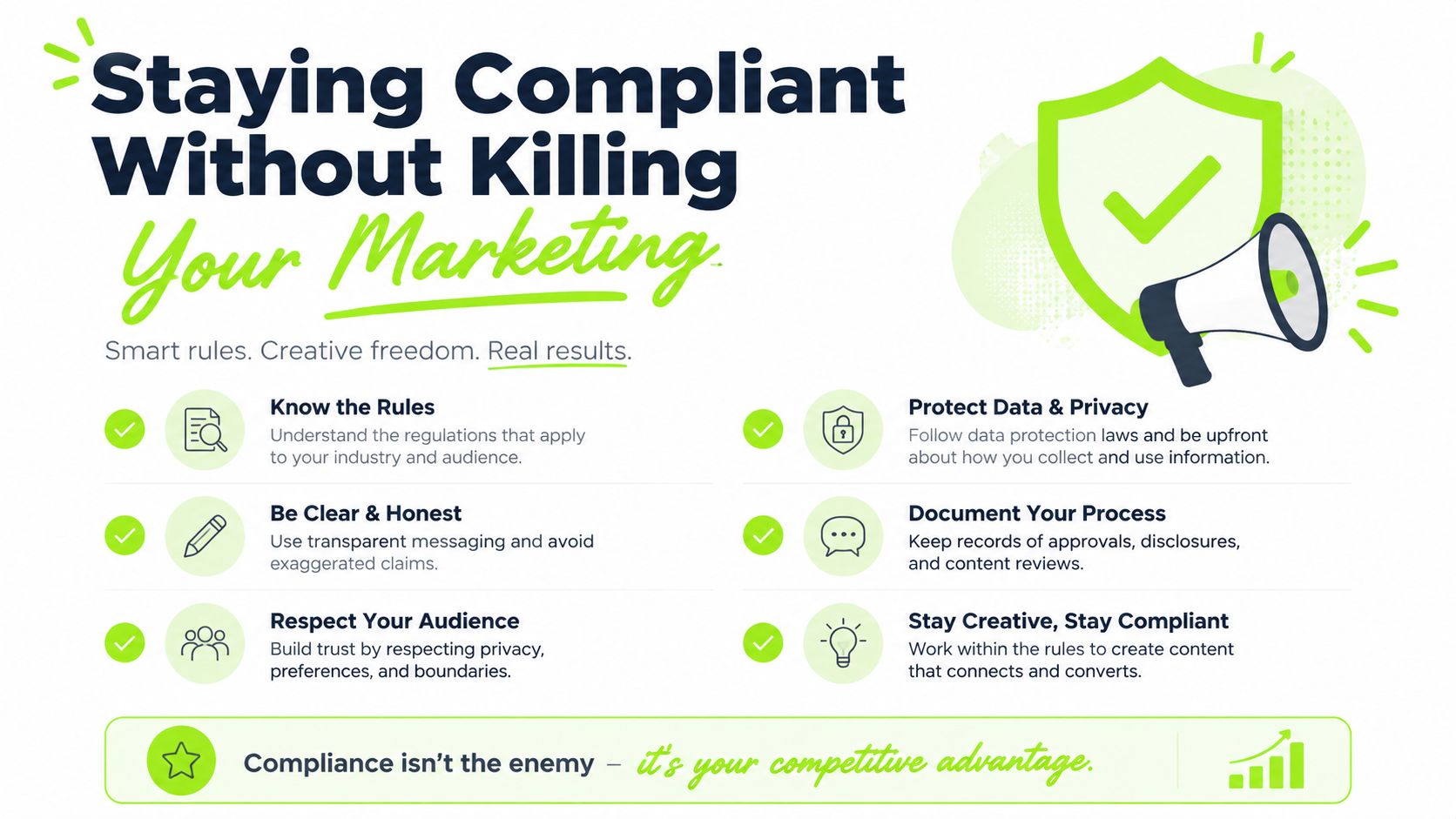
Compliance is usually treated like a blocker, when in reality it is just a set of habits. Clubs that handle consent properly tend to build cleaner databases, and cleaner databases make the whole email system easier to trust and easier to manage.
Keep the consent trail clear
For a golf club, the practical rule is straightforward. Ask for permission at the point of enquiry, explain what kind of messages the contact will receive, and make unsubscribing easy. If someone opts out, respect it immediately. That does more than reduce risk. It protects deliverability and keeps the team focused on contacts who want to hear from the club.
Buying lists is the opposite of that approach. So is stuffing members into a marketing list without a proper opt-in process. Those shortcuts create noise, damage trust, and make it harder to tell whether the campaign itself is any good.
Use data honesty as a marketing advantage
A tidy consent process is not just a legal safeguard. It also improves the quality of the follow-up. When people know why they are receiving emails, they are less likely to ignore them, and staff are less likely to waste time chasing the wrong contacts.
GolfRep's WhatsApp lead follow-up article sits in the same territory because the bigger point is consistent handling across channels. Email, WhatsApp, and CRM notes only work together if the club records consent, ownership, and next action in a disciplined way.
A short compliance checklist before any send keeps things tidy:
- Check the source: confirm the contact consented to receive marketing.
- Check the purpose: make sure the email matches why the data was collected.
- Check the unsubscribe: confirm it works and is easy to see.
- Check the list: remove old, duplicated, or irrelevant contacts.
- Check the record: store enough detail for staff to explain where the contact came from.
Compliance does not have to slow the club down. It only becomes a problem when the data is messy and nobody trusts the system.
Measuring What Actually Moves Membership Numbers
Open rates are interesting, but they rarely tell you why membership is flat. A club can send well, get decent engagement, and still miss the desired commercial outcome if the follow-up is weak. The useful numbers are the ones that connect email activity to actual movement in the pipeline.
Track the journey, not the vanity metric
Start with lead source attribution. Know where the enquiry came from, whether it was an advert, a form, an event, or a reactivation list. Then track enquiry-to-response time, because speed still matters when a prospect is deciding whether to book a visit.
After that, look at the stages that matter most to the club:
- Tour or taster show rate: did the visitor turn up?
- Member conversion: did the visit turn into a signed member?
- Renewal retention: did the reminder system keep the member in the club?
If the club cannot connect the email to the next commercial step, it is measuring the wrong thing.
Use a weekly review that staff can keep up with
The review does not need to be complex. A manager should be able to scan the same set of numbers every week, see which leads are waiting, and decide who needs a call. That rhythm matters more than a large dashboard nobody opens.
The email guide for golf clubs recommends retention emails at the 90-day mark after joining, mid-year for annual members, and 60–90 days before renewal, while society enquiry emails should go out 4–6 times per year, including January and March as planning points. It also advises a personalised post-round email within four hours of a guest visit (Capture CRM). Those timings give clubs a practical schedule for measuring whether the sequence is being followed.
A simple table keeps the numbers usable
| Metric | What it tells you | Healthy benchmark for a UK club |
|---|---|---|
| Lead source attribution | Which enquiry channels are producing real opportunities | Every enquiry should be tagged at source |
| Enquiry-to-response time | How quickly the club is handling incoming interest | Fast enough that leads do not go stale |
| Tour or taster show rate | Whether booked visits are being honoured | Consistent enough to support planning |
| Member conversion | Whether follow-up is turning interest into joins | Strong enough to justify the pipeline |
| Renewal retention | Whether the reminder process is protecting revenue | Stable enough to reduce avoidable loss |
A/B testing fits into that rhythm too. Subject lines, send times, and call-to-action wording should be tested in small, controlled ways, then reviewed against the same pipeline metrics. That keeps testing practical instead of becoming another marketing project that never touches revenue.
Turning Email Into a Predictable Membership Pipeline
The clubs that get this right stop thinking in campaigns and start thinking in systems. Segmentation makes the message relevant. Automation makes the response timely. Templates make the work repeatable. Compliance keeps the database clean. Measurement tells the manager what is moving.
That operating rhythm is the key prize. A short weekly review, a live set of automations, and one clear owner for enquiry handling are enough to make the pipeline visible. Once staff can see each lead from first click to signed member, email stops being an administrative task and starts behaving like part of the club's sales process.
Golf clubs do not need more random broadcasts. They need a dependable process that captures interest, follows up properly, and keeps the next step visible to the people responsible for conversion.
GolfRep helps golf clubs build that kind of pipeline with structured follow-up, CRM-linked automation, and practical lead handling that fits the way clubs work. If you want to tighten enquiry response time, improve visibility, and make email part of a real membership system, visit GolfRep and see how the approach fits your club.
Ready to tap into our proven growth system?