How to Run Profitable Golf Club Corporate Golf Days
A busy corporate day can feel like proof that the club is doing well. The car park is full, the booking sheet looks healthy, the clubhouse is active, and the photos make the event look like a success. Then the week after arrives, the inbox goes quiet, no repeat enquiry comes in, and the day that looked busy on paper has barely moved the revenue line.
That gap is where most golf club corporate golf days fall down. The day itself is rarely the problem. The issue is how the club handles the enquiry, prices the package, runs the operation, and follows through afterwards so the event becomes part of a measurable pipeline instead of a one-off hospitality hit.
Why Most Corporate Days Fail to Drive Real Revenue
A club can host a polished corporate day and still end up with very little commercial return. The room is full, the sponsor banner is up, the catering runs on time, and everyone says they had a great day. A month later, there's no second booking, no society enquiry, and no membership conversation worth counting.
That usually happens because the club measured the wrong thing. Attendance feels visible, but visibility isn't conversion. The useful question is whether the club captured the right company contact, responded quickly, tracked the lead properly, and stayed in front of the organiser after the event.
Lead visibility matters because corporate golf days are not just social occasions. They're packaged business visits, and the club should know who enquired, who approved the budget, who attended, and who might book again. Event platforms now make registration data, sponsor tracking, and post-event reporting standard tools rather than nice extras, which is a useful reminder that modern corporate days should be managed like sales events with hospitality wrapped around them, not the other way round.
Practical rule: if you can't see where a corporate enquiry came from, who handled it, and whether it converted, you don't have a pipeline, you have activity.
The clubs that do better treat the day as the start of a relationship. They ask whether the event created a future society booking, a second corporate day, or a membership enquiry. That is a much harder test than counting how many golfers came through the door, but it's the test that actually matters.
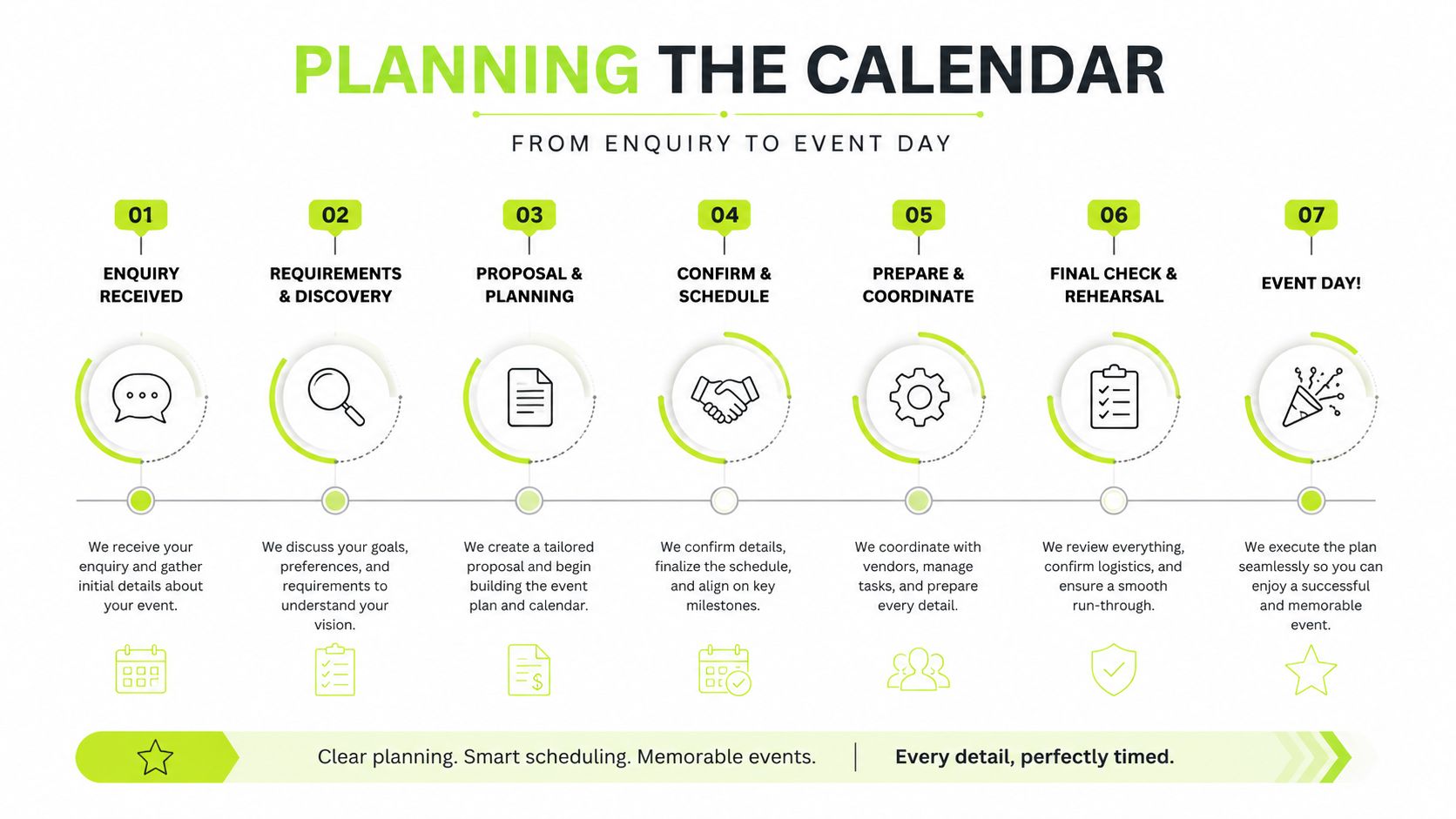
Planning the Calendar from Enquiry to Event Day
A good corporate day usually starts long before the first tee time is booked. The strongest planning window is 3 to 6 months ahead, because that gives the club room to qualify the right firms, build the package properly, and avoid last-minute compromises that damage margin or service.
Six months out to three months out
Start by pre-qualifying firms that are worth hosting. That means decision-makers in HR, finance, and local business development, because those are the people who can approve hospitality, client entertainment, or staff engagement budgets. If the first contact is vague, push for clarity early. A club that chases every enquiry equally ends up filling the calendar with low-value dates.
At this stage, the club should also decide what kind of day it wants to sell. A business audience will respond differently to a client entertainment package than to a staff reward day, and the club needs that distinction before it confirms tee times or promises extras. For clubs refining their offer, advice for marketing managers can be a useful reference point for thinking about branded touches without overcomplicating the event.
Three months out to one month out
This is the point where tee times, catering structure, and add-ons should be locked. If the golf side is vague, the clubhouse team ends up under pressure later. If the food and beverage offer is still open-ended too late, service quality suffers and costs creep.
This is also when the club should brief staff. Front-of-house, golf operations, and catering should all know the group profile, expected timings, sponsor arrangements, and any special requirements. A corporate day feels well-managed only when the handovers are planned in advance.
Final month and event week
The last stretch is for confirmation, not improvisation. Guest numbers, dietary notes, branding, score format, arrival times, and contact details need to be finalised. Structured planning matters because corporate golf events are operational events as much as hospitality events, and the UK's health and safety guidance requires formal risk assessment and controls for golfers, vehicles, machinery, and course conditions.
If the club is trying to build a repeatable process, the simplest measure is this, did the enquiry become a booked tee time, and did that event become a repeat booking later. That conversion chain is the calendar's real job.
Pricing Packages That Protect Margin
The hardest commercial question is not how to make a corporate day attractive, it's how to price it without training buyers to expect discounting. Clubs often price against the market instead of against their own cost base, and that's where margin gets eaten away.
A better approach starts with a true break-even rate per golfer. That floor should include every direct and indirect cost tied to the day, not just the obvious ones. Catering labour, buggy wear, staff time, food and drink, printing, welcome materials, tee markers, cleaning, and admin all belong in the calculation. If the club doesn't know that floor, every package decision is guesswork.
A package only works if it protects the club before it pleases the buyer.
Once that floor is clear, the club can build its package structure around value instead of discounting. The headline rate should cover the basics. Premium extras should sit on top and feel useful, not forced. That's how clubs stop being compared only on price.
A useful way to think about add-ons is by sponsor visibility, guest experience, and post-round hospitality. Branded holes, near-pin competitions, halfway-house upgrades, and a post-dinner speaker slot can all lift the perceived value of the day without dragging the base price down. The point is to make it easier for the buyer to spend more for a better event, not to shave the headline rate until the club is carrying the risk.
The package mix matters too. Different buyers want different levels of control, and a clear tiered structure helps them choose without endless negotiation. Clubs can also learn from a broader package-led approach, as set out in creating golf club package deals that convert.
| Corporate Day Package Template | Headline Price (per golfer) | Included Elements | Margin Lever |
|---|---|---|---|
| Entry | Base package built above break-even | Golf, standard catering, basic score support | Protects floor margin |
| Enhanced | Higher package with more hospitality | Golf, upgraded catering, branding touches | Raises average spend |
| Premium | Top package for sponsors and clients | Golf, hospitality upgrades, event extras | Uses add-ons to lift yield |
The discipline is simple. Price from cost, then shape the offer around value. If the club starts with the discount, it trains buyers to ask for less every time.
Marketing Channels That Actually Bring Bookings
Some channels create noise. Others bring enquiries that can become booked corporate days. The difference comes down to audience fit, message clarity, and how tightly the enquiry form pre-qualifies the prospect.
Start with the channels closest to your existing business base. Local business networks, member referrals, and account-manager outreach to current members can produce warmer leads because the club already has some trust in the room. Those enquiries may be smaller, but they're often easier to close because the organiser already knows the club.
Email is still useful if it's targeted properly. Lapsed corporate clients should receive a message that speaks to the kind of day they previously booked, not a generic club newsletter. Paid social can work too, but only if the geography and sector targeting are narrow enough to attract the right sort of company rather than casual browsers.
For clubs that want more structured ideas, golf club event marketing is a sensible reference point for thinking about how event-led promotion differs from general club marketing.
Match the channel to the enquiry you want
A club should decide what sort of booking it is trying to win before it spends money attracting traffic. A hotel or conference centre partnership may suit business entertainment enquiries. A local chamber of commerce or business network may suit team days and client hospitality. A referral from a member may suit a lower-friction first booking that can be expanded later.
The enquiry page should do some of the filtering too. Ask for company name, group size, rough budget, and event purpose. That's not about discouraging leads. It's about making sure the club can respond intelligently and avoid wasting time on enquiries that were never viable.
The clubs that fill their calendars usually do one thing well. They choose a few channels they can manage properly, then measure which ones create real bookings rather than just form fills.
Handling Enquiries With Speed and Structure
The club doesn't usually lose a corporate booking because the day looked weak. It loses the booking because nobody responded clearly enough, fast enough, or with enough context. That's why enquiry handling is a commercial process, not an admin task.
A strong first response should do three things. It should acknowledge the enquiry, confirm who is handling it, and ask for the missing details needed to build a proper proposal. If the club replies with a generic brochure and waits, the lead often goes cold before anyone has spoken about date fit, group size, or budget.
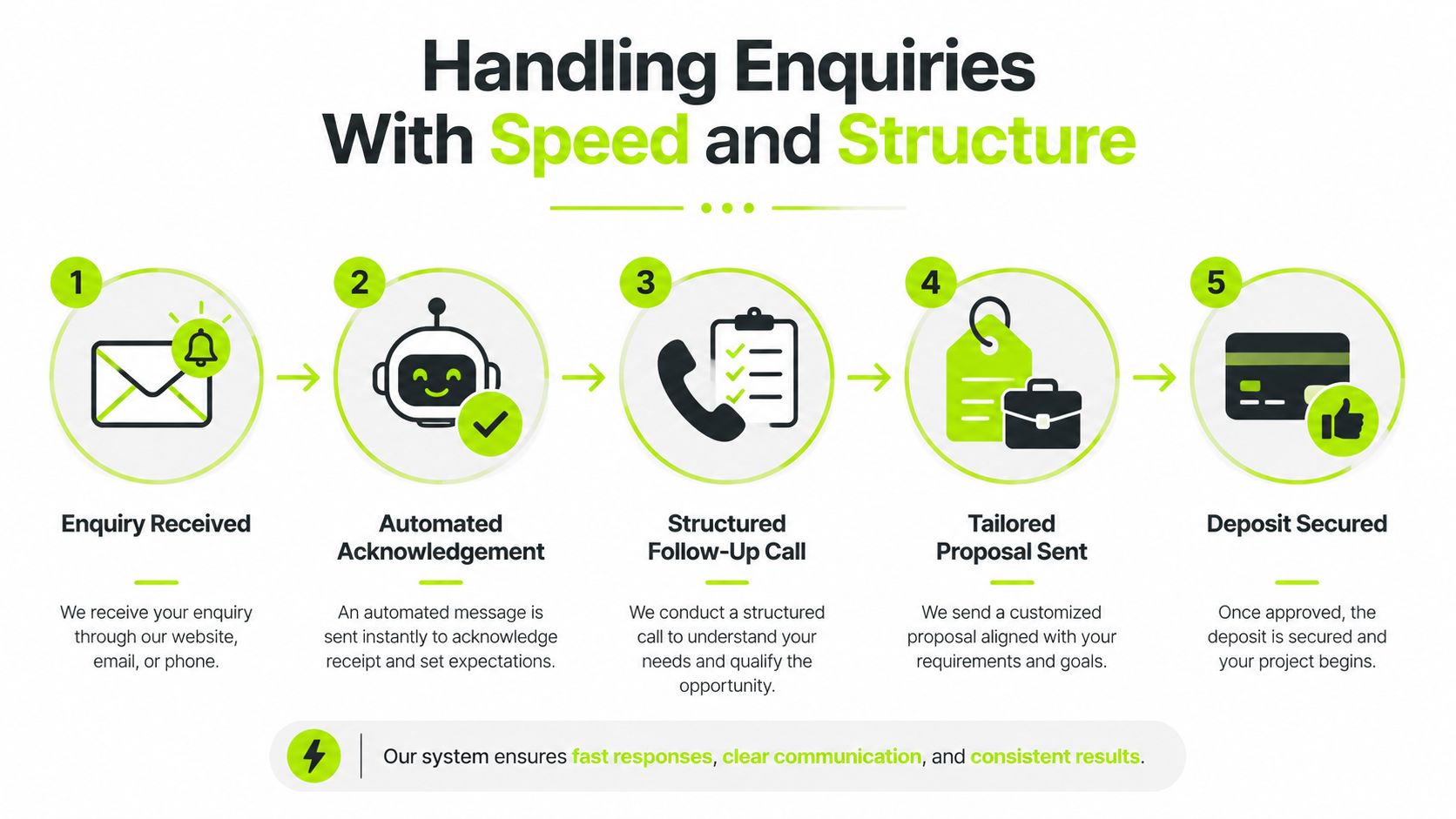
What structured handling looks like
A structured process starts with tagging the enquiry correctly in the CRM. Corporate, society, member referral, sponsor, and repeat client should all be visible at a glance. That way, the management team can see what kind of lead arrived, who owns it, and what stage it's at.
The first contact should capture the essentials, date range, group size, event purpose, catering expectations, decision-maker name, and any branding needs. Once that information is stored properly, follow-up becomes specific instead of recycled. The club can then send a proposal that feels like it was built for that buyer, not pulled from a template.
Manual inbox management makes this harder than it needs to be. Emails get buried, replies get delayed, and no one has a clear view of whether the lead is moving. A CRM with automations for acknowledgement, qualification questions, and meeting booking solves that problem by keeping the process visible.
Rule of thumb: if one person leaving the office means the enquiry disappears, the system is too fragile.
I've seen clubs improve results by giving corporate enquiries one owner and one process. That owner doesn't have to do everything, but they do need to make sure the lead is moved, not just answered.
The first 24 hours checklist
- Acknowledge quickly: confirm receipt and set expectations for the next contact.
- Qualify properly: ask for the missing details that affect price and availability.
- Tag the lead: make sure it's visible to the right people in the CRM.
- Book the next step: call, site visit, or proposal review.
- Log the outcome: note what was said so the follow-up is relevant.
GolfRep's system is one option clubs use to combine lead generation with structured follow-up and CRM tracking, but the wider principle is the same. If the club can't see the lead and move it through the process, it won't convert reliably.
Running the Day With Operational Confidence
The best corporate days feel calm because the team has already solved the hard parts before guests arrive. Staff know the sequence, the clubhouse is ready, the course is set up, and the organiser never has to chase for basic information.
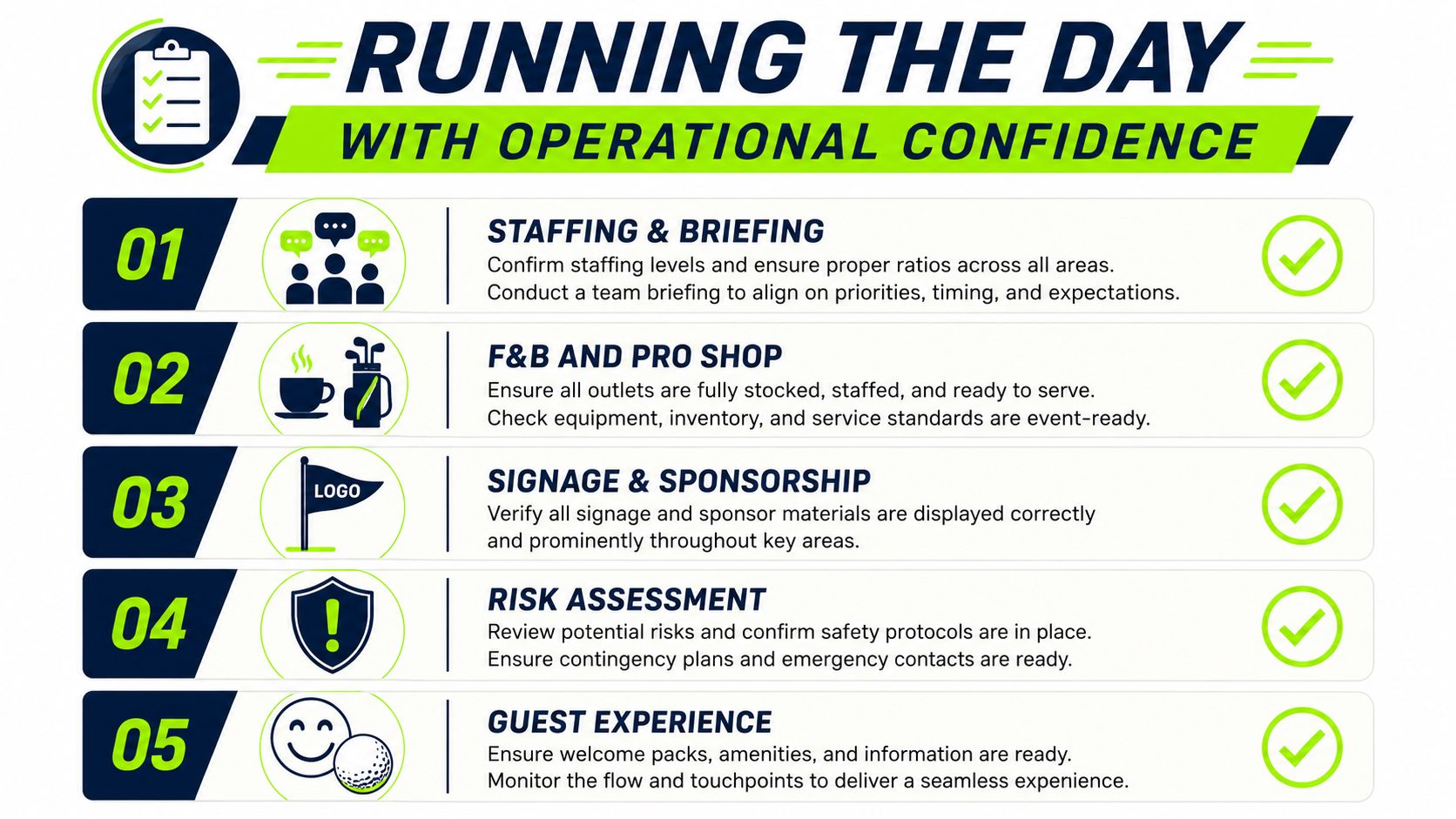
The operational priorities that matter
Start with staffing and briefing. The front desk, starter, marshal, catering, and pro shop team all need to know the guest profile and the run order. The club doesn't need theatrical service, it needs consistent service that keeps the day moving without confusion.
Food and beverage also need to be briefed properly. Corporate guests notice whether coffee is ready, lunch arrives on time, and the bar is set up to handle the flow. The same is true in the pro shop, where small delays or poor coordination can spoil the tone before the golf even starts.
Brand visibility matters if sponsors are involved. Signage, tee markers, welcome boards, and any branded touchpoints should be placed deliberately so they're seen. That's where the event starts to feel like a proper business day rather than a mixed social round.
Health and safety has to be built in, not bolted on. The UK government guidance for golf courses requires formal risk assessment and suitable controls for people, vehicles, machinery, and course conditions. That means the club should know the hazards, the contingencies, and the communication route before the first group tees off.
Practical rule: a scramble format usually suits corporate groups because it keeps the pace moving and lowers pressure on casual players.
The World Handicap System also matters for consistency. The R&A and the USGA revised WHS for 2024 so scores above net double bogey are capped at net double bogey for handicap purposes, and England Golf oversees WHS procedures in England. For clubs, that means results should be handled through proper WHS processes rather than informal manual scoring that can become messy when players are inexperienced or mixed-ability.
If the event includes extra entertainment, the right add-ons should support the mood rather than distract from the golf. For clubs looking at supplementary activities, interactive entertainment for events is a practical reference point for thinking about guest engagement without overloading the schedule.
KPIs and Follow-Up That Convert Attendees Into Members
A corporate day only earns its place if it feeds a system that can be measured. The club should track enquiry-to-quote time, quote-to-deposit conversion, attendee-to-society conversion, attendee-to-membership conversion, and repeat corporate bookings year on year. Those are the numbers that show whether the day was a sales event or just a busy one.
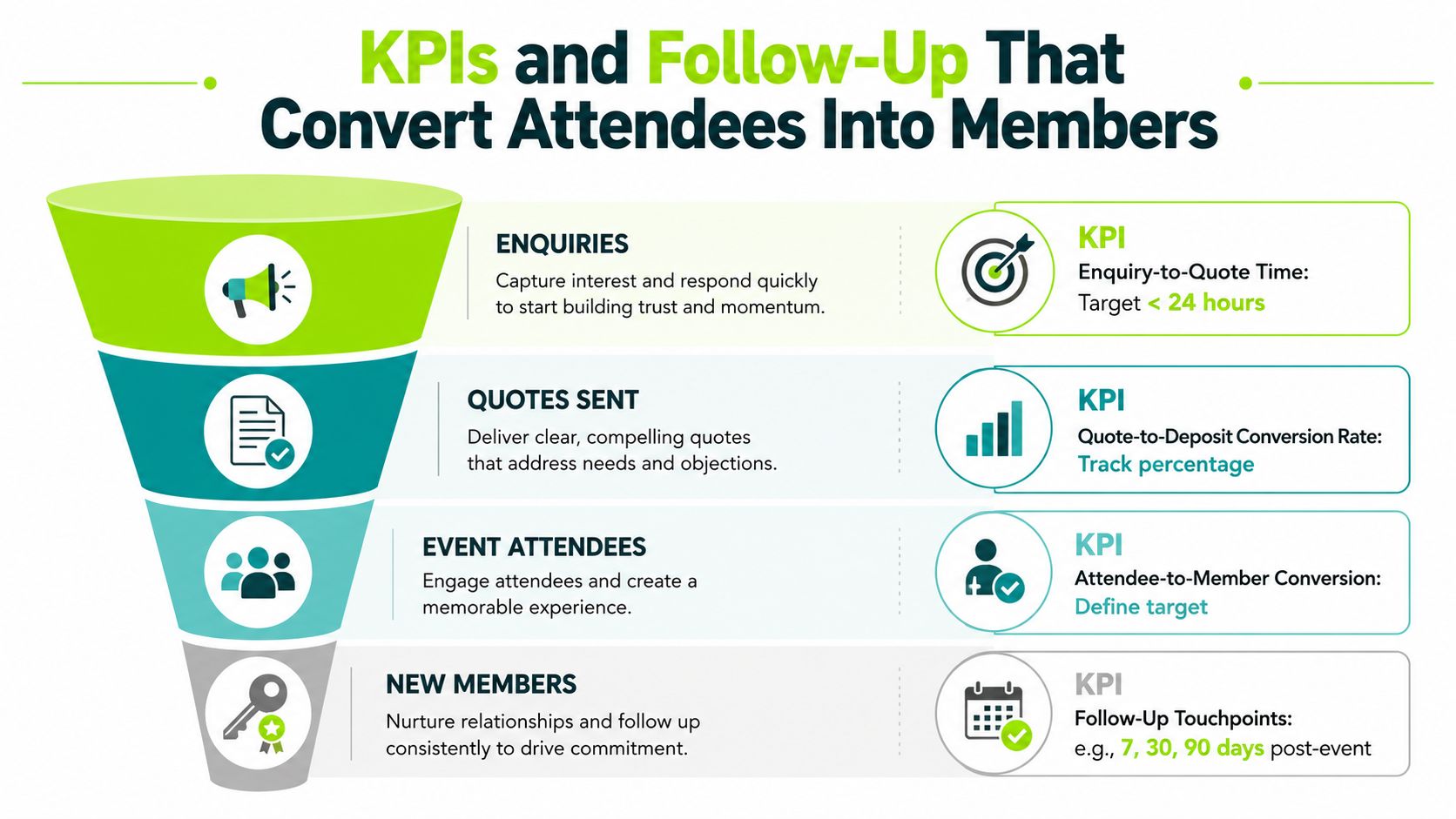
Follow-up should be role-based, not generic
The host, sponsor, and individual attendees should not all receive the same message. The host needs a thank-you and a clear next step. The sponsor may need a recap of visibility or usage. Individual attendees may respond better to an invitation to return with colleagues, join another society day, or visit the club again in a different format.
Timing matters. Same-day or next-day contact is a sensible benchmark because the event is still fresh and the organiser is still comparing options. That principle aligns with broader event-sector thinking, and it's consistent with the need for prompt nurture in B2B hospitality.
A useful CRM sequence usually runs in stages. First, an immediate thank-you and summary. Then a short follow-up with the next commercial option, whether that's a society booking, a second corporate date, or a membership conversation. Later touches should be personalized to the relationship, not sent as a broadcast blast.
For clubs wanting a clearer workflow, golf club follow-up system is a practical starting point for thinking about ownership, timing, and lead tracking.
Audit the process, not just the outcome
If a corporate day didn't convert, the club should ask where the chain broke. Was the enquiry handled quickly enough. Was the proposal relevant. Did the organiser get a proper follow-up after the event. Did the CRM show who owned the lead at each stage.
That's the true test. Not whether the day looked successful, but whether it created a predictable route to future bookings and member interest. Corporate golf days can do that well, but only when the club treats them as part of a funnel, not a one-off function.
If you want help turning golf club corporate golf days into a repeatable sales and retention system, visit GolfRep. We work with UK clubs to build structured enquiry handling, CRM follow-up, and practical event pipelines that create clearer visibility from first contact to repeat booking.
Ready to tap into our proven growth system?