Ad Copy Optimization
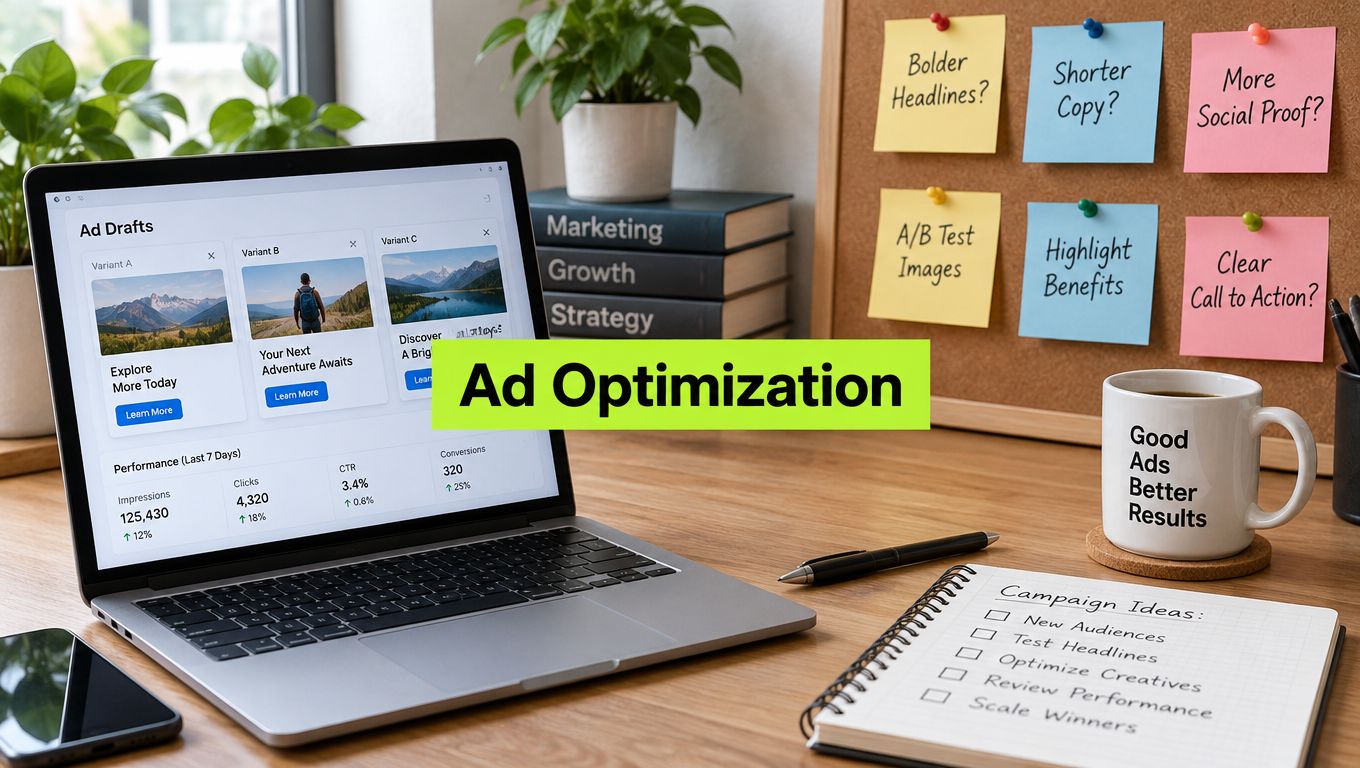
A club manager opens the ad account on Monday morning and sees two campaigns promoting the same membership. One is producing inexpensive clicks and a steady trickle of enquiries. The other is generating fewer leads, but those leads are booking visits, asking sensible questions and progressing towards joining.
The difference isn't necessarily the audience, budget or landing page. Often, it's the promise made in the advert. One ad attracts anyone interested in a cheap round. The other speaks to a golfer's actual reason for considering a club, then gives them a credible next step. That makes ad copy optimization a commercial discipline, not a wording exercise.
For golf clubs, every headline, description and call to action should support the wider path from ATTRACT to NURTURE, CONVERT and RETAIN. The advert is the first commercial decision in that system. Treat it with the same care as membership categories, tee-sheet pricing and joining conditions.
Why Most Golf Club Ads Underperform Before the Funnel Even Starts
A golf club can spend time refining its audience settings while leaving the most important question unanswered: what exactly is the prospect being invited to do?
“Join a friendly golf club” sounds harmless, but it gives a golfer very little to act on. A local player might want a course near home. A lapsed golfer might want a low-pressure way back into the game. A parent might be looking for something the family can do together. A committed player might want reliable access, competitions and practice facilities. One generic membership headline can't speak convincingly to all of them.
The problem becomes visible when the club compares lead quality rather than platform metrics. An advert built around “cheap golf near you” may attract clicks from people looking for a one-off tee time. An advert built around a local trial round, a clear membership category and a visit to the course can attract fewer but more commercially useful responses.
Commercial rule: Judge an advert by the customer behaviour it creates, not by the activity it reports.
That distinction matters because paid media sits at the front of a broader revenue system. A click has value only when the message, landing page, sales conversation and membership offer remain consistent. GolfRep works with clubs across acquisition, sales processes, CRM, follow-up, conversion, retention and revenue growth, so copy can't be separated from what happens after the advert.
A useful review starts with the current creative, not a blank document. Ask:
- Audience: Which golfer is this message intended for?
- Motivation: What do they want to do next?
- Proof: Which specific fact makes the promise believable?
- Action: Is the next step a trial round, open day, call or joining conversation?
- Commercial outcome: How will the club identify a booked visit or membership opportunity?
If those answers aren't clear, changing a headline is unlikely to solve the campaign. The wider commercial context is explored in why most golf club marketing fails, but the immediate lesson is simple. Copy is the first qualification stage. It determines who feels addressed, who clicks and what they expect when they arrive.
The UK Ad Landscape Your Copy Is Competing In
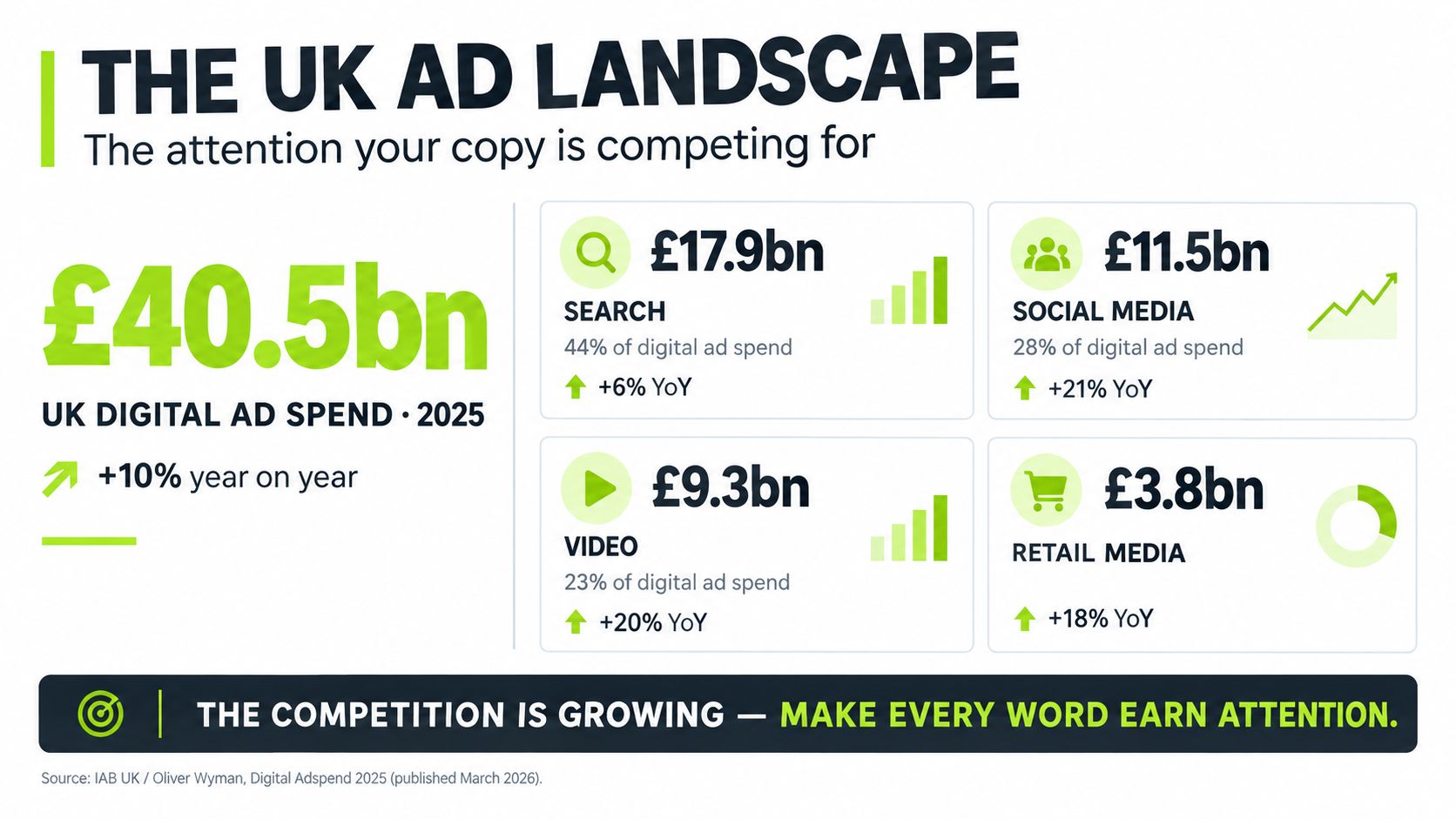
The UK advertising market is large, mature and heavily digital. Advertising Association and WARC figures show that UK advertising spend reached £42.6 billion in 2024, with online formats accounting for approximately four in every five pounds spent, as reported in the UK Adspend update. Search advertising reached £16.9 billion, while online display, including social and retail media, reached £16.7 billion.
That scale changes how a club should think about a headline. A vague promise isn't competing only with another golf club. It's competing for attention in auctions and feeds where audiences process many commercial messages quickly. Relevance, clarity and a credible next step help a local club earn attention without relying on inflated claims.
Why format changes the writing
IAB UK reports that the UK digital advertising market reached £35.5 billion in 2024 after 13% year-on-year growth. Video-display investment rose 20% to £8.3 billion, and video represented 64% of online display spending, up from 51% five years earlier, according to Digital Adspend 2024.
For golf clubs, this means the same proposition needs different treatment by placement. A search advert can lead with location and membership access. A mobile video needs a readable opening line, a strong first-frame promise and captions that work without sound. A social advert may need to show the clubhouse, practice area or welcome experience while the wording explains the next step.
The research also shows why relevance matters. An IPA-reported study of 408 nationally representative UK adults found that relevant advertising was noticed for longer and was six times more likely to be remembered than non-relevant advertising. Attention declined quickly when more than two ads appeared on screen, and platform-optimised advertising generated more attention, as detailed in the IPA attention research.
The practical rule is to write for the moment of attention. Name the golfer's likely motivation, make the benefit easy to scan and offer one action that feels proportionate. Further considerations for paid social appear in GolfRep's guide to golf club Meta Ads.
Headline Formulas and Value Propositions That Earn the Click
Google Responsive Search Ads give clubs limited space. Google specifies headlines of up to 30 characters, descriptions of up to 90 characters and display-path fields of up to 15 characters each, as set out in its Responsive Search Ads guidance.
That limit forces a useful discipline. Don't try to explain the whole membership proposition in one line. Supply several assets, each with a clear job, then check that every line still makes sense when Google combines it with others.
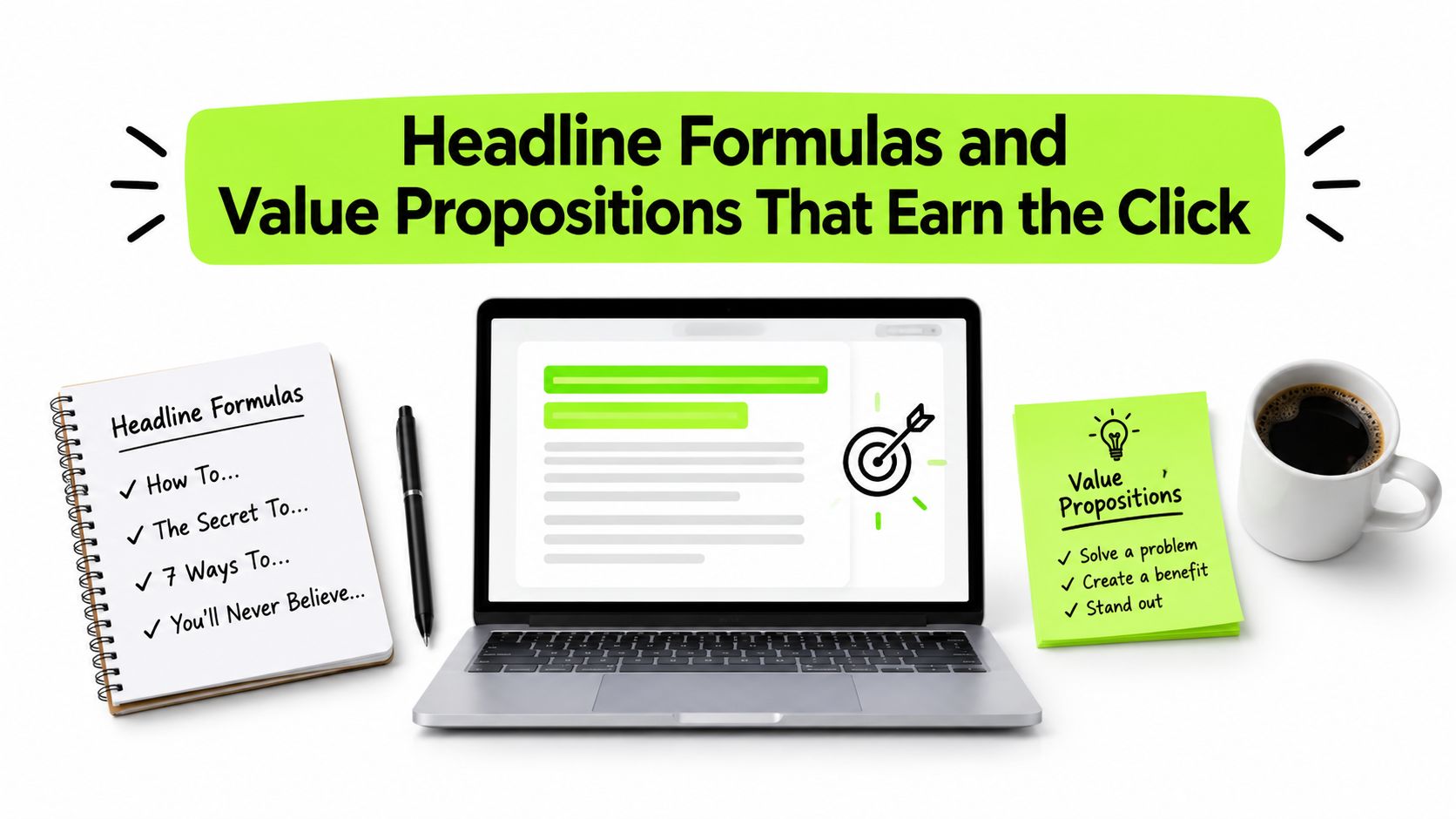
Four formulas for golf club campaigns
Locality plus access works when the prospect is actively looking for a nearby option.
- Headline: Golf Near Guildford
- Description: See membership options and book a relaxed club visit near you.
Benefit plus category helps the reader understand what type of membership is available.
- Headline: Flexible Golf Membership
- Description: Choose playing rights that suit your week. Ask about membership categories.
Audience plus experience is more useful than a broad claim about friendliness.
- Headline: Golf For New Players
- Description: Meet the team, see the course and find a welcoming way to play more often.
Invitation plus proof gives a colder prospect a lower-pressure action.
- Headline: Visit Our Golf Club
- Description: Tour the facilities, discuss membership and decide if the club suits you.
These examples are deliberately modest. “World-class course”, “best value” and “exclusive membership” are difficult to believe without precise evidence. A specific access arrangement, location, visitor process or facility is usually more persuasive because the reader can understand and verify it.
Build combinations, not isolated slogans
A responsive advert may combine different supplied assets, so each headline should work independently. Avoid a headline such as “And Get More” that depends on another line appearing first. Put the location, audience, benefit and action into separate assets, then review common combinations in the platform preview.
Descriptions should complete the decision rather than repeat the headline. If the headline says “Flexible Golf Membership”, the description might clarify playing rights, payment terms or the next conversation. A call to action should also match intent. “Book a club visit” is appropriate when the prospect needs reassurance. “Ask about membership” is better when they aren't ready to commit. “Book a trial round” may suit a participation-led campaign.
For teams producing several platform formats, a resource such as performance-focused creative production can help organise message variations and adapt approved propositions without losing consistency. The principle remains the same: one advert, one central promise, one logical next action.
Matching Copy to Participation Intent, Not Just Membership Intent
A golfer searching for a club isn't always searching for membership. That distinction is important in England, where England Golf figures identify 12.6 million adults who played some form of golf in the previous 12 months. That included 9.4 million playing crazy golf or mini-golf, 7.3 million playing traditional nine- or 18-hole courses, and 5.3 million taking part in off-course formats such as ranges, simulators and adventure golf, according to England Golf participation figures.
A membership-first advert assumes the prospect has already decided what relationship they want with a club. Many haven't. They may want to play more often, improve, meet people, return after a break or find an activity for the family.
England Golf's figures show that 59% of recreational golfers want to play more regularly, while 98% of recreational golfers and 96% of leisure golfers expect to continue playing, according to the same source. Those audiences have participation intent before they have membership intent.
A better front door for different golfers
| Participation intent | Message angle | Suitable next step |
|---|---|---|
| Play more often | Local access and practical playing options | Ask about a trial or visit |
| Improve technique | Coaching, practice facilities and support | Book a lesson or assessment |
| Return to golf | Welcoming re-entry without pressure | Meet the team or attend an open day |
| Find family activity | Family-friendly facilities and formats | Visit or book an introductory session |
| Meet other golfers | Competitions, groups and social atmosphere | Attend a club event or guided visit |
| Compare membership | Playing rights, fees and restrictions | Request a clear membership discussion |
The qualification question should follow the advert. Ask what the person wants to do, how often they expect to play and whether they're interested in membership now or just exploring options. That answer can determine the nurture path, rather than forcing every response into a joining form.
Membership-led copy still has a place. It suits high-intent searches and prospects who already understand the club offer. Participation-led copy is useful earlier in the journey, particularly for social and local campaigns where the audience may not yet recognise the club as relevant.
Teams working extensively with Responsive Search Ads can also use this guide for Google Ads teams to think through asset combinations and message roles. For a golf club, the operational takeaway is to test the desired behaviour before testing another adjective. Ask what the golfer wants to do next, then make that action the advert's centre.
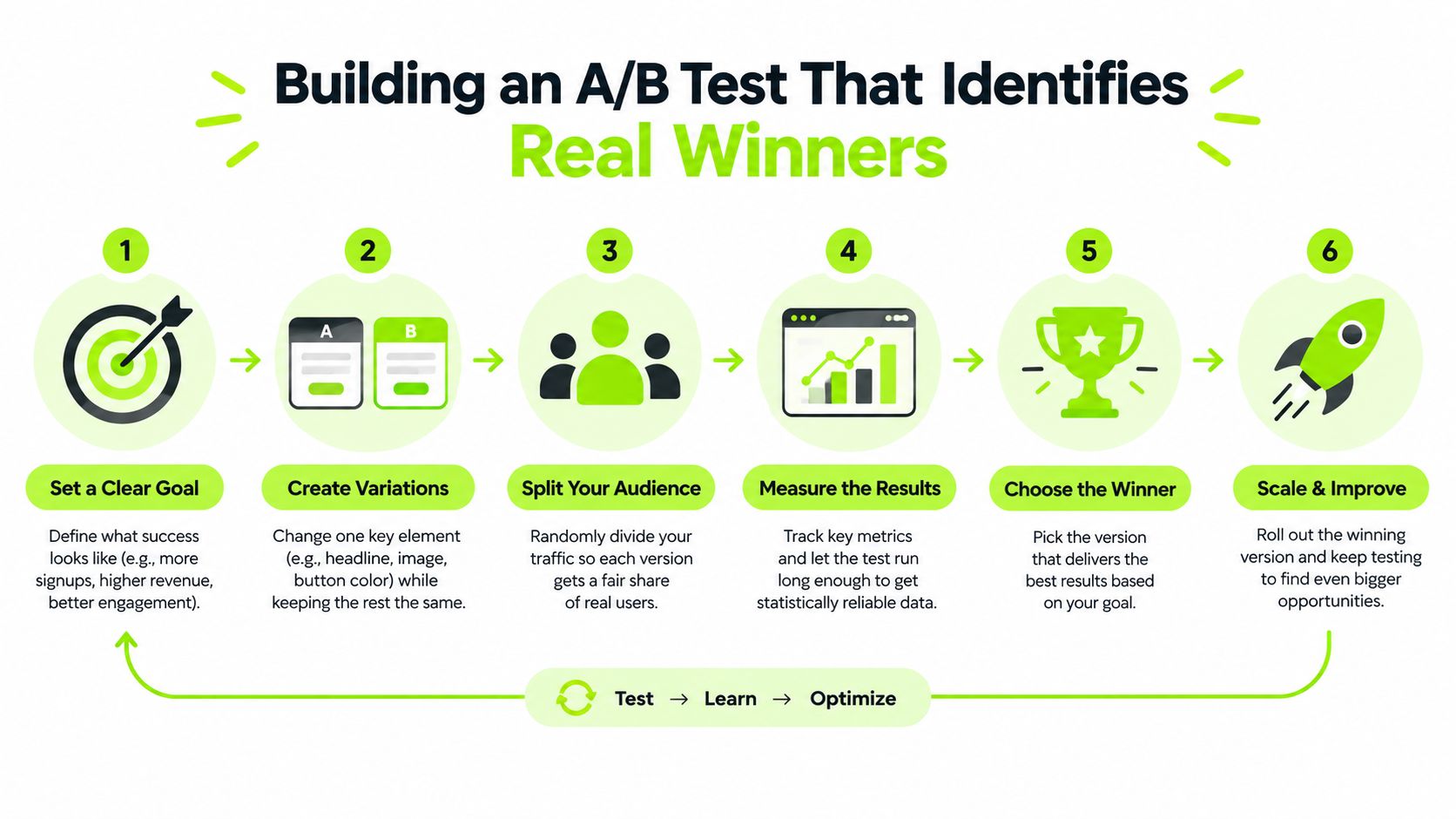
Building an A/B Test That Identifies Real Winners
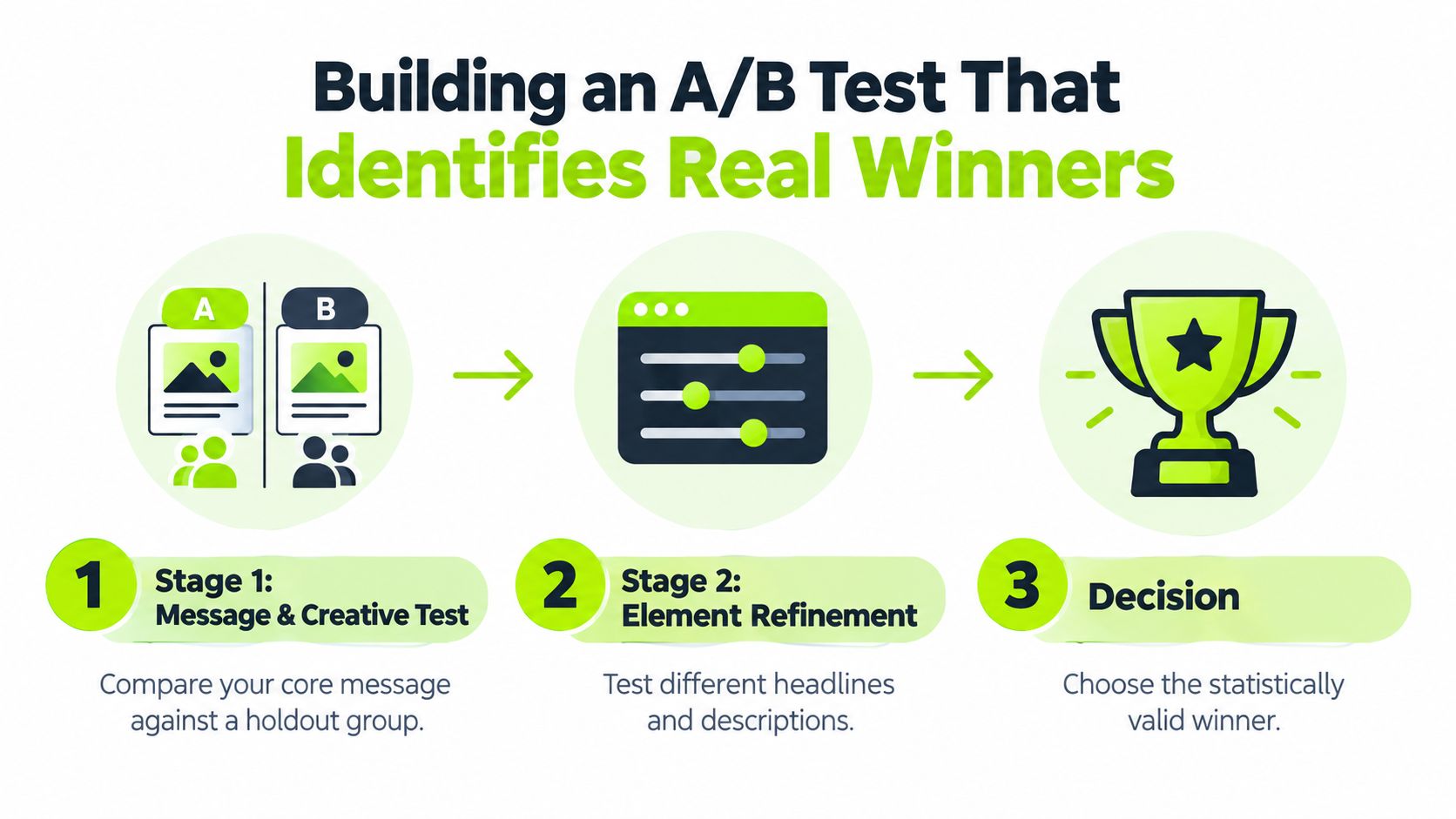
A credible copy test needs more control than changing several headlines and declaring the highest click-through rate the winner. For GolfRep campaigns, the first stage compares the core message and creative against a control. The second repeats the winning direction across desktop and mobile placements to identify device and format effects.
Keep the audience, offer, landing page and budget constant during the initial comparison. If one variant promotes flexible membership and another promotes a trial round, the test is answering a strategic question about the proposition, not a minor wording question. That's useful, but label it correctly.
Stage one tests the commercial angle
Start with a control and a small number of materially different variants. One might focus on local access, another on playing more regularly and another on a club visit. Don't change the audience and landing page at the same time, or the result won't show whether the message caused the difference.
Track the journey beyond the advert:
- Qualified enquiry rate, whether the response fits the intended audience.
- Booked-visit rate, whether the person takes a meaningful next step.
- Cost per membership opportunity, whether spend is producing commercially useful prospects.
- Joining decision, whether the opportunity becomes a member.
- Retained membership, where the club's systems allow that outcome to be connected.
CTR remains useful as a diagnostic. A weak CTR can indicate that the message doesn't earn attention. A strong CTR paired with poor booked visits usually indicates a promise that attracts the wrong behaviour or creates a mismatch after the click.
Stage two isolates placement and device
Once the core message has a credible result, adapt it for mobile and desktop rather than assuming one version works equally well. Check text size, opening wording, video captions and the distance between the promise and the call to action. The IPA research found that platform-optimised adverts attracted more attention, so format adaptation is part of the test, not a cosmetic extra.
A false winner often appears when one placement has less clutter, one device has a stronger audience mix or one short-term spike produces cheap clicks. Keep a record of spend, impressions, clicks, enquiries, booked visits and membership opportunities by variant and placement. Use conversion tracking setup to connect the advertising record to the actions the club values most.
Don't stop at the first positive signal. Stop when the variant has produced enough downstream evidence for a commercial decision.
Compliance and Substantiation Before Any Variant Goes Live
A copy test should never begin with an unapproved claim. The UK ASA states that roughly 70% of complaints it receives are considered under misleading-advertising rules, and marketers must hold evidence for objective claims consumers are likely to take at face value, as explained in its misleading advertising guidance.
For a club, this applies to paid adverts, its website and its own social-media channels. “Best value in Surrey”, “double your membership” and “guaranteed growth” aren't harmless creative flourishes if a prospective member could understand them as factual statements.
Classify every claim
Use four categories before writing variants:
- Factual: location, playing rights, opening arrangements or included facilities.
- Comparative: best value, cheaper than another club or more flexible than alternatives.
- Quantified: savings, growth, numbers of facilities or a stated outcome.
- Subjective: welcoming, relaxed or sociable, provided the overall impression doesn't imply unsupported superiority.
Retain documentary evidence for the first three categories. The CAP Code also applies to claims on company websites and owned social-media channels, not only paid advertising, according to ASA advice for businesses.
Price-led copy needs particular care. If an advert says “save £500”, “50% off joining fees” or “was £X, now £Y”, the reference price must be genuine. ASA guidance says advertisers should be able to provide at least three months of pricing history, including intervening prices, when substantiating a usual selling price, as set out in its pricing guidance.
A safer rewrite replaces an unsupported superiority claim with a precise benefit. “Flexible weekday membership with six-day tee access” is defensible only if those terms are accurate, but it gives the reader something more useful than “unbeatable membership”.
Connect approval to measurement
Add a compliance status to the creative register, then record the evidence supporting each factual or comparative claim. Once approved, attach every variant to the CRM stages of enquiry, qualified lead, booked visit, joining decision and retained membership.
That process prevents a short-term response spike from rewarding wording the club can't defend. It also protects the sales team from handling prospects who were attracted by a promise the membership team can't fulfil.
A 30-Day Iteration Loop for Continuous Improvement
Copy optimisation works best as a monthly operating rhythm rather than a one-off writing session.
Week one starts with the commercial question. Choose one audience, participation intent, proposition and next action. Write the variants, check every claim and approve the landing-page message match.
Week two launches the controlled test. Keep the audience, offer and budget stable, then label each asset clearly so the club can connect the advert to downstream outcomes.
Week three reviews quality rather than celebrating cheap traffic. Separate performance by device and placement, then inspect the actual enquiries, booked visits and membership opportunities.
Week four records the decision. Keep the winner as the new control, retire weak wording and write the next test around one unresolved question.
| Metric | Why It Matters | Source |
|---|---|---|
| Click-through rate | Shows whether the message earns initial attention | Advertising platform |
| Qualified enquiry rate | Shows whether the advert attracts the intended golfer | CRM |
| Booked-visit rate | Measures commitment beyond the click | CRM and booking records |
| Cost per membership opportunity | Connects media spend to commercial pipeline | Advertising platform and CRM |
| Joining decision | Shows whether the proposition supports sales conversion | Membership records |
| Retained membership | Connects acquisition copy to longer-term revenue | Membership and CRM records |
A club doesn't need endless variations. It needs a clear question, compliant assets, consistent measurement and the discipline to carry learning into the next cycle. The strongest copy often comes from understanding participation intent, proving the promise and giving the golfer a credible next step.
GolfRep helps golf businesses connect advertising creative with qualification, CRM, follow-up, conversion and retention. Visit GolfRep to discuss how your club can test ad copy against booked visits and membership outcomes, rather than optimising for clicks alone.
Ready to tap into our proven growth system?