Golf Club Meta Ads: The Predictable Revenue Playbook
Most advice about golf club Meta ads starts in the wrong place. It starts with targeting, creative, or budget. Those things matter, but they’re not usually the reason a membership campaign fails.
The bigger problem is what happens after someone raises a hand.
A club can run polished ads, generate a healthy batch of enquiries, and still end up saying Meta ads “didn’t work”. In practice, the ads often did their job. The breakdown came later. Leads sat in an inbox, forms asked for too much, the phone call went out the next day, or nobody could see which enquiries turned into visits and which turned into members.
That’s why the target shouldn’t be “more leads”. The target is more predictable revenue. Golf club Meta ads only become commercially useful when they sit inside a system that captures, routes, follows up, and measures every enquiry properly.
At GolfRep, that’s the distinction we care about most. A campaign is just the front end. The pipeline behind it decides whether your club gets a short burst of interest or a repeatable member acquisition process.
The Real Problem With Golf Club Meta Ads
Most clubs don’t have a lead generation problem. They have a lead handling problem.
That can be uncomfortable to hear, especially if you’ve been told the answer is to “run more ads”. But more enquiries don’t fix a weak process. They expose it. If your team already struggles to respond consistently, adding volume usually creates more waste, not more memberships.
Why lead volume is the wrong main metric
A manager looking at campaign performance can get distracted by surface-level numbers. Plenty of impressions, a decent click-through rate, and a steady flow of form fills can all look encouraging. None of that tells you whether the club is converting attention into joined members.
The practical questions are different:
- Did the enquiry get acknowledged immediately
- Did someone follow up while interest was still high
- Did the prospect book a visit or a conversation
- Did the club track where that person came from
- Did the campaign produce revenue, not just activity
If the answer to those questions is unclear, the campaign isn’t under control.
Most golf club Meta ads fail after the click, not before it.
Why clubs misdiagnose the issue
Committee-led clubs and lean management teams often default to manual follow-up. An enquiry lands by email. Someone intends to call later. Another staff member assumes it’s already been handled. A strong prospect goes cold without anyone realising.
That creates a false conclusion: “the leads weren’t any good”.
Sometimes that’s true. Often it isn’t. A delayed response, poor visibility, and no nurture process can make good enquiries look weak. The club then changes the advert, increases spend, or blames the platform, when the actual problem sits in operations.
What success actually looks like
Good golf club Meta ads create demand from local golfers who are open to a better membership option. Great campaigns do one more thing. They connect that demand to a structured process that turns interest into booked visits, membership conversations, and signed members.
That’s the shift worth making. Stop asking, “How do we get more leads?” Start asking, “How do we make every valid enquiry easier to convert?”
Laying The Foundation Before You Spend A Penny
A lot of wasted ad spend comes from clubs launching too early. They build adverts before they’ve decided what they’re selling, who they want, and how they’ll judge success.
That’s backwards.

Pick one objective, not three
The first discipline is simplicity. One campaign should usually have one commercial goal.
If you ask a Meta campaign to promote membership, society days, green fees, and Christmas vouchers at the same time, the message gets diluted. The audience doesn’t know what action to take, and your team won’t know what outcome the campaign was meant to drive.
For a membership campaign, keep the objective narrow. That might be:
- 7-day membership enquiries
- 5-day membership enquiries
- Flexible membership consultations
- Trial visit bookings for serious prospects
Those are workable. “General awareness” usually isn’t, unless you already have a strong follow-up and retargeting structure behind it.
Build the offer before the advert
Clubs often obsess over the image and headline, then treat the offer as an afterthought. In reality, the offer is what gives the ad its force.
A useful membership offer doesn’t have to mean discounting the club into the ground. In many cases, the stronger route is clarity and urgency. Prospects respond when they understand what they’re getting and why they should act now.
A practical offer tends to include these elements:
| Offer element | Why it matters |
|---|---|
| Clear membership type | Removes confusion about what’s being promoted |
| Specific reason to enquire now | Creates momentum without sounding desperate |
| Simple next step | Makes it obvious what happens after form submission |
| Relevant value point | Gives a golfer a reason to compare your club seriously |
That value point could be convenience, culture, playing access, coaching, clubhouse atmosphere, or a joining incentive. What matters is that it’s credible and easy to understand.
Practical rule: if a prospect needs a committee member to explain the offer line by line, the advert isn’t ready.
Know your commercial threshold
Before you spend anything, decide what an acquired member is worth to the club. Not in abstract terms. In operational terms.
You need a realistic view of membership value, margins, and how many new members the club can service properly. That informs what you can afford to pay to generate and convert an enquiry. Without that, budget decisions become guesswork.
A simple pre-launch checklist helps:
Define the membership product
Make sure the team is aligned on what is being sold.Agree the offer
Keep it strong enough to prompt action, but aligned with the club’s brand and pricing.Map the follow-up route
Decide who calls, who emails, who books visits, and where each lead is recorded.Set the commercial target
Judge the campaign by member acquisition and revenue contribution, not just the volume of forms.
Fix the internal handoff first
There’s no point paying Meta to generate interest if your club still relies on forwarded emails and memory. Before launch, decide where enquiries live and how staff will see status at a glance.
At minimum, every new lead should move through a clear pipeline such as new enquiry, contacted, booked visit, attended, proposal sent, joined, or closed. That sounds basic, but it’s the groundwork most clubs skip.
Planning And Building Your High-Performance Campaign
The clubs that do well with golf club Meta ads rarely win because they’ve discovered some secret button inside Ads Manager. They usually win because the campaign is tightly matched to the local market, the offer is specific, and the ad feels relevant to a real golfer nearby.
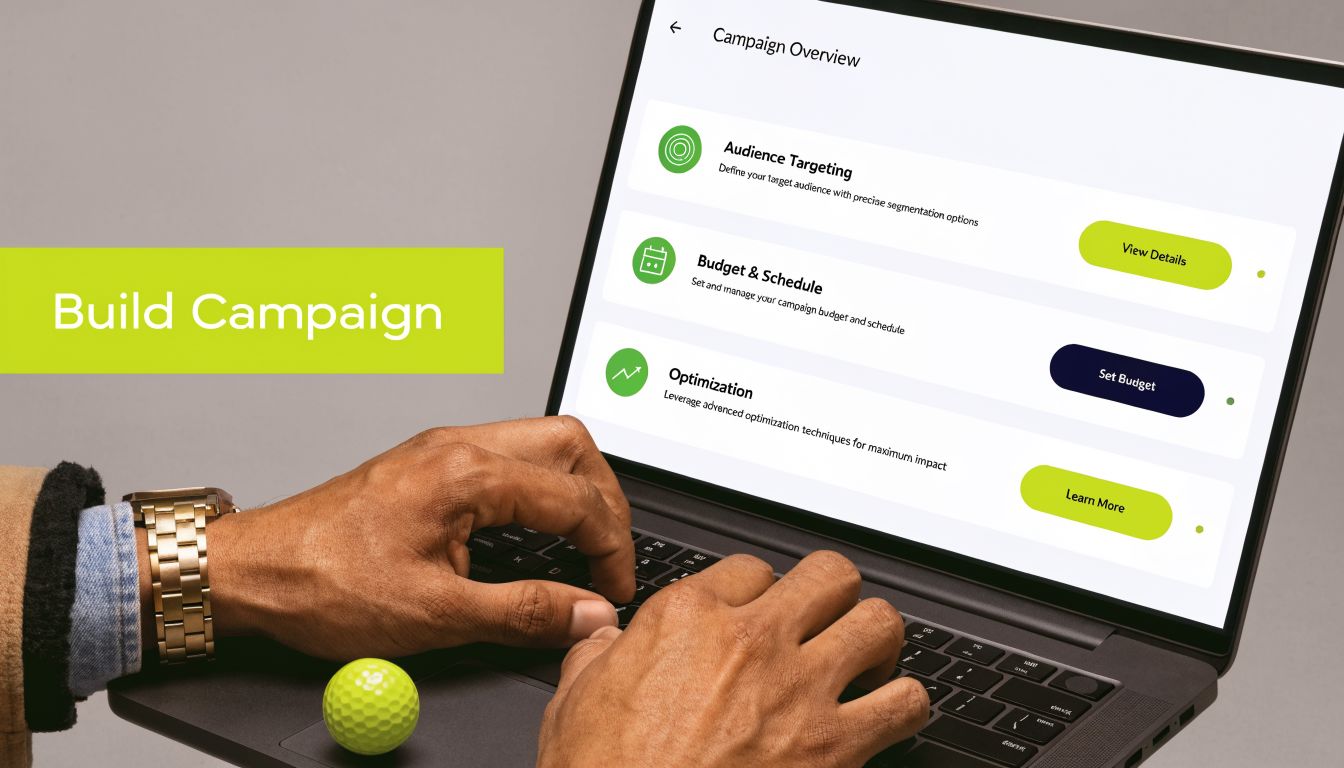
Astbury Golf Club is a good example. Its 2025 Meta campaign generated 71 highly qualified leads from £225 of ad spend at £3.20 per lead, and 21 of those leads became 7-day members, producing approximately £25,000 in new revenue according to The Revenue Club’s Astbury Golf Club case study. That result didn’t come from brute-force budget. It came from precision.
Start with audience logic, not platform habits
One of the most common mistakes is targeting everyone with a loose interest in golf. That can produce reach, but it doesn’t always produce serious local buying intent.
A stronger structure usually layers audiences by relevance:
Warm audiences
Past website visitors, previous enquirers, lapsed prospects, and email database segments.Club-derived audiences
Existing member lists, former trialists, event attendees, and known local contacts where data usage is appropriate.Local prospecting audiences
People within sensible travel distance of the club who fit the likely member profile.
Clubs must exercise discipline. If your membership proposition suits a commuter, a flexible worker, or a retiree with daytime availability, say so in the campaign thinking. Don’t rely on Meta to infer everything from a vague brief.
What the creative needs to do
Golf club Meta ads don’t need to look flashy. They need to answer a local golfer’s unspoken questions quickly.
Those questions are usually simple:
- Is this club for someone like me?
- Is it within easy reach?
- Does the membership feel attainable?
- Is there a reason to enquire now?
- What happens if I submit my details?
A good ad creative package normally includes a strong club visual, a short and direct primary text, and a call to action tied to one next step. Video can work well when it shows the course, practice facilities, clubhouse, and the kind of atmosphere a prospect would join. Static images can work just as well when the offer and audience fit are clear.
If the ad only says “join our club today”, it’s too thin. Local golfers need a reason to interrupt what they’re doing and enquire.
Messaging that tends to work
The strongest copy for membership campaigns is usually grounded in a real buying reason, not generic club pride.
That might mean leading with:
A membership window
Open places, new intake, or a timely joining opportunityA practical advantage
Flexible access, easier playing patterns, or a better fit for a golfer’s routineA decision trigger
Joining fee savings or a clearly framed benefit for acting now
Astbury’s campaign worked in part because the targeting was tight and the incentives were relevant. The lesson isn’t “offer discounts at all costs”. The lesson is that the message and the audience have to fit each other.
The campaign build should stay simple
For most clubs, the strongest starting point is not a sprawling account structure. It’s a clean campaign with a clear objective, a controlled number of audience tests, and enough spend concentration to generate learnings.
That means:
| Campaign element | Better approach | Weak approach |
|---|---|---|
| Objective | Membership enquiries | Mixed club promotion |
| Offer | One clear joining proposition | Several competing messages |
| Audience | Local and relevant | Broad and vague |
| Creative | Club-specific visuals and copy | Generic stock messaging |
| Follow-up path | Predefined and visible | Decided later |
If you want a more platform-specific breakdown of setup choices and creative decisions, GolfRep has covered some of that in this guide to golf club Facebook ads. The bigger point still holds: the campaign only works when the structure behind it is ready to convert the interest it creates.
From Click To Conversation The Critical Handoff
Most membership revenue is lost in the minutes after a prospect submits a form.
That’s the moment clubs underestimate. They focus on getting the click, but the decisive factor is often the handoff between Meta and the club’s follow-up process. If that handoff is slow or messy, a promising enquiry can disappear before your team even opens the email.
Why native lead forms usually beat website contact pages
For initial capture, Meta’s native Lead Forms are often the better option. They reduce friction. They keep the prospect inside the platform. They remove extra page loads and the distraction of a full website journey before the club has even secured basic contact details.
The alternative is common but weaker. An advert sends traffic to a contact page with too many fields, no mobile-first thinking, and no immediate confirmation of what happens next. That’s not a campaign problem. It’s a conversion design problem.
According to Adamigo’s Meta ads conversion benchmark article, the median cost per lead on Meta is £27.66, leads contacted within 5 minutes are nine times more likely to convert, and over 70% of people abandon multi-field forms. The same source states that clubs should use minimal-friction lead forms and automated response systems to protect ROI.
A lead that waits in an inbox is not an asset. It’s an opportunity already decaying.
What the form should ask for
Early-stage forms should ask for the minimum needed to start a conversation well.
In practice, that means keeping it close to:
- Name
- Phone number
That’s enough to trigger contact and qualification. Clubs get into trouble when they try to collect everything upfront. Handicap details, preferred playing times, budget, current club, and membership preference all feel useful internally, but they create drag at exactly the wrong point.
The first job is capture. Qualification comes next.
Speed matters more than most clubs think
A membership enquiry is often highest intent in the first few minutes. The golfer has just seen your ad, considered your offer, and taken action. If the club replies quickly, the conversation feels joined up. If it replies much later, the prospect has already mentally moved on.
That’s why manual-only follow-up is unreliable. Staff get busy. Reception closes. The pro is on the lesson tee. The secretary is in a meeting. None of those realities change the prospect’s expectation of a timely response.
A better system looks like this:
Instant acknowledgement
The moment the form is submitted, the prospect gets a confirmation by SMS, email, or WhatsApp.Clear next step
The message explains who will contact them and what happens next.Fast human follow-up
During working hours, a team member responds promptly while interest is still warm.Out-of-hours cover
If the lead comes in late, automation holds the conversation properly until staff pick it up.
Automation doesn’t replace the human touch
Some club managers worry that automated replies feel impersonal. Used badly, they do. Used properly, they prevent silence.
A simple, well-written message can reassure the prospect that the club has received the enquiry and will follow up with a useful next step. That protects momentum and makes the eventual phone call easier, not harder.
The mistake isn’t using automation. It’s assuming that good staff intentions are enough to deliver consistent response speed across every enquiry, every day.
Building Your Club's Automated Growth Engine
A single Meta campaign can produce a burst of leads. That’s useful, but it’s not the same as building a dependable member acquisition system.
Predictable growth comes from connecting three things that clubs often keep separate: advertising, lead management, and nurture. When those pieces finally operate together, Meta stops being a one-off promotional channel and starts becoming part of an organised pipeline.
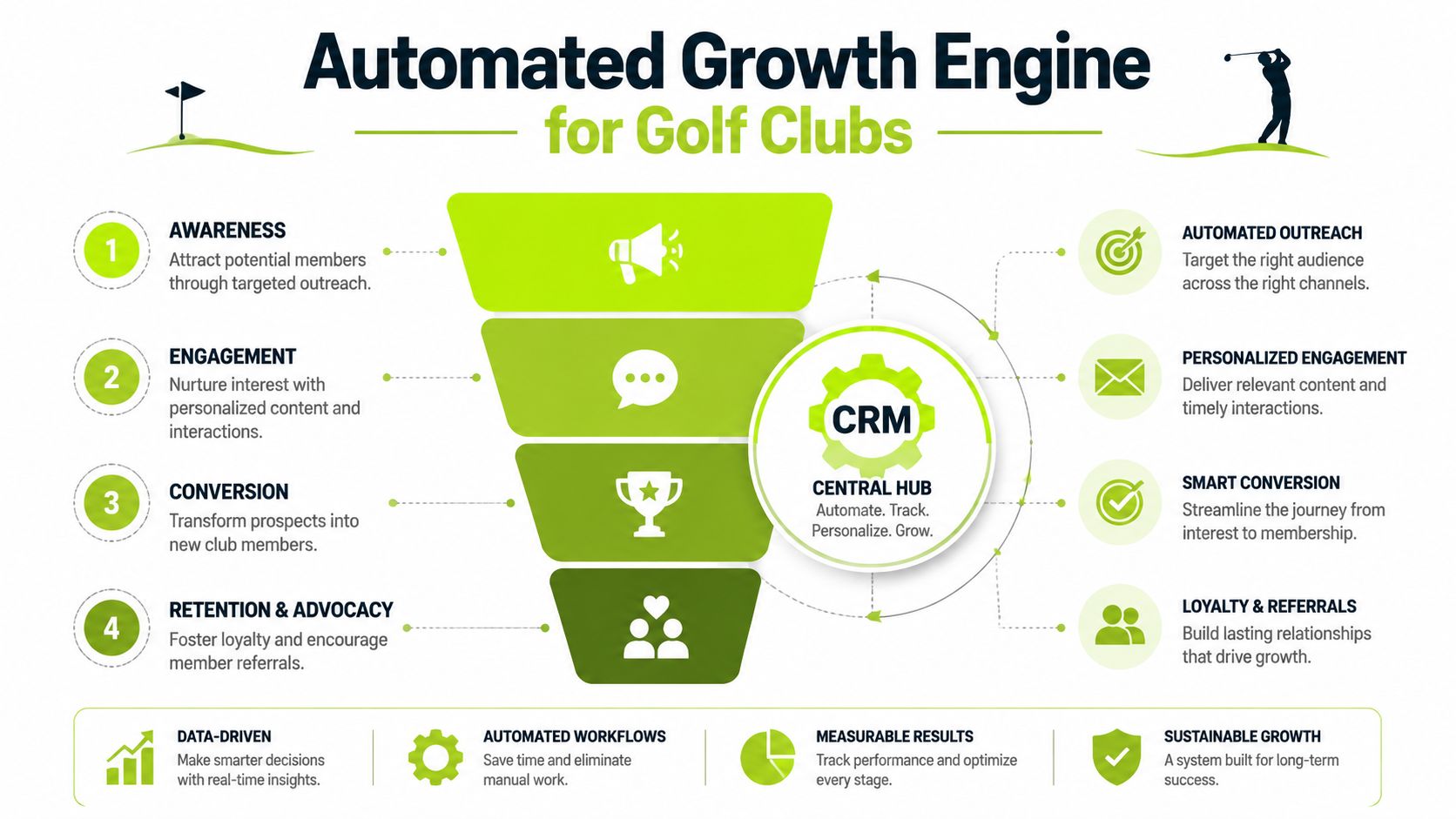
The CRM is the operating system
A CRM gives the club one place to see every enquiry from first contact to final outcome. That visibility matters more than many clubs realise. Without it, staff work from inboxes, spreadsheets, memory, and disconnected notes. Nobody has a full picture, and no one can confidently say which campaigns are producing actual members.
For a membership campaign, the CRM should show:
| Stage | What the club needs to see |
|---|---|
| New lead | When the enquiry arrived and from which campaign |
| Contacted | Whether someone responded and when |
| Qualified | Whether the lead fits the membership offer |
| Visit booked | Show-round or call arranged |
| Outcome | Joined, still considering, or closed |
That structure sounds operational because it is. Revenue predictability comes from process clarity.
Why automation is valuable after the first reply
Not every prospect joins quickly. Some need time. Some want to visit later in the month. Some ask for details, then go quiet before re-engaging. If the club relies on a single phone call and one follow-up email, many of those people drift away.
A CRM-enabled nurture flow solves that. It can send timely reminders, membership information, visit prompts, and follow-up messages without forcing staff to remember every next action manually. Human follow-up still matters, but it now happens inside a system rather than around one.
Clubs don’t need more marketing noise. They need a reliable way to stop good prospects slipping through gaps.
Multi-site groups need central control
This issue becomes more serious for resort groups and operators managing several clubs. If each site runs ads independently and stores enquiries locally, reporting becomes fragmented and leads get mishandled.
According to Kingfisher Ads’ article on Meta ads strategies, only 18% of UK clubs use integrated ad-to-CRM tracking, which leads to 40% lead drop-off rates. The same source states that GolfRep’s work with Macdonald Hotels & Resorts produced a 150% increase in booked visits via automated 24/7 follow-ups.
For that kind of operator, the answer isn’t just “better ads”. It’s centralised lead capture, common pipeline stages, and automated routing so each enquiry reaches the right site and still remains visible at group level.
If you’re looking at the systems side of that setup in more depth, this overview of golf club automation is a useful starting point.
What an automated growth engine looks like in practice
A practical setup usually includes:
Meta Lead Ads feeding directly into a CRM
No manual exporting or delayed processing.Immediate acknowledgement messages
So every prospect hears back even outside office hours.Task creation for staff
The right person sees the next action without chasing inboxes.Nurture sequences
Prospects who aren’t ready today don’t disappear.Pipeline reporting
Management can see what’s generating visits, memberships, and revenue.
That’s the shift from campaign thinking to engine thinking. One creates bursts. The other creates control.
Measuring What Matters For Membership Growth
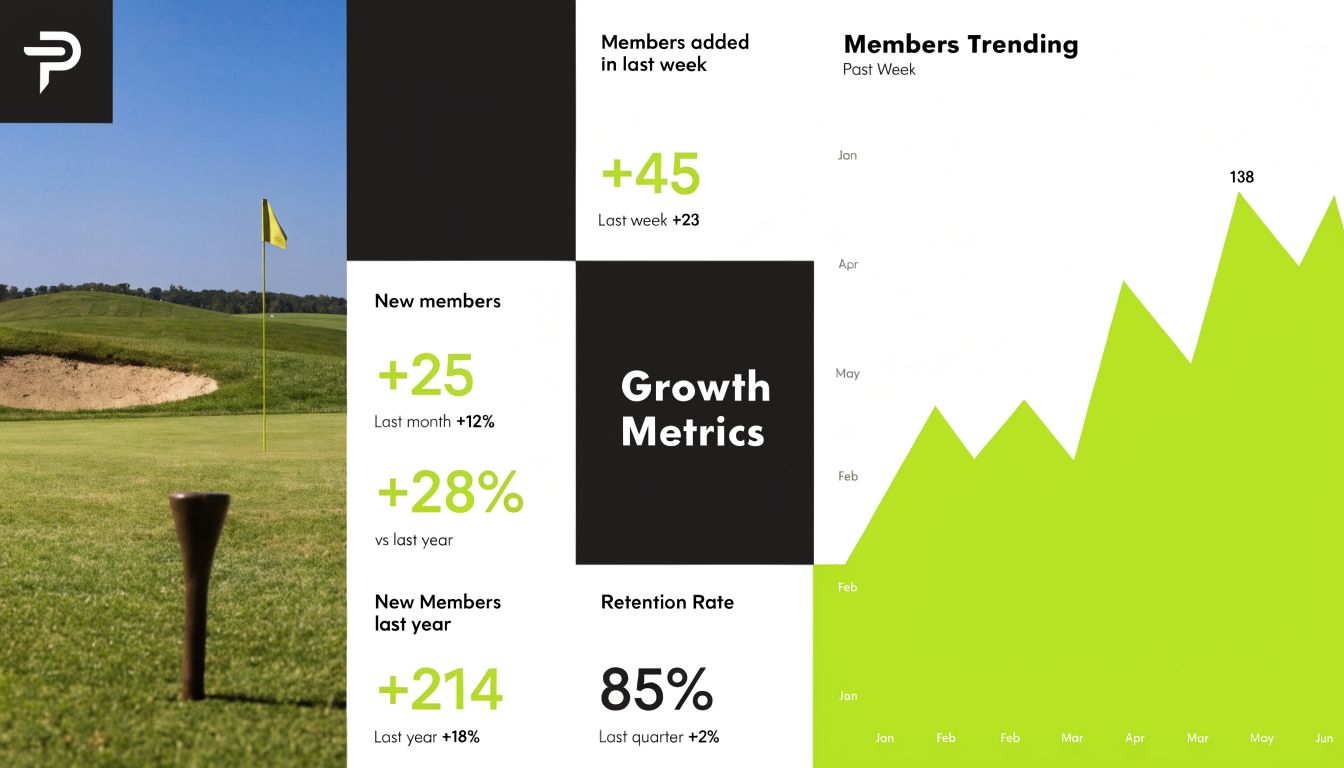
A club committee doesn’t need another report full of impressions, clicks, and vague engagement commentary. It needs to know whether the campaign is adding members at a sensible acquisition cost and whether the process behind it is commercially sound.
That means measuring golf club Meta ads against business outcomes, not platform vanity.
The metrics that deserve attention
A sensible reporting stack for membership growth usually includes:
Cost per lead
Useful, but only as an early indicator.Cost per booked visit or show-round
More meaningful because it reflects lead handling quality.Cost per acquired member
The clearest view of commercial efficiency.Revenue generated
The number that matters most to owners, managers, and committees.
The key is connection. If your club can’t trace a new member back to the original campaign and follow-up process, then any ROAS figure is incomplete at best.
Why blended measurement matters
One of the better examples of this comes from Get Golfing’s membership campaign across twelve UK clubs. According to The Revenue Club’s Get Golfing case study, the integrated campaign generated £67,840 in new membership revenue at a combined 2,148% ROAS. The same case study states that Meta ads generated leads at £1.97 each, but the strongest outcome came from running Meta and Google together with a refined sales process.
That’s the lesson. Meta may introduce and warm up the prospect. Another channel may capture stronger buying intent later. The membership team then closes the sale. If you only look at one platform in isolation, you can undervalue what drove the revenue.
Good reporting doesn’t ask which ad got the click. It asks which system produced the member.
How to report this internally
When you present results to a manager, owner, or committee, keep the report tight:
| Question | Better reporting focus |
|---|---|
| Did the campaign create interest | Leads and booked visits |
| Did staff handle enquiries well | Response visibility and pipeline progression |
| Did the club gain members | Confirmed joins |
| Was it commercially worthwhile | Revenue and acquisition efficiency |
If you want a deeper view on revenue-focused reporting, this guide on the real ROI of golf club marketing expands on how to judge campaigns beyond surface metrics.
GolfRep helps golf clubs build predictable pipelines by combining paid lead generation with CRM tracking, automated follow-up, and structured nurture systems. If your club is generating enquiries but still struggling to turn them into members consistently, explore how GolfRep approaches the full lead-to-revenue process.
Ready to tap into our proven growth system?